Showing posts with label story. Show all posts

Wednesday, July 4, 2012

Intriguing Observations: Maximizing Research


The Intriguing Observations series was created to gather some of the greatest supporters and bloggers to provide their own insight on all things creative both in their ventures and their techniques. This week on the guest series is another all-star supporter and an outstanding wordsmith K.M. Weiland.

~~~~~~~~~~~~~~~~

Research is vital no matter what kind of fiction you write. I spent almost as much time researching modern-day Chicago for my fantasy novel Dreamers Come as I did the Third Crusade for my historical novel Behold the Dawn (scheduled for release October 1). I’ve always found it odd that some authors approach research as if it were the bane of their craft. Since most of us write fiction in an urge to learn and grow, research is a natural extension of that. On average, I spend three months researching any given novel before diving into the writing. And I love it. I love discovering the solid facts—the bricks—that will turn the imagined walls of my story into something solid. That said, I’m very much aware that research can be both overwhelming and frustrating. Following are some of the tricks I’ve adopted for my own use.


Photo Credit
1. Know the Questions. Usually, I decide to set a story during a particular period or place because I already possess some interest in and at least a basic knowledge about it. Using that foundational knowledge, I’m able to complete my sketches and story outlines. By the time I officially begin my research, my story is already almost fully formed in my head, and I have a very good idea of what questions I need to answer during my research phase. For instance, in Behold, I knew I needed to spend a lot time learning about not only the Crusade itself, but also the world of the tourneys—the huge mock battles that were loved by the knights and banned by the church.


2. Find the Resources. The first thing I do is run several searches through my libraries’ online card catalogs. My goal is to pick up every book my libraries have available on my subject, so I try to be as thorough in my keywords as possible. After evaluating whatever I’ve come up with, I’ll complete my research library with the necessary purchases. If I have any blanks remaining once I’ve finished my books, I’ll utilize the Internet—although it should go without saying that you have to be careful about the reliability of Internet sources. (Check out my links page for some great research resources.)


3. File the Gems. Research notes aren’t worth much in the long run if they aren’t easily accessible, so I’ve constructed a system of note keeping that, although a bit time-intensive in the beginning, pays huge dividends over the course of the novel. Whenever I run into a snippet of information that I think might prove useful to my story, I either highlight it (if I own the book) or pull out a notebook and mark down the page and paragraph numbers and the first and last three words of the information I want. For example, if I want to remember something on a book’s thirty-first page and second paragraph, my shorthand note looks like this: 31:2 “First three words… last three words.”

The next day, before settling in for more reading, I take my books to the computer and use my notebook to find the passages I marked the day before. I type them up in a Word document, which I divide into appropriate headings. For Behold, I used headings such as “Animals,” “Children,” “Home Life,” “Tournaments,” “Warfare,” etc.

This may initially look like a lot of extra work, but it’s not. When I’m in the middle of a scene and I need to know what kind of food an earl would serve at a banquet, my elaborate note system keeps me from having to dig through piles of dog-eared books in search of a minute detail. Instead, I can either look through my research document’s headers in search of “Food & Dining,” or I can simply hit the Find button and run a search for “banquet.” Either way, it takes seconds to find the information and continue writing my scene.

4. Add the Visuals. Something else I find extremely helpful is a folder of images. Maps and landscape pictures are particularly valuable when I’m writing about a place (such as Syria—or Chicago) with which I am totally unfamiliar. But it’s also nice to have pictures of period clothing, diagrams of weapons and machinery, and maybe even a collection of people pictures for character inspiration.

5. Take the Responsibility. Very probably the single most important facet of portraying authenticity is chutzpah. If you act like you know what you’re talking about, most readers will buy it, whether it’s true or not. But hand in hand with that understanding goes a realization of the responsibility we have for giving our readers truth in exchange for their trust. None of us are ever going to get the facts one hundred percent correct, but checking and double-checking our sources is important lest we convey an incorrect fact or impression. The line between learning as many facts as possible and using our imaginations to fill in the blanks is a delicate one. If, for whatever reason, I ever intentionally depart from the facts (as I did once or twice in Behold, in regard to dates and such), I always make note of it in an afterword.

As writers, our fertile imaginations are what allow us to create something out of nothing. But it’s as researchers, that we’re able to make that something into a solid delivery of facts that will keep readers from blinking twice at suspending their disbelief.

~~~~


K.M. Weiland is the author of the historical western A Man Called Outlaw and the medieval epic Behold the Dawn. She enjoys mentoring other authors through her writing tips, her book Outlining Your Novel: Map Your Way to Success, and her instructional CD Conquering Writer’s Block and Summoning Inspiration.

Blog: WordPlay
Twitter: KMWeiland 

Wednesday, May 16, 2012

Intriguing Observations: Live. Write. Thrive.


The Intriguing Observations series was created to gather some of the greatest supporters and bloggers to provide their own insight on all things creative both in their ventures and their techniques. This week on the guest series is another all-star supporter and NY Times Bestselling author, Bob Mayer.

~~~~~~~~~~~~~

No Matter the Genre, All Great Books Start With a Great Idea

The kernel idea is the Alpha and the Omega of your book, no matter what genre you are writing in.  By that I mean a single idea starts your creative process and it completes it.  It’s what you begin with and at the end of the manuscript, everything in the book points toward it.

The kernel idea is the foundation of your novel.  When I say idea, I don't necessarily mean the theme, although it can be.  Or the most important incident, although it can be.  But it can also be a setting.  It can be a scene.  It can be a character.

It is simply the first idea you had that was the seed of your novel.  All else can change, but the idea can’t.  It might be a place; a person; an event; a moral; whatever.  But you did have it before you began writing and you must remember it as you write.  If you don't, your story and style will suffer terribly.  You should be able to tell your idea in one sentence.  And repeat it to yourself every morning when you wake up and prior to writing.  Knowing it will keep you on track.

Every new book I begin, I write out this one sentence on a word document as the very first writing I do.  I print it out and put it where I can constantly see it. If you can't do remember this one sentence, then you need to backtrack through your thought processes and find it, because you had to have had it.  Everything starts from something.  Idea is not story.  Because every idea has been done, but every story hasn't.  The kernel idea is the one thing in your manuscript that cannot change.

In one of my early novels, the original idea was an action:  What if Special Forces soldiers had to destroy an enemy pipeline?  That's it for Dragon Sim-13.  Not very elaborate, you say.  True.  Not exactly a great moral theme.  Right.  But with that original idea there was a lot I could do and eventually had to do.  I had to change the target country after the first draft.  But that was all right because I still had the idea.  I had to change characters, but that was fine too, because it didn't change my idea.  I had to change the reason why they were attacking a pipeline, but again, the original idea was the same.

You will have plenty of latitude for story after you come up with your kernel idea; in fact, I sometimes find the finished manuscript turns out to be different from what I had originally envisioned, but one thing is always true: that kernel idea is still there at the end as the Omega.

For my first kernel idea, I made it as simple as possible to enable me to focus on the writing because when I was in the Special Forces my A-Team had run a similar mission on a pipeline.   Since I had a good idea what would happen in the story, I could concentrate on the actual writing of the novel.
I've sat in graduate literature classes and heard students say:  "The author had to have a moral point in mind when they wrote that book."  I agree, but sometimes it is not at the forefront of the story.  Many authors write simply to tell a story started by that kernel idea, which indeed might be a moral point, but sometimes is a story that they wanted to tell and the theme developed subsequently.

Photo Credit
A moral or theme (screenwriters call it intent) always does appear in a book by the time it’s done.   No matter what conscious expectations or thoughts an author has when they start writing, a lot more appears in the manuscript than they consciously anticipated.

After you have that kernel idea, you should spend a lot of time wrestling with it and consciously uncover your feelings and thoughts about it.  I try to look at my main characters and determine what will happen to them emotionally, physically and spiritually as they go through the story.  Who are they at the beginning of the story and who are they at the end?

This is an example of being aware of what you are doing.  I said above that not all authors have a conscious theme when they write a novel, but experience has taught me that it is better to have your theme in your conscious mind before you start writing.  It might not be your original idea, but it will definitely affect your characters and story.

The reason it is important to have a theme in mind is because people want to care about what they read and the characters.  If there is some moral or emotional relevance to the story they read, they will become more involved in the story and enjoy it more.  Even if the reader doesn't consciously see it either.  
Let me give you more examples of ideas I’ve used and gotten published:

What if the force that destroyed Atlantis ten thousand years ago comes back and threatens our world?  Atlantis series of books.

What if mankind didn’t originate the way we think we did?  Area 51 series.

What if Japan succeeded in its atomic bomb program at the very end of World War II and one of those bombs was hidden at the base of the Golden Gate Bridge?  The Gate

Another way to try to figure out what the core of your novel is this:  What is the climactic scene?  This is when the protagonist and antagonist meet to resolve the primary problem that is the crux of the novel.  This is what the entire book is driving towards.

Where’s the shiver?

What excited you so much that you decided to sit in the dark and writer 100,00 words.  That’s not normal, in case no one’s told you.  What excites people you talk to about your book?  I know I’m on target with an idea if others pick up my excitement when I discuss it.

Remember, as a writer, you are selling emotion and logic.  And Kirk always trumps Spock.
A key to selling your book is being able to communicate this shiver to other people.  To get them as excited as you were when you first began writing.


Bob Mayer is the NY Times Bestselling author of factual thrillers. He steeps his stories in military, historical and scientific facts, then weaves those facts through fiction creating an exciting ride for the reader.  He’s a West Point graduate, former Green Beret, and author of more than 50 books all available in eBook that have sold over 4 million copies.  He’s been on bestseller lists in thriller, science fiction, suspense, action, war, historical fiction and is the only male author on the Romance Writers of America Honor Roll.  He is one of the bestselling indie authors in the country.
Twitter: Bob_Mayer
Sites: www.bobmayer.org   www.whodareswinspublishing.com


Wednesday, April 18, 2012

A Titanic Story

"I think that it was definitely a goal of Titanic to integrate a very personal, very emotional, and very intimate [story]... something that has a profound impact on your imagination..." - James Cameron

Photo Credit
In today's industry where publishers, Hollywood, music and even game developers are constantly in a race to 'remake' previous works or produce ones that are so similar to what has already been successful that they couldn't make it in the witness protection program, one wonders how it is possible to make something significant.

I recently had the pleasure to see the re-release of James Cameron epic as Titanic 3D. While I had seen pieces of this behemoth before, I never really saw it from beginning to end nor had I ever looked at this in terms of story. After watching I can only marvel at the culmination of elements that conspired to make it a true modern 'epic.'

Examining the story it seems to be a very simple romance. The boy from the wrong side of the tracks, the rich socialite that wants to escape her confining life, the jealous bad-guy fiancé and the helpful friends. On paper this sounds rather mundane, it very well sounds like almost any other romantic story in existence. So, where does this story become an epic?

The setting for the story is aboard the ill-fated cruise ship in 1912, this is not an original setting by any stretch of the imagination, There are no fewer than fifty different movies about the ship not counting the hundreds of documentaries. If we look at strictly the literary scene there are thousands and thousands of fictionalized accounts with a large percentage of them as romance stories. While tragic, this setting does not necessarily equate to an 'epic.'

If it's not the overall story or the setting, one might wonder if it's the characters that make this such a significant story. The characters are quite flat overall with a street kid, the socialite cheating fiancée, a controlling millionaire, and countless other rather flat characters. The superficial details to their lives, the personality traits and their interactions do not even pertain to an 'epic story.' Just sampling quotes reveals how dull or predictable most interactions are and how unusual some of the dialogs are.

Are the Events of the story what drives it to epic status? Outside of context you have a poker game, a guy that talks a socialite out of suicide, a dinner where socialites discuss status, a number of conversations about foreshadowing, a 'low-brow' party, a violent outburst from the millionaire towards his fiancée, a drawing session, a romantic moment between the star-crossed lovers, a moment of false imprisonment, survival on the sinking ship, treading water, character death and finally the heart/staircase. Is it the events that make this story epic? If it is the case then the story should be able to be moved to any other setting and have the same results.

Photo Credit
After looking at all of the elements it is abundantly clear at what makes this piece an epic, a story that is still successful 15 years later. It's the emotional punch.

The romantic story feels unique and new because the characters are drawn together in a believable way, reacting in an expected but emotional manner. The characters conveyed the emotions of each event in such a manner that even years after everyone knows the whole plot that people still react emotionally to Jack attempting to escape from the handcuffs or when Rose is slapped. The setting keeps the story together, it makes it a period piece that never feels out of place where technology can give away the age of the piece and pull the audience from it. These emotional punches culminate with the very moment that makes it an epic. Jack's death.

If the story had concluded with Jack and Rose making a new life together it would certainly be a happy ending but it would never even touch epic status. The only plausible ending was to take the one thing that the audience became so attached to throughout the journey, their relationship, and breaking it with something beyond their control. Old Rose's photos and the staircase scene give a sense of completion but also convey immense emotion. Even to this day, the audience can see an image from one of the 'emotional hits' and immediately feel it personally.

So what makes a story an epic? Is it unhappy endings? Is it the story alone? Is it the characters, their lives, the setting or the events? It is a culmination of all of these elements, each element that comes with it's own emotional hit and is then tied together. Creating a Titanic story is not about the individual elements or what they represent but the emotions that they convey.

Monday, April 9, 2012

The Artistic Product

Desire, Appeal, Demand, Art....

In any creative venture there is an element conceptual fulfillment and appeal. Often many choose to define their works as an art. These concepts demonstrate a defined expression and communicate emotion through specific aesthetic criteria, in short works that are of more than ordinary significance.

There are many different mediums that can be termed art, ranging from the standards of painting and sculpture to writing and even film or gaming. The ideal of conveying a concept through a medium in such a way as to be desirable is a fundamental motive for many artists. Through practice, refinement of technique and expression a work can be viewed as art.

While any work can be viewed as a work of art it is undeniably the aesthetic criteria that permits the work to be classified and termed "a work of art" within the medium. The aesthetics of a piece, while entirely subjective, are often representative of the 'high-concepts' that determine the appeal of the piece.

Photo Credit
As with any creative work, the determination of appeal is quite subjective however the broader the appeal the more accepted the piece is overall.

It is the appeal of a piece that many artists seek so that the work is broadly accepted as a work of art without dispute. Many artists are willing to sacrifice for the sake of their work, barely making a living while trying to find 'mainstream success' in their desired field. These Starving Artists epitomize the concept of an artist and are entirely dependent on the demand for their work.

Starving Artists and demand are where a couple of misconceptions enter.

Many writers/artists that are new to the industry often claim that their work is art as a defense to changing their work. As previously discussed, there are components to this that determine viability of their claim and then there is the misconception about the 'Best Seller' author.

The Best Seller author may have made their way into the best selling ranks but it does not mean that they have left 'Starving Artist' status. Most authors work other more permanent jobs because it often takes more than six published works and at least 2 'best sellers' before they can even consider focusing on being an author as their career.

In reality, an artist creates a work that they hope has enough appeal to drive the demand for their work including future works. Successful artists can convey their work with broad appeal but still remain truthful to their original concepts so that it is a work of art. Even starving artists who have sacrificed for their art dream of 'breaking into the business' and having their work desired. This desire effectively makes the work of art a product.

Products rely on marketability to determine success and even art needs an audience to claim success. In the writing industry success is measured in more facets than stars in the sky but claiming a work is art is not a defense against change, it only means that you'll be left by the roadside in an industry of unique artistic products.

Wednesday, March 14, 2012

Intriguing Adaptations

In any creative composition that desires to convey a narrative, the piece strives to emulate life. Through the emulation it is possible for others to connect with the work.

Individuals that perceive the composition can empathize with others in familiar situations, they can recognize individuals and even understand how narrative thoughts could come together because it is familiar. Establishing relatable elements expands the scope of the piece, changes it into something personal, something that can convey a concept into the very thought process of others.

Photo Credit
Selecting and manipulating elements to make a composition relatable is only one part of a larger challenge, making the piece interesting to an external perspective. Individuals have their own perceptions, preconceived notions that filter any composition.

While establishing the connection with the piece creates a given level of interest, it does not guarantee that the piece will have enough innate interest to keep the viewer engaged.

The most fundamental element of any narrative that grabs an individual's attention and keeps it is adaptation.


Every narrative, every piece is driven by the fundamental concept of human adaptation, individual adaptability. People are naturally drawn to stories because of the innate fascination with observing how other people adapt to situations. Regardless of whether it's how someone would adapt to the death of a loved one, the stress of saving lives, catching a murderer, caring for a child or even switching careers the interest is piqued.

Since most people are unable to experience all the possibilities of human adaptability they are innately drawn to experience these adaptations through others. It doesn't matter if it's called coping, overcoming something or character growth, it is human adaptation and we are always interested. Mixing relatable elements into the piece only assists in emphasizing our interest in that adaptation.

Monday, February 20, 2012

Carnival of Thrills

Every composition is its own thriller, a unique and compelling ride that provides the necessary suspense, excitement and satisfaction to compel the audience to the conclusion.

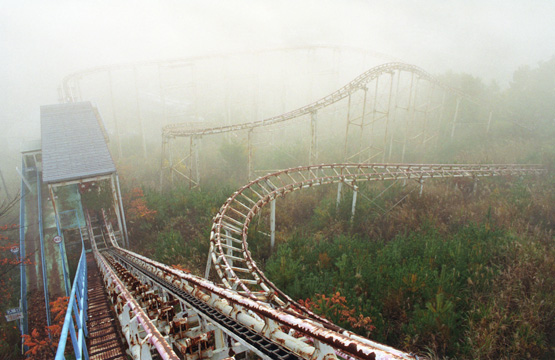
Many authors equate a strong narrative to a roller-coaster, a thrill ride with countless ups and downs, sharp twists in the track and blind drops that keep the participants on the edge of their seats. To a degree this is a strong analogy for the perfectly balanced narrative.

Photo Credit
When participants choose a roller-coaster they have a certain set of preconceived notions about the experience and the expectations of what will be experienced. Presentation is at the foremost, the coaster typically has a theme be it horror, adventure or even action heroes. This establishes the tone for the ride and gives participants a set of emotions to expect. This then leads to the actual ride, the anticipation of the excitement, the suspense as the the coaster climbs each rise in the track, the fear as the drops are perceived, the excitement of the pacing and ultimate satisfaction from the whole experience.

Any narrative composition, even life, can be easily compared to a thrill ride like a roller-coaster but while this is sufficient in most cases it's not entirely accurate.

The reality of a carnival ride like a roller-coaster is that the participant is aware of what's in store for them. The track is easily visible, like a reader selecting a specific genre but in all instances, the strongest compositions emulate life. This is where the carnival ride diverges greatly from the single track roller-coaster ride.

Where a narrative does follow a path it is not a singular track bound for conclusion. A narrative, as life, is predicated on following choice and consequence. A singular choice may cause the track to drop from under your feet or climb to great heights. When characters in a narrative are subject to their own choices and the consequences of those choices, the audience can better relate than if it was an on-rails ride.

The individuals in a narrative are not merely characters designed to support the main attraction like props on a roller-coaster ride to add atmosphere. Ever individual is a product of their choices and the more that these connections are explored, the more the audience becomes invested in the composition. A strong narrative, like life, is not a restrictive roller-coaster but a full carnival of thrills. Every path is hidden,every ride, adventure and event concealed until the appropriate choices are made.


“Writing is not life, but I think that sometimes it can be a way back to life.” 
― Stephen King, On Writing

Tuesday, February 7, 2012

Suspended Perceptions

Any narrative journey is a confluence of events, lives and emotions. It is a carnival ride that the participants are thrown onto and it's up to the gathered crowd to judge the entertainment value of watching participants on the rides.

Like any carnival there are a great variety of rides available and a number of ways that the crowds can experience them. Each can be equated to a narrative avenue and an emotional outlet that is available to experience.

Some individuals prefer to experience the ride first-hand, experiencing all of the emotions, events and the personal interactions along with the participants. In the narrative journey these adventurous individuals would choose a first-person perspective, they want to experience what the participants experience.

Photo Credit
Others prefer to watch participants reactions to the rides, enjoying not being on the ride that is evoking all of the emotions in its participants. Honestly, it can be quite the experience watching the brave climb aboard the Orbiter and then watching them scream in terror as they are hurled about. These observers typically choose the third-person perspective for their narrative journey.

Between the adventurers and the observers the carnival rides offer endless opportunities and countless experiences. Examining these attractions from an outside perspective it is possible to identify the key emotions that each ride is designed to exploit.

Regardless whether it's the Tunnel of Love, a calm ride that brings the participants closer together or  a Tilt-a-whirl that offers non-stop excitement each is an abstracted concept focused on one singular emotion that exploits the behaviors of participants. Every participant boards a ride with their own expectations and perceptions of what the ride will convey to them. In the narrative sense these are all just genres. Just as the participant is aware what each ride is meant to convey, so too is the reader aware of what each genre entails.

Interestingly, despite the cliches and the preconceived notions participants and observers have, they still enjoy the ride.

Monday, January 30, 2012

Author Anxiety

Anyone outside the publishing industry or even those just starting their writing journey have a distinct vision of the 'author.' The private, relaxed individual sitting in their own home office plugging away at their keyboard while downing coffee. Not that there isn't some truth to this image, most authors have more coffee in their system than blood, but TV, movies and stories romanticize this image.

The first-time author is a far cry from that idyllic vision that the entirety of the world seems to portray. In-fact the budding author is actually subject to more stress than they could anticipate.

Just starting out the writer has clear aspirations, a precise writerly dream that they want to accomplish. They receive praise and support for their work from friends, family and other aspiring writers in their circle.  The nervous anxiety that comes with sharing what was private work with the outside world is taxing but the support keeps the writer moving. 

The writer completes their work, making minor edits and revisions based on the input of those offering support. Their supporters start asking the question; "Are You Going to Get it Published?"

Constant questioning from supporters leads the writer to the publishing industry. That perfect, amazing work will now have a home, well, maybe. The writer is introduced into the confusing maze of ambitions, pitfalls, deceit and predators. It becomes a learning process, how the industry works, what is currently trending, roles of agents, editors, the author platform and the loathed query. 

Photo Credit
The writer needs to create an 'author platform.' This is basically a string of social media platforms that work together to help the writer establish a community. Blogging, Twitter, Facebook, Goodreads, Dear Author etc. These need to be tended daily to develop a community and show potential agents and publishers that the writer can establish an audience.

Stress levels skyrocket as the first-time writer is introduced to the confusing logic of 'writers need an agent to reach the publishers but most agents require the writer to have some publishing credit before considering them.' Add in an introduction to Pred-editors, and the process becomes a frustrating mess. The most trusted agencies and publishing houses have guidelines that make prisons look lenient. Generic form letter rejections flood in with little hint at why the writer is being rejected. The publishing industry seems to be an impregnable fortress with a labyrinth surrounding it. Almost 80% of writers surrender at this stage.

First-time authors do have a number of options at this juncture; they can self-publish, they can try a smaller press or maintain their persistence pursuing the traditional route. Fighting their instincts, they start making changes to the masterpiece, editing and revising the work to address the rejections.

The remarkable and persistent few manage to find their way through that mess and through a small bolt of lightning receive a publishing contract. This doesn't mean any of the stress fades at all, this only changes the goals. The writer now needs to evaluate the terms of the contract, are they fair? Does the publisher have a solid distribution network? Sure Amazon and Barnes & Noble are on the list but how far is the publisher's reach? Does it include the itunes bookstore? What about physical imprints or audio? What about media rights? Do the percentages and efforts balance? The writer has a contract and they have a longing desire to just sign but the fear of being betrayed is extremely high. 

Everything balances out, the writer signs the contract and will be a published author soon. The writer can start working on the next project.

Once again the stress levels rise as the first editor dives in while you're filling in all of the necessary paperwork. It is like working for an employer after all. At this time the publisher starts their cover-artist on your project. The editor takes your masterpiece and leaves enough red on it to make you wonder how you ever made it this far. Some things are requisite changes while most are just questioning your logic. The next project is left on hold as the writer is left to make adjustments and edits to their work. Now the writer has the pressure of the publisher to make sure the work is the best. 

Just as the writer begins to find a bit of calm in the routine engagement with the publisher, the cover-artist produces the first mock-up for their title. It looks nothing like what the writer had in mind but the writer needs to fight their instincts once more. The publisher and cover-artist know what will work, the writer can make changes if they want but it may not be advisable. At this stage the writer is introduced to the Line Editor. The last editor said the work was great but the LE goes through every single line with a microscope and scarily enough knowledge about various subjects to win big on Jeopardy. 

The writer manages to endure and completes the line edits. They can turn their attention back to working on the next project. Then the final proofs come in from yet another editor. There are barely any marks on the project now and these changes are made in no-time at all. 

After the proofs are returned come the Galleys, yet another round of edits. Things that slipped by all of the editors up to this point are caught and after a couple of checks the publisher produces the ARCs, that's Advanced Reading Copies for the newbies. It's an exciting time and the writer's work is almost on the shelves. 

Photo Credit
This doesn't alleviate stress, it only causes more. Now come the marketing efforts both from the publisher and the author. The publisher will readily produce booktrailers, get the book to all available channels and push it out to all the review sites that they have ties with and maybe even create Pay Per Click ads on Facebook, Google or Goodreads. There may also be a book tour or blog tour (more common now). The writer can not simple 'fire and forget,' letting the publisher handle all of the marketing. Depending on the publisher, the author will need to design the PPC ads and run them or set up promotions, tours and send out their book to any additional reviewers.

The writer needs that project to be a success, they need to manage the marketing, find time to write and still maintain their author platform so they can be found.

Then it hits home, even with a publisher and a novel about to be on the shelves most large review sites pass along form-letter rejections citing that they don't have enough time or aren't interested in the book. Is the project slipping already? It hasn't even launched yet and it's being relegated to the non-important pile.

Fortunately most authors have grown a thick hide by this time but the doubts still nag at the back of the mind. Then they begin to question the marketing. These review sites are great for grabbing avid readers but they do nothing at grabbing the majority of potential readers who only occasionally read. Forcing out social marketing doesn't work, it only blitzes the same audience over and over again and traditional marketing doesn't work either. Avid readers are only a small portion of sales how can the project possibly be a success?

In truth, it only takes about 100 sales-a-week (ebook) to make the top 10,000 in sales rank on Amazon. Most books are lucky to sell 1,000 copies in their sales life. So long as the novel is available on every possible distribution channel it stands the best chance but not without marketing to push it.

The anxiety of the publishing process never lets up. Even as the book hits the shelves it becomes a concern of sales and reach while the whole cycle starts again for the next project. The romantic image of the author is never fully true. The best authors have just grown accustomed to that stress and keep pushing out their work to assure they have the best possible results.    


Tuesday, December 20, 2011

That Holiday Feeling

Ferias Ex Machina….

As Christmas is only a few days away now traditional Holiday themes are inundating all narratives on all mediums but why?

In a traditional narrative whether it is still, sculpted, cinemagraphic or literary a composition is orchestrated in such a way as to draw the viewers into the piece. There is a level of intrigue as the thrill of uncertainty keeps the rapt attention of the audience. This is not the case for many 'Holiday' narratives.

Photo Credit
The majority of 'Holiday' narratives are composed with layers of positive themes; selflessness, family, change of heart, unconditional love and other similar themes.

While many narratives can utilize similar themes, Holiday compositions typically feature these themes at a relative superficial level. The dramatic twists and turns that otherwise would create a thrilling piece are sedate compared to traditional narratives. These narratives often rely on the Ferias Ex Machina. 


Ferias Ex Machina or "Holiday out of the machine" is where a seemingly unsolvable/inextricable problem is suddenly and abruptly solved with the contrived and unexpected intervention of some new event, character, ability or object particularly in a 'Holiday' composition. These are where the characters will have a revelation, change of heart, a random bystander offers help because it is the season, etc.

In a traditional narrative composition, if the Ex Machina approach is used it makes for a superficial or failed piece by modern standards. So how is it acceptable for Holiday compositions?

Many narratives span extensive time periods either within the singular narrative or within a series and inevitably draw on the 'Holiday' themes. Much like a straightforward Holiday composition, the narratives fall to the same superficial level of device yet, since it is 'Holiday' themed it is generally accepted by the audience despite the Ferias Ex Machina approach.

What do you think? Is Ferias Ex Machina a suitable device for a holiday narrative or should a piece strive to be more than a 'Holiday' composition?

Merry Christmas….

Monday, December 12, 2011

Storyboarding Timelines

In any visual composition it's necessary to have a plan of action, a concept that needs to be visualized. Taking that concept to a realized piece requires that certain elements are available for production and the primary means are creating a timeline and storyboards.

It's not possible to produce the conceptualized piece if the material, the shots that are needed to realize the piece are not available.

Recently, I was reviewing my series outline that I had conjured making notes as time passed and I found that the series while conceptualized was missing a number of elements. It was apparent that with three separate timelines and the initial story in the background to contend with, it was fast becoming unmanageable. The outline just didn't fill in the blanks that I was looking for to make sure it was cohesive and not a random series of events. The outline just wasn't working.

Taking the issue out of the strictly literary realm and applying the cinematographers law- 'Storyboard It' the creative issues evaporated.

Photo Credit
The visual approach to storyboarding begins with understanding the full purpose of the storyboards, the intent, who will see them and how detailed they will need to be for those purposes. What many don't realize is how relatively easy it is to create storyboards especially for narrative. These are not going to be an amazing artwork but can be as rudimentary as stick figures so long as the notes are detailed and there is a rough sketch of a scene. The primary difference between using storyboards for cinematography and using the boards for a written narrative is strictly the tools used to create the piece.

After the purpose of the storyboards is established the key scenes are selected. Any composition, any story is a culmination of specific scenes. The largest benefit of creating these boards is the ability to manipulate them physically. It becomes strikingly apparent when the storyboards are actually tacked up on the wall what scenes work, how the pacing and narrative flow work in the composition. It also becomes apparent how the actual timeline will flow.

The timeline in my case, was actually creating the separate timelines stacked in a simple excel sheet. The stories become abundantly clear with dividing points clearly denoted for a series. After the initial timeline was stretched out, the storyboards for the entirety were orchestrated filling in all of the 'missing pieces' that were sadly lacking from the overstuffed outlines.

The composition timeline behaves much like any historic timeline, there are significant events that effect the narrative either directly or indirectly and these are recorded. It's designed to give perspective on the piece.

A narrative composition is an assemblage of elements and often keeping those elements in a cohesive order can become quite unwieldy especially if there are multiple narratives that are layered together for a series. Many techniques can be utilized to organize the concept but creating a timeline with detailed storyboards is easily one of the most efficient means.

Tuesday, December 6, 2011

Abstracting Layers

Depth, Dimension, Layers…

As a narrative piece is composed, one of the difficulties of framing a specific point as the subject of the narrative is establishing the sense of depth in the composition.

Often a visual composition will rely on layering to add a sense of depth and even time to the piece. A narrative composition can quite frequently utilize similar techniques to bring that composition into greater focus, bring it to life.

Adding depth to a narrative is achieved through layering interaction dynamics and narrative history.

Photo Credit
Interaction dynamics are the implied and explored relationships within the narrative. These can be the relationships between subjects or between subjects and setting. Implied relationships are not overt reactions between subjects but the secondary inferred relationships. In a visual sense the subjects would be juxtaposed to demonstrate hidden emotions or draw tension. These are quite common in romantic narratives as two subjects awkwardly avoid interactions.

The explored relationships are overt dynamics, emotions and interactions are direct. Visually there are direct correlations between subjects or subjects and setting. These can be further layered with different levels of emotions, interactions and relationships. All of these are typically the make new friends, adversaries and love interests subject interactions.

The interaction dynamics of both implied and explored relationships add layers to the composition, provide a sense of depth to the interactions.

A visual composition can frequently capture a still moment in time, but it can also appear flat and superficial. While in a narrative it is possible to convey a linear progression of time, like a visual composition it can also appear flat and superficial.

Through narrative history it is possible to layer a composition with additional depth and dimension. The composition demonstrates a history for the subjects through details of worn settings, memories of previous events and relationships built on events not within the composition.

As any visual composition becomes more interesting with layers of interaction dynamics and narrative history so to does a narrative composition. The flat one-dimensional take on a narrative timeline or strictly overt interactions leaves a flat, superficial image. Adding layers of interactions, history and detail together brings the piece to life.

Monday, November 28, 2011

Leading Lines

In a composition there are a variety of techniques that can be utilized to explore the piece. One of the most dynamic means of guiding the audience through a piece is through the use of leading lines.

Leading lines are one of the top rules of visual composition and are used to great effect to guide the viewer's perspective through the piece, drawing attention to focal points and creating narrative rhythm. These lines are also can be used singularly or with additional supporting lines.

Photo Credit
A narrative composition is led by leading lines as much as any visual composition, however unlike a visual composition the leading lines are not only visual based on the narrator's perspective but also a product of dialogue.

The narrator's perspective has a strong influence on the composition through the depth of field, viewing angle and the leading lines. Through the narrator's perspective it is possible to guide the audience through the piece in a similar fashion as a visual composition. The narrator's perception can create tension, emotion and dynamic depth through their perception of the scene. As the narrator examines a particular scene, their view will follow the same leading lines as an audience would with a visual composition.

Ex: I forced the weathered metal door open and stumbled out onto the platform. The tile was cracked and broken, covered in disturbing stains that led to the tracks. The tracks were rusted, long forgotten as they ran down the tunnel and back into the real world.


The narrators eye follows the leading lines as the audience would view it in the visual composition. The eye follows the lines of the tile in the foreground to the tracks which prominently guide the eyes down in a linear direction.

Dialog leading lines are often more clearly defined as character movement within the environment or lines that begin or end a scene. These lines convey movement not only through the visual composition but through the story as well. Often these lines are used as indicators for scene and settings change.

Ex: "Well, that's not going to matter anyhow." I heard her let out a sigh. "Fine, let's do this." I stopped and looked at her. "That's the spirit. Ready?" She nodded. I turned the knob.


The audience's perception of a narrative composition is subject to the same rules of visual compositions. Through dialogue and scene leading lines, an audience is guided through the piece in a fluid, dynamic manner that keeps the piece interesting.

Tuesday, October 11, 2011

Abstracting Exposure

Exposure, Bracketing, Compensation….

In the visual arts, particularly photography, the exposure of a composition determines the amount of detail and contrast in that composition. Traditionally, the longer the exposure the more detail and darker the overall composition.

The concept of exposure is not limited to the visual arts, a narrative composition is subject to the same rules of exposure as any medium. The longer the reader is exposed to a composition the more details are clear to them but if they are exposed to the same scene for too long it may all blend together (Over-Exposed). The same is also true if the exposure is too short. There will be too few details (Under-Exposed).

In order to achieve the Optimal Exposure the perfect balance between light and shadow, detail in the composition, it is necessary to sample the right saturation for each scene. The optimal exposure is, of course, the right exposure that achieves the desired effect. This approach may be entirely subjective however, there is a 'correct exposure' for every scene.

Photo Credit
Obtaining the correct exposure is a balancing act in any composition, obtaining the right level of detail while obtaining the desired effect. This can be achieved through a process called Bracketing. In a visual medium this process entails adjusting the exposure to increase and decrease the exposure and ultimately taking the best of the series. Through a narrative, the process of bracketing is a bit more complex but ultimately has the same results and centers on controlling the exposure in the scene.

Controlling the exposure in a narrative can be achieved through a few specific elements, the lighting, depth of field and speed of the composition. The most important concept to consider in the process is Reciprocity. This is a simple principle that states that the longer the exposure, the reciprocally smaller aperture required. In a narrative sense this means the longer the scene the fewer details of the scene and more focus on the subject. As each change in exposure adjusts the overall composition it creates a different exposure for the reader. Through reviewing each exposure it is possible to create the optimal exposure for the scene, the perfect balance of details and focus.

A different means of bracketing the exposure in a narrative scene is to use scenes of differing exposures to bracket the selected scene. Use a slightly darker scene before the darkest scene and a slightly lighter scene leading away from that scene to achieve an exposure balance.

To prevent an over exposure in a composition it may be necessary to provide a means of compensation for the scene. If the composition is too dark it is possible to compensate for this overexposure by adding more light to the scene or just an additional lighting source. The narrative composition can find compensation in added details, lighting sources and subtle shifts in depth of field that can change the exposure.

Finding the optimal exposure of a composition can be a difficult practice but often creates the best overall compositions whether it is bracketing the composition in a single scene to find the right balance or using the surrounding scenes to bracket a single composition. It is important to recognize when the audience becomes over-exposed and under-exposed to a composition.

Monday, October 3, 2011

Lighting the Narrative

In any composition, details can control the tone and atmosphere of the piece more than any overt elements. The strongest of these elements is also most often overlooked due to it's rather commonplace nature, lighting.

While settings and even weather can influence the atmosphere and tone of a piece, these are direct elements that an audience can perceive as cliche and can become a detriment to the overall composition. Using the lighting of each scene, each setting can be a subtle means of controlling the audience's preconceptions and perceptions of the composition.

As with photography and cinematography, controlling the lighting of the scene allows the creator to bring their vision of the piece to life. Through controlling the direction, quality and quantity of light in a scene it's possible to control perceptions of a scene.

Through the subtle manipulations of directional lighting it is possible to convey specific emotions and manipulate audience perceptions of the scene.

Ex: She paced along the ocean walkway under the warm glow of the park's lights. She needed answers and he was going to be the first step. Her pacing quickened until another gust rushed her and the rolling waves sprayed higher than the railing.

Photo Credit
The streetlight provides the directional lighting and offers a sense of security, safety, that the audience can perceive. This light source conveys the emotional tone of the scene, it's night, there's an anxiety about the scene and most details are washed out highlighting the primary subject in even greater detail.

Controlling the quantity of light in a scene is another means of controlling tone although it is far less subtle than simply adjusting the quality of the light and the direction of it.

Ex: The sun was warm as she drew a breath of determination and pulled open the heavy fire-door. Inside was a long dirty hallway lined with neglected and abused doors. Light was a precious commodity with a number of the ceiling lights broken. The fire door closed and left her in the pathetic lighting.

The transition from sunlight to a poorly lit interior reflects the oppressive emotions of the scene. The sunlight offers warmth, safety and comfort while the interior lighting reflects something darker, harsher than the outside world. This also demonstrates the differences in the quality of the lighting. The sunlight carries natural preconceptions and emotions while interior lights reflect a different set of emotions. Even if the lights were simple florescent lights there would still be a shift in the perceptions associated with the lighting.

Ex: I stepped out into the pure white florescent light. White eggshell walls reflected the light off the white tile floor in an empty wide hallway lined with cream colored doors and wire mesh windows down it's length. I stopped at the first large glass window to look at the sun-lit parking lot.

The distinction of the florescent lights emphasizes the sterile nature of the environment and carries a sense of cold detachment while the sunlight carries the warmth. The contrast between these two different qualities of light distinguishes two different sets of preconceptions and perceptions of the settings.

Through the subtle manipulations of lighting it is possible to reflect the desired narrative tone of the scene. Adjusting the depth of field, the focal points and emphasized details of a composition allows for a more dynamic composition that carries more emotional weight for the audience.

Monday, September 26, 2011

Macro-Composition

Every composition has a set of defined elements from depth of field to subjects to the very contrast of the details in a piece. There is however, no set scale for any piece.

The challenge of any creative piece is utilizing all of the elements to form a connection with the audience, to give that emotional bond that keeps their attention, makes them want to understand. In a narrative this can mean perspective in the piece or scale of the subject matter (Will it affect the world? or Just a few lives?) or this can mean the very length of a piece.

Building a connection between the audience and the composition can be achieved through a variety of methods but the strongest is creating the 1:1 connection, a Macro-connection.

Photo Credit
In photography, establishing a 1:1 connection between the audience and the subject is achieved by focusing intently on the minute details of a larger subject. The Macro-composition is created by selecting the details of a larger composition that best represent the larger piece and then making them larger than life, a direct 1:1 ratio.

Eg. The larger composition is a broken down and forgotten home, now overgrown with trees and is slowly collapsing as autumn sets in with the early morning sun. The Macro would be a close up shot of the neglected flowerpots along the fading stucco wall with a few fall leaves resting on the pots with a hint of the early morning sun.

Creating a Macro-composition in a narrative can be one of the more difficult things for a writer to accomplish. It is often easier to express the larger implications of a narrative by breaking the 1:1 connection. In a third-person perspective it is common for global effects to be viewed by jumping to an outside narrative character that can witness these. This breaks the 1:1 ratio and the essential 'spell' that the audience is under however, and the last thing any writer wants to do is break their audience-composition connection.

There are a number of ways to express a larger composition within the details of a given scene or event without breaking the Macro-compostion. To borrow the phrase from Rohe ~ "The Devil is in the Details."


Controlling the focal point of a composition and through a clever use of details it is possible to express the larger composition without breaking the Macro 1:1 connection. These practices are easily attributable to Macro-Compositions, telling an entire narrative in a few precisely chosen details and words.

One of the strongest practices comes from utilizing video as art. The Macro-Challenge consists of creating 4 video clips under 15 seconds each, the catch is they need to be 'Non-Symbolic' but convey an emotion. In short, it means to convey love the cinematographer can not use hearts, flowers the color red, people etc. Through this practice the cinematographer learns to take explicit care in developing every 15 seconds.

In a narrative, the desire to focus on larger details can inhibit the audience-composition connection or even break that connection if the wrong focal points and details are selected. The solution is to utilize the Macro-Challenge of cinematographers. Many of these challenges are currently floating around including Twitter-Fiction and Flash-Fiction among the many other variants. Taking specific care to craft a narrative in a sentence or two encourages a conscious selection of words and details. As the short sentence is perfected then that same approach can be brought to the paragraph, the chapter, the novel and ultimately the series.

Every composition, every narrative has a Macro-perspective embedded in the piece. Utilizing precise details can convey a larger composition without ever breaking the 1:1 connection with the audience.

Tuesday, September 20, 2011

High Dynamic Composition

In any composition there are a variety of factors that can either detract or enhance the piece. While the depth of field and the subjects of the composition are considered 'fixed' or 'unchangeable,' many elements ranging from contrast to saturation to detail can be altered to enhance the piece.

One of the most important elements of a composition is establishing the appropriate contrast in the piece, contrast of light and shadow, contrast of subjects and contrast of elemental details.

Often, those in the visual arts use a technique called 'bracketing' or 'stepping' to find the right balance in a composition. The technique consists of increasing and decreasing the amount of exposure, or light in the shot to establish different details and find the best result.

Photo Credit
Abstracting this technique to narratives, it is not too dissimilar from establishing revisions to a draft. The draft creates the basic composition with an established depth of field and subjects but does not have the strength of an emotionally draining 'dark' composition or the emotional highs of the 'light' composition. Each step towards the 'darker' or 'lighter' compositions can shift the entirety of the piece but at the same time, finding the right composition can be extremely difficult. Most take each piece of the composition and adjust it individually to suite the piece. This can result in a lengthy and painful process to attain the desired composition.

A very beneficial technique that supplements 'bracketing' in the visual arts is known as High Dynamic Range imaging. This technique involves taking the variations of a composition, the lightest highlights to the darkest shadows and merging them into a solitary composition that will have exceptional contrast and all of the positive elements from each variation.

While revisions can be painful, the concept of taking a single draft and revising it into separate directions, applying a lighter tone so the high points are the brightest, then taking another variation and revising with the intent of taking the dark moments and making them the darkest they can be is very beneficial. The end result of creating separate, bracketed, revised compositions allows the creator to merge all of the strongest elements into one HDR Composition.

How do you revise your work? Do you use an HDR technique or do you adjust the individual elements of the original piece?

Monday, September 12, 2011

Composing Composition

Focal Points, setting, details, composition…

In the visual arts there are a variety of simplistic guides that can help an artist create a strong composition and with enough fore-thought it is actually possible to push the limits of a piece to something that the masses will regard highly.

One of the basic guides for crafting a strong composition in the visual arts that can also be reflected in a compelling narrative is the Rule of Thirds. In the 1783 Sir Joshua Reynolds describes this in unquantified terms as 'the balance of dark and light. This has since been refined as conceptualizing an image by dividing the image into nine equal parts with two horizontal and two vertical lines. The points at which these lines meet are considered the 'power points.'

Photo Credit
Two primary concepts that can be abstracted from this Rule of Thirds are the ideas of 'balancing light and dark' and utilizing 'power points' at equivocal lengths.

In a narrative the balance of light and dark is often more complex than visualizing shadows and highlights. The overall tone of a piece can determine the 'exposure' for the piece but the shadows or 'darkest moments' in the piece will need to be of significant contrast to add sufficient dimension to the work. Eg. If the narrative is filled with deaths then the darkest moments will all appear the same level. The same is true for the highlights of a piece. If all the high points or highlights of a piece are on equal ground then there will be no significant contrast between one moment and the next. When all of the highlights and shadows of a piece are equal then the composition will be a dull neutral gray.

While finding the right balance of light and dark is integral to providing contrast in a piece, it is also necessary to define the 'power points' of the composition. These are the most visually striking focal points or in a narrative, the most thrilling moments of the piece. Together with balancing light and dark, these power points will be the contrasting subjects of the piece. Each of the four selected points and the 'strike line' leading to that point are inherently where the most emphasis is derived for a piece. These highest highlights to the lowest shadows provide the depth and contrast necessary to drive interest in a piece, when the appropriate focal points are selected for the piece at precise intervals the overall composition becomes an interesting piece.

To further enhance the the composition it is necessary to choose the appropriate setting to provide the requisite contrast between the focal points and the subject(s) of the composition. It is also necessary to choose the appropriate depth of field for each composition to emphasize details and enhance the overall composition.

Whether creating a visually striking image or an emotionally striking narrative, the abstracted principles remain the same; contrast and balance for the light and dark of the piece as well as choosing the appropriate subject(s) for the 'power points' and strike lines that lead up to these points.

Tuesday, August 23, 2011

Inexhaustible Aspirations

Regardless of the medium, everyone has long-term aspirations, dreams that they either consciously or subconsciously desire to attain. Aspirations are as varied as the individuals that have them. An artist may dream of having their work in a gallery exhibit, a writer may dream of publication and certainly there are those who dream of a stable home or the 'Epic Love.'

Photo Credit
Every aspiration can be very telling about the individual but these are more than simple aspirations to individual, these demonstrate motivations. When an artist is asked why they want their own gallery exhibit they may recount that it is because it symbolizes that they've 'made it' or any number of superficial reasoning but it is very likely that the individual does not even recognize the subconscious motivations that are driving them towards the aspiration.

A writer may aspire for publication or even acclaim for their work ranging from community praise to the Pulitzer. However, like the artist there are subconscious motivations that are responsible for driving the individual towards these aspirations.

More emotional aspirations like a consistently stable home or finding 'Epic Love' not only are subject to the subconscious motivations to the emotional states associated with these aspirations. Individuals aspiring of a stable home may be under constant duress, anxiety because their current status is the opposite of their aspiration. The 'Epic Love' or fairytale romance is subject to emotional fluctuations raising to the highest elation and dropping to the darkest depressions. The severe anxiety and emotional turmoil make the Epic Love one of the most dangerous psychological traumas.

"Spanning Years, and contenents. Lives ruined and blood shed. Epic!…. No one writes songs about the ones that come easy." -Logan Echolls (Veronica Mars)

Every long-term aspiration has a psychological impact on the individual and their behavior. Subconscious motivations that alter their behavior and the extreme emotional affluences that can alter an individual's emotional state. The desire for a gallery exhibit may actually be a subconscious desire for affection. These hidden motivations can cause undue amounts of stress as the individual obtains their exhibit but the aspiration still remains unfulfilled. As an individual moves closer to their aspiration, the events and obstacles that prolong attaining that aspiration will have a significant psychological impact. Often these will result in larger emotional reactions than they would ordinarily receive. As an aspiration continues to be evasive, anxiety ultimately becomes a tension and leads to psychological and emotional exhaustion.

Life is filled with aspirations, dreams that drive individuals towards an uncertain goal. While the emotional turmoil of pursuing and ultimately attaining a dream may be an 'Epic' process the emotional and psychological turmoil does not end with attaining that dream. Fear of completing a dream is almost as daunting as trying to attain it. As many artists, writers and dreamers realize when they nearing their aspiration… What comes next?

"That's the fun part. You find a new dream."  

Tuesday, June 28, 2011

Sustaining Believability

"The characters have to be true to themselves. The events need to follow a logic that fits the story. A single flaw and the magic is gone. The story dies." ~ Sam Lake


When a writer crafts their work they know that the story will not stand on it's own. More often than not, their work will be a piece of a series. While each piece needs to be complete in-of-itself with the ability to stand on its own, it's little more than a chapter of the larger story. Just like the singular story, the series will be it's own ride with its' own pacing, its' own suspense, tension and excitement. Unfortunately the most difficult part of crafting a larger story from the pieces is sustaining the continuity, the connections, between the pieces.


As the individual piece is crafted the writer often focuses intently on creating a believable, cohesive story that is wound so tightly that the audience can not foresee the dips in the ride. On its' own, the piece is a solid ride but as the audience expects it to lead to the next they are often disappointed. The connections between the first in a series and the next are jarring transitions. Why?

In the past, when a writer published a series the time delay between one piece and the next could exceed a year or more. This delay meant that when the next piece was released all of the recurring elements including setting, characters, themes and such would need to be re-introduced to the same detail that they were in the first piece. In addition to re-introducing the elements from the first in the series, the changes and events of the previous story(s) must also be reflected. Now, the delay between pieces has been shortened sometimes down to a matter of months between each. This means fewer details are re-introduced and repeated. Yet, there are still jarring transitions between most pieces in a series.

The largest failing for most when crafting a series of works is maintaining the same elements that are observed in the introductory piece. The tone can shift from one work to the next or more jarringly, the characters shift dramatically. While they act within the framework of the current story and it helps propel the current story, they are completely different characters from one piece to the next. These elements shift so dramatically that they do not match the overall work.

While some works were never intended to be part of a larger story, most were devised as continuing 'adventures,' a means of taking the favored characters and carrying them on so that the audience has more time with them. The strongest series are treated the same as other artistic mediums. Diptychs, Triptychs and so forth. One piece feeds into the next and while they are strong alone, they are even stronger when viewed as part of that series.

Sunday, June 12, 2011

Defining the Absence

When any creative piece is crafted the artist must analyze and interpret a number of elements to bring their vision to life. Just as a painter or sculptor must consider the aspects that they must insert into their composition they must also consider how they will use what they will not include.

The Negative Space of a composition is just as integral to the piece as every brush stroke or chisel mark. The artist can use it to add depth to the composition, further define the structure of the piece and act as a transition between the elements.

As an artist sculpts their piece from the void they select the elements that will serve the piece best whether by insertion or omission. The negative space is not a simple void but strategically implemented space that can bring the composition to life. Sculptors often utilize the negative space of a piece to draw the shadows and light the piece with emotion much like a writer can wield implications through omitted events. That which is omitted can bring events, actions and even emotions for characters into sharper focus.

While the negative space defines the piece, the structure and shape of that space can be molded to guide the audience's perception. In the visual arts this can be done to define the focal point of the piece, while a literary perception on this can be called a theme. A specific attempt by the creator to shape a piece towards one singular point, one event, that the creator wishes to convey.

The most common use of negative space in any creative piece is it's use as a transitional element to prevent inconsistencies or detract from the piece. It is not only more powerful to bypass the 'mundane' parts to keep the piece cohesive but by leveraging that negative space a piece can enhance the emotional impact of what is crafted.

In writing, negative space is just as prevalent as in any other art. When characters are describing traveling to location and the next scene is the characters at that location the journey to that location is implied, it is negative space. When characters act according to their past history but do not explain it, it is implied even though it is omitted. These omissions in the writing are actually the negative space in the piece.

In any creative piece what is sculpted and what is omitted are equally important elements. While there is an extensive amount of attention that is given to what is crafted, it is imperative to understand that what is omitted is still integral to the structure of the piece and has its own impact.

How do you use the negative space? Do you arrange your piece with the impact of that space in mind?
 

PW Creighton: The Surveillance Report Copyright © 2011 -- Template created by PW Creighton -- Powered by Blogger