Showing posts with label Composition. Show all posts

Wednesday, July 4, 2012

Intriguing Observations: Maximizing Research


The Intriguing Observations series was created to gather some of the greatest supporters and bloggers to provide their own insight on all things creative both in their ventures and their techniques. This week on the guest series is another all-star supporter and an outstanding wordsmith K.M. Weiland.

~~~~~~~~~~~~~~~~

Research is vital no matter what kind of fiction you write. I spent almost as much time researching modern-day Chicago for my fantasy novel Dreamers Come as I did the Third Crusade for my historical novel Behold the Dawn (scheduled for release October 1). I’ve always found it odd that some authors approach research as if it were the bane of their craft. Since most of us write fiction in an urge to learn and grow, research is a natural extension of that. On average, I spend three months researching any given novel before diving into the writing. And I love it. I love discovering the solid facts—the bricks—that will turn the imagined walls of my story into something solid. That said, I’m very much aware that research can be both overwhelming and frustrating. Following are some of the tricks I’ve adopted for my own use.


Photo Credit
1. Know the Questions. Usually, I decide to set a story during a particular period or place because I already possess some interest in and at least a basic knowledge about it. Using that foundational knowledge, I’m able to complete my sketches and story outlines. By the time I officially begin my research, my story is already almost fully formed in my head, and I have a very good idea of what questions I need to answer during my research phase. For instance, in Behold, I knew I needed to spend a lot time learning about not only the Crusade itself, but also the world of the tourneys—the huge mock battles that were loved by the knights and banned by the church.


2. Find the Resources. The first thing I do is run several searches through my libraries’ online card catalogs. My goal is to pick up every book my libraries have available on my subject, so I try to be as thorough in my keywords as possible. After evaluating whatever I’ve come up with, I’ll complete my research library with the necessary purchases. If I have any blanks remaining once I’ve finished my books, I’ll utilize the Internet—although it should go without saying that you have to be careful about the reliability of Internet sources. (Check out my links page for some great research resources.)


3. File the Gems. Research notes aren’t worth much in the long run if they aren’t easily accessible, so I’ve constructed a system of note keeping that, although a bit time-intensive in the beginning, pays huge dividends over the course of the novel. Whenever I run into a snippet of information that I think might prove useful to my story, I either highlight it (if I own the book) or pull out a notebook and mark down the page and paragraph numbers and the first and last three words of the information I want. For example, if I want to remember something on a book’s thirty-first page and second paragraph, my shorthand note looks like this: 31:2 “First three words… last three words.”

The next day, before settling in for more reading, I take my books to the computer and use my notebook to find the passages I marked the day before. I type them up in a Word document, which I divide into appropriate headings. For Behold, I used headings such as “Animals,” “Children,” “Home Life,” “Tournaments,” “Warfare,” etc.

This may initially look like a lot of extra work, but it’s not. When I’m in the middle of a scene and I need to know what kind of food an earl would serve at a banquet, my elaborate note system keeps me from having to dig through piles of dog-eared books in search of a minute detail. Instead, I can either look through my research document’s headers in search of “Food & Dining,” or I can simply hit the Find button and run a search for “banquet.” Either way, it takes seconds to find the information and continue writing my scene.

4. Add the Visuals. Something else I find extremely helpful is a folder of images. Maps and landscape pictures are particularly valuable when I’m writing about a place (such as Syria—or Chicago) with which I am totally unfamiliar. But it’s also nice to have pictures of period clothing, diagrams of weapons and machinery, and maybe even a collection of people pictures for character inspiration.

5. Take the Responsibility. Very probably the single most important facet of portraying authenticity is chutzpah. If you act like you know what you’re talking about, most readers will buy it, whether it’s true or not. But hand in hand with that understanding goes a realization of the responsibility we have for giving our readers truth in exchange for their trust. None of us are ever going to get the facts one hundred percent correct, but checking and double-checking our sources is important lest we convey an incorrect fact or impression. The line between learning as many facts as possible and using our imaginations to fill in the blanks is a delicate one. If, for whatever reason, I ever intentionally depart from the facts (as I did once or twice in Behold, in regard to dates and such), I always make note of it in an afterword.

As writers, our fertile imaginations are what allow us to create something out of nothing. But it’s as researchers, that we’re able to make that something into a solid delivery of facts that will keep readers from blinking twice at suspending their disbelief.

~~~~


K.M. Weiland is the author of the historical western A Man Called Outlaw and the medieval epic Behold the Dawn. She enjoys mentoring other authors through her writing tips, her book Outlining Your Novel: Map Your Way to Success, and her instructional CD Conquering Writer’s Block and Summoning Inspiration.

Blog: WordPlay
Twitter: KMWeiland 

Monday, March 26, 2012

Assembling Endings

Every narrative, every story has a beginning, middle and end. Through the author's artistic vision for the piece the reader experiences scripted emotions, perceptions and thoughts as the writer intends but there limitations.

A recent story that has brought into question series endings as well as artistic vision has been the whole Bioware/Mass Effect 3 ending that has managed to go from an industry specific topic to national news and even spurred Forbes to begin analyzing the industry. This is really interesting because it is an argument of artistic expression versus respect for the property for fans.

More on artistic vision next time but for right now we'll focus on the concept of the ending.

Photo Credit
The entertainment industry is no stranger to 'bad endings' in movies, tv and writing. Every person can recall a multitude of narratives that failed due to the writer's choice in crafting the ending.

Examining the concept as a whole there are many stories that can succumb to 'bad endings' but are these part of artistic vision or are these elements subject to change? Regardless of whether it's artistic license or something that is open for debate, there are certain elements that need to be considered.

When an author chooses to convey their vision to others they need to consider the threads of each piece and how they flow.

Each element that is introduced in a narrative be it a character, a detail or an event these become elements, threads, of the story that continue forward throughout the piece. The viewer has a unique perception of the story and while the writer can attempt to foresee what those perceptions will be, it is important to note that the audience may focus on elements that may be insignificant to the writer.

Ex. If the writer introduces an engraved handgun that was given to the main character by a brother in the first couple of chapters, the readers will expect it to come into the story as some point before the close. This may be a detail to the author to create a sense of heritage but to the audience it is unconsciously an element that will play a role. This may come as another detail, it may come as the use of the weapon but there will be an aspect of this 'thread' that will return with implications.

Most 'bad endings' are not a result of leaving too many threads loose but frequently the result of Deus Ex Machina or breaking off the threads rather than tying them off.

Deus Ex Machina literally means - "God Out of the Machine." In short this means where the writer creates a perfect solution to the problems that arise in the story. This perfect solution is generally an unexpected abrupt event, character, ability or object that appears out of nowhere.

In some instances Deus Ex does have it's place for writers but for the audience these instances still feel contrived and cheap.

Breaking off threads usually incorporates Deus Ex for the threads or simply creating ways of eliminating the threads without a sense of closure. A number of series rely on this method when the writer wishes to make radical changes to a series. The writer desires to change the car the main character drives? The writer creates a radical scenario where the old car is eliminated and a new one needs to replaces it.

While this may be an applicable means to make changes in a story or series the primary key to using it effectively is in the pacing. If the threads are broken too quickly it will will appear out of place and once more it will cheapen the experience from the audience's perspective.

The final option for a writer to assemble the ending of a piece is for the writer to actually leave some of the threads untied. This is a common practice for writers to leave openings for sequels or other story opportunities.

This approach is used the most frequently to great effect providing the appropriate threads are tied in the conclusion.

Crafting a narrative is a delicate balancing act. The beginning is constructed in such a fashion to hook an audience and introduce all of the threads but the conclusion is the final moments of the piece. The last thoughts the audience will have of the work and the parting impression that will stay with them. If the conclusion doesn't strike the right chords, tie off the right loose ends in an appropriate fashion, the audience will perceive the entire work with that connotation just like the Mass Effect series.
 

Sunday, March 4, 2012

Establishing Style

Each and every composition is born of a unique idea that the creator desires to convey through their work. The idea, concept and overall composition may be unique; however conveying the distinctiveness of the piece can be one of the more difficult prospects.

Out of the more than 300,000 books published in the US each year, the difference between one composition and another can be as little as character names despite the unique idea that the creator originally had.

Photo Credit
The audience is often drawn to similar works and when one composition is difficult to distinguish from another on premise alone, the unique idea needs a strong means of conveying that distinctiveness. Adjusting tone, setting and specific details can take a composition from similar average work to something iconic.

Examining some of the most iconic media compositions, Burn Notice, MacGyver, Supernatural, X Files, Twin Peaks, The Matrix, TrueBlood, GhostBusters, The Shining, even James Bond it is apparent that each of these compositions established their distinctiveness through tone, setting and the manipulation of character details.

Adjusting the tone of the entire piece not only changes how characters perceive others and elements in the composition but it affects how the piece is perceived through the narrator and ultimately the audience's own perceptions. Changing the setting to something unique or even changing how the setting is perceived can establish a unique aspect that shifts the composition to something iconic. One of the most powerful means of establishing a composition's uniqueness can be through the details of the piece. Does the main characters wear expensive suits? Drive a classic car? Have an obsession with coffee?

When there are millions of different narrative compositions and the audience has a preference for things that are uniquely distinct but remarkably similar to what they are comfortable with, the struggle to be distinct becomes synonymous with Style. Even when the theme or concept is familiar establishing the uniqueness becomes a drive for the distinct style of the work.

Monday, February 20, 2012

Carnival of Thrills

Every composition is its own thriller, a unique and compelling ride that provides the necessary suspense, excitement and satisfaction to compel the audience to the conclusion.

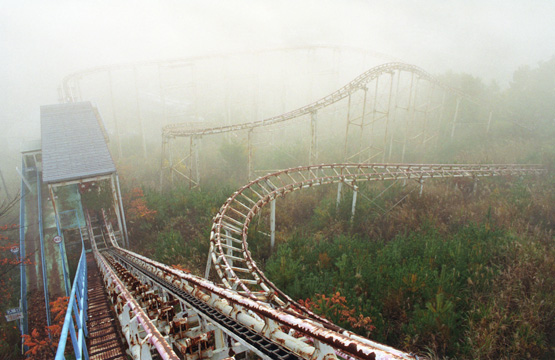
Many authors equate a strong narrative to a roller-coaster, a thrill ride with countless ups and downs, sharp twists in the track and blind drops that keep the participants on the edge of their seats. To a degree this is a strong analogy for the perfectly balanced narrative.

Photo Credit
When participants choose a roller-coaster they have a certain set of preconceived notions about the experience and the expectations of what will be experienced. Presentation is at the foremost, the coaster typically has a theme be it horror, adventure or even action heroes. This establishes the tone for the ride and gives participants a set of emotions to expect. This then leads to the actual ride, the anticipation of the excitement, the suspense as the the coaster climbs each rise in the track, the fear as the drops are perceived, the excitement of the pacing and ultimate satisfaction from the whole experience.

Any narrative composition, even life, can be easily compared to a thrill ride like a roller-coaster but while this is sufficient in most cases it's not entirely accurate.

The reality of a carnival ride like a roller-coaster is that the participant is aware of what's in store for them. The track is easily visible, like a reader selecting a specific genre but in all instances, the strongest compositions emulate life. This is where the carnival ride diverges greatly from the single track roller-coaster ride.

Where a narrative does follow a path it is not a singular track bound for conclusion. A narrative, as life, is predicated on following choice and consequence. A singular choice may cause the track to drop from under your feet or climb to great heights. When characters in a narrative are subject to their own choices and the consequences of those choices, the audience can better relate than if it was an on-rails ride.

The individuals in a narrative are not merely characters designed to support the main attraction like props on a roller-coaster ride to add atmosphere. Ever individual is a product of their choices and the more that these connections are explored, the more the audience becomes invested in the composition. A strong narrative, like life, is not a restrictive roller-coaster but a full carnival of thrills. Every path is hidden,every ride, adventure and event concealed until the appropriate choices are made.


“Writing is not life, but I think that sometimes it can be a way back to life.” 
― Stephen King, On Writing

Wednesday, February 1, 2012

Intriguing Observations: How Choreography Helps a Scene

The Intriguing Observations series was created to gather some of the greatest supporters and bloggers to provide their own insight on all things creative both in their ventures and their techniques. This week on the guest series is another all-star supporter and an outstanding wordsmith Jill Kemerer.


~~~~~~~~~~~~


Each October I spend hours choreographing a dance routine for our school’s cheerleading squad. First, I select fast-paced, appropriate music—no suggestive lyrics or cursing—then I think of possible sequences, often searching YouTube for new-to-me dance moves.

The real choreography doesn't begin until I throw on my yoga pants and practice performing eight counts. It’s a fun but arduous process of repeating moves until they’re memorized and then deciding which order to put them in. Often, I have to throw out entire eight counts for being too difficult, too fast, or too confusing. When I have the routine finished, I rehearse it often to keep it fresh until practices begin in December.

Photo Credit
As a fiction writer, I incorporate choreography in every scene. If you’re a writer, you do too, but you might not have realized it. First, we select the location of the scene the same way I select music for a dance. It must be the appropriate locale for the season—we wouldn’t put our characters on a sunny beach during a Canadian winter—and it should be a venue where our characters would logically appear.

After we’ve determined the setting, we have to figure out how to start the scene, who is in the scene, and what the viewpoint character wants to accomplish. The real choreography doesn’t begin until we open up our manuscript and start writing. I don’t believe I’ve ever written a scene where the characters didn’t move. Even if the scene is mostly in one character’s head, movement should occur. Maybe she stomps to the kitchen in frustration as she tries to figure out who sabotaged her project? Or he tries to ignore his problems by flipping through the television stations at the speed of light?

When there are several characters in a scene, the choreography gets trickier. We have to clarify who speaks, responds, and walks away when the scene is crowded or we risk losing the reader.

If you, like me, overuse gestures from scene to scene, choreography can help. Visualize the interaction between characters and strive to find the unique actions they take. If nothing new comes to mind, picture them moving within the scene.

Try to provide tension and conflict even in their actions. Let’s say your characters have reluctantly paired to solve a crime. Maybe one shuffles slowly through life and takes the time to notice little details, while the other has a goal and won’t be distracted by anything. You could show their personality traits by setting the scene in a store and having one striding to the counter to question the clerk while the other picks up merchandise and examines walls, prices, even the other customers. The dialogue will remain the same, but the little actions tell a reader much more than their words ever could.

In many ways, our characters’ interaction is a dance. We simply choreograph their movement on each page and throughout the story.

How do you choreograph your characters’ actions in a scene?


Jill Kemerer writes inspirational romance novels. Coffee fuels her mornings; chocolate, her afternoons. A former electrical engineer, she now enjoys a healthy addiction to magazines, fluffy animals, and her hilarious family. She is a member of ACFW and RWA and also serves as vice-president of MVRWA. Jill is represented by Rachel Kent of Books & Such Literary Agency.

To learn more about Jill, head to her website, www.jillkemerer.com, stop by her blog, http://jillkemerer.blogspot.com, be friends with her on Facebook (http://www.facebook.com/AuthorJillKemerer), and follow her on Twitter (http://twitter.com/#!/jillkemerer).


Wednesday, January 25, 2012

Intriguing Observations: Art In Writing


When this blog was first launched early last year, there were concerns about subject matter and finding an audience that would be interested in these ramblings. Over time, topics became more creative and more distinct, focusing on not just writing but all creative aspects. On the anniversary of the initial launch it only felt appropriate to gather together some of the greatest supporters and bloggers to provide their own Intriguing Observations on creative ventures and techniques.

Kicking off the Intriguing Observations Series this week is an outstanding supporter and wordsmith Amber Keller. 

~~~~~~

When you read a book have you ever felt like you were in a scene? Maybe you could see what the character sees, feel their anxieties or fears, maybe even smell certain scents or hear a particular sound. This is what a writer strives for; to have their audience as lost in and passionate about their work as they are. In order to achieve this, several things must be taken into account.

This is also a way to incorporate art into writing.

Photo Credit
When you write a scene, place yourself in your characters head. What do they see? What do they hear or feel? What would they do? If you start with these questions, many times you can branch off into much deeper details in a natural progression. Like an artist with a canvas, the writer needs to convey emotions and meanings. Give the readers a real, visceral interpretation of the scene so that they can lose themselves in it.

Also much like a potters’ wheel, a writer starts with a crude idea and begins to mold it into the right words and phrases, building elements such as scene, characters, setting and plot. It is a work of passion, of sweat and tears, maybe even literally at times, but one that is not meant to show the work. It needs to seem flawless and fluid. The delicate balance is what we attempt to achieve.

Another way to assimilate art into writing is to use symbolism. This can be in the form of a repeated phrase or item throughout a story. Once the reader sees something repeated, it becomes significant and there will be a meaning bestowed upon it.

One example of a widely known artistic movement is Surrealism. There were works of literature being created at this time that are fundamentally considered a part of this movement. The method was to concentrate on undertones instead of the literal meaning. This can be a powerful tool in a writer’s toolbox.

After all that’s been previously discussed, there is one discernable truth that speaks to the totality. 

Writing itself is an art. 


Amber Keller is writer who delves into dark fiction, particularly horror and suspense/thrillers. Besides having finished two horror novels this past year, she has numerous short stories available on her blog, and is fortunate to be a part of two anthologies. She is a member of the Horror Writers Association and also contributes to various websites and emagazines, including horror and science fiction movie reviews. When not at her laptop, she can be found looking for things that go bump in the night.

Amber's blog ~ Ramblings by Amber
Amber on Twitter ~ akeller9


The newest anthology that was just released is the Night Terrors II anthology and can be found here.


Monday, January 23, 2012

The Perfect Tease

Compelling, Intriguing, Tease…

Any artistic piece is a combination of different elements that are arranged in such a manner as to be compelling to the observer, the audience. Creating a compelling work is more than just the internal elements; the setting, scenes, dialog, pacing even tone of the piece. Making a compelling work is ultimately perfecting the art of the tease.

Every creative work relies on an intriguing presentation to attain the interest of the viewer regardless of the medium.

The primary challenge for any piece is to compress the entirety of the work into a small segment that is both a summary of the piece and an outstanding 'hook' that leaves the viewer with the desire to know more about the work.

Photo Credit
In cinematography, especially the film, this initial hook can be presented as 30 second or 1 minute clip of a work that summarizes the piece, creates tension and makes an exceptionally compelling argument for why the piece should be viewed. Often these promos, or teasers, feature the most dramatic or compelling moments of the overall piece to show a heightened sense of drama and conflict. A secondary approach to the cinematic teaser is to create the compelling nature of the piece by only revealing the unique elements of the work and creating an incomplete picture of the piece.

In these cinematic instances, the teaser is created as an instrument to compel the audience to experience the entirety of the piece. Both approaches rely on the viewer's questioning nature to create sufficient desire to 'fill in the blanks.' Why were the characters fighting/running? What is going on at town/village/office etc.

The differences between narrative teasers and visual teasers are precious few. The primary difference between literature/narrative teasers and visual is that the narrative needs to constantly replicate the sense of the teaser. The cover is the first compelling teaser, combining the most dramatic elements of the piece into a visual representation that serves to intrigue and compel interest.  The synopsis is the second teaser, compressing the entire piece into a few lines that serve to outline the story and leave the observer with the desire to 'fill in the blanks.'

Moving into the actual narrative, the first line that is affectionately known as a 'hook' is the teaser. A highly effective line that serves to pique interest in the piece. The first paragraph, page and even chapter become the more complex teasers that allude to the overall narrative and hint at the direction of the piece. Subsequently, each introductory line in a chapter and exit line serve as teasers to compel interest. This is where perfecting Macro-composition can assist greatly.

Outside of the primary narrative, teasers are constructed in animated gifs, book-trailers and even ad text that are designed to highlight aspects of the work while remaining true to the overall piece.

No matter the medium, all creative works rely on being the perfect tease. Creating that perfect tease is an ever evolving process and what worked previously may no longer be acceptable or effective. The audience is constantly evolving and so too does the art of the tease.

Monday, January 16, 2012

Abstracting Speed and Clarity

Expressing the focus of a composition is a delicate balance between the primary subject and surrounding details of the piece.

The balancing of primary subject and supporting details is most readily apparent in visual compositions from mediums such as photography and cinematography. The speed of the composition determines the clarity of the overall composition.

In photography and subsequently cinematography, the film speed determines a number of components within a given composition. Most prominently the speed determines the level of detail and clarity of the the piece. The restriction of adjusting the speed at which a composition is captured is that as the speed increases to capture fast subjects with more clarity, the more detail is sacrificed.

Photo Credit
Film, as well as digital, requires larger film grains to capture at faster speeds. As the film speed is increased, the grains become noticeably larger and affect the level of detail capable in the image. While faster speed allows for capturing a subject with more stability the faster the subject, the faster speed required to capture it.

The concept of speed and clarity is just as visible in a narrative composition as it is in the visual arts. As the speed of the composition increases, the subject becomes clearer as the focus but the level of detail is reduced as the speed - pacing is increased.

In a narrative the descriptors, dialog tags and even breaks either page or chapter are the equivalent 'film grain' in the piece. Increasing the pace of the narrative makes these elements seem larger and even distorted compared to the piece. The primary subject becomes even clearer but the surrounding details begin to lose detail to keep that pace. While reducing the speed of the piece too much can make the overall composition seem unfocused.

Every composition is a delicate balance of speed and clarity. Increasing the details reduces the focus of the primary subject and slows the pace. Likewise, too little detail yields a fast-paced blur of a composition.


Tuesday, December 6, 2011

Abstracting Layers

Depth, Dimension, Layers…

As a narrative piece is composed, one of the difficulties of framing a specific point as the subject of the narrative is establishing the sense of depth in the composition.

Often a visual composition will rely on layering to add a sense of depth and even time to the piece. A narrative composition can quite frequently utilize similar techniques to bring that composition into greater focus, bring it to life.

Adding depth to a narrative is achieved through layering interaction dynamics and narrative history.

Photo Credit
Interaction dynamics are the implied and explored relationships within the narrative. These can be the relationships between subjects or between subjects and setting. Implied relationships are not overt reactions between subjects but the secondary inferred relationships. In a visual sense the subjects would be juxtaposed to demonstrate hidden emotions or draw tension. These are quite common in romantic narratives as two subjects awkwardly avoid interactions.

The explored relationships are overt dynamics, emotions and interactions are direct. Visually there are direct correlations between subjects or subjects and setting. These can be further layered with different levels of emotions, interactions and relationships. All of these are typically the make new friends, adversaries and love interests subject interactions.

The interaction dynamics of both implied and explored relationships add layers to the composition, provide a sense of depth to the interactions.

A visual composition can frequently capture a still moment in time, but it can also appear flat and superficial. While in a narrative it is possible to convey a linear progression of time, like a visual composition it can also appear flat and superficial.

Through narrative history it is possible to layer a composition with additional depth and dimension. The composition demonstrates a history for the subjects through details of worn settings, memories of previous events and relationships built on events not within the composition.

As any visual composition becomes more interesting with layers of interaction dynamics and narrative history so to does a narrative composition. The flat one-dimensional take on a narrative timeline or strictly overt interactions leaves a flat, superficial image. Adding layers of interactions, history and detail together brings the piece to life.

Monday, November 21, 2011

Filtered Perspectives

Perceptions, Tones, Filters…

A writer's challenge in crafting a narrative is conveying the piece they envision to an audience that has no concept of the piece. The creator has to balance the elements of the piece, the settings, characters, thrills and the visual elements that can affect the perceptions of the piece.

Even as a piece is painstakingly balanced between the elements, it still may not convey the vision that the creator desires. It may not have the appropriate tone or saturation.

Conveying the appropriate tone for a piece can often be the most challenging due in-part to the preconceptions that audiences carry. Every individual has differing experiences and most often what one person perceives is not what another understands.

Ex. "She let out a sigh and leaned against the damp brick wall. Somewhere down the alley she could hear the rats fighting."    

Photo Credit
The setting in this example may convey a gritty and dark tone to some, to others that have lived or experienced this type of setting only conveys a night-time city neighborhood. The piece fails to utilize the preconceptions and carry the appropriate tone.

Drawing the appropriate saturation for an audience can be an equally strong challenge. The saturation of a piece is dependent on how long the audience is exposed to a setting or scene. Certain individuals will require longer time in the scenes to reach the appropriate saturation levels to convey the envisioned composition.

Adjusting the tone and saturation of a composition is similar to the visual arts. In photography and cinematography, when all of the elements are drawn together and the composition is still not what was envisioned, the artist typically applies filters to create the vision. Red filters to 'warm' a composition, 'blue' to cool and still more to affect the saturation levels in the piece. The more the light is controlled through filters, the more artists are able to control the audience's perceptions of the piece.

In a narrative it is possible to control tone and saturation through this same 'filter' concept. Adjusting tone is possible through filtering the narrator's perception. Expanding on the previous example with a 'filter' it is possible to ensure that the right tone is conveyed.

Ex. "She let out a sigh and leaned against the damp brick wall. It was hard to believe it had come to this. Somewhere down the alley she heard the footsteps over the fighting rats."


Through filtering the narrator's perspective it is possible to adjust the tone to a perceptible level. Extending the scene through a few slight details fully saturates the audience. Attaining the envisioned composition is not only an assemblage of the right elements but often the right application of filtered words.

Tuesday, November 15, 2011

A Sound Design

Any narrative composition is an assemblage of elements from the relationships between characters and their interactions, to subtle details like lighting, depth of field and narrative angles that are all designed to control the audience's perceptions of the piece.

In cinematography, a primary element that is necessary to unify a composition is sound. Whether it's the audio levels for a given scene, the subtle use of background noise or even music, audio creates the gestalt composition.

Controlling the audio levels in cinematography, while challenging, also yields the most dynamic results and brings the composition to life for the audience.

Photo Credit
Audio levels typically consist of two subset levels and four operating levels. The two subsets consist of the dynamic range, the full range of sound in a given recording; and the operating range, the actual range of recording. Within these subset levels are the operating levels; the Noise floor, the Reference level, Headroom and Maximum output.

The Noise Floor, also known as the background noise, is most responsible for creating a unifying tie between scenes even when the scenes take place in dramatically different settings. Most often a cinematographer will create a steady white-noise that they can underly to subtly tie together all of the scenes in a piece.

The Reference Level quite frequently is the 'talking volume' in a piece. This is subject to the direction that the sound is coming from in regards to the input. Individuals talking in frame or background music that alter from scene to scene. This is the primary level for action and interaction with the main composition.

The Headroom and Maximum Output levels are typically only utilized for 'peaking,' that is, the times when the music will swell or a particular noise will be emphasized over the previous sounds. A number of compositions utilize this to great effect for startling the audience.

A narrative composition utilizes sound design just as well as any cinematography effort. While the cinematographer needs to rely on the actual sounds and levels of their work, the writer has infinitely more control over the sound but has a greater challenge. Every narrative setting has audio levels that can be subtly used to create the desired effect and control the audience's perceptions of the scene.

 Ex. She paced along the walkway under the warm glow of the park's lights. She needed answers and he was going to be the first step.


In the narrative, the sound design is not always overt and quite frequently the audio is dependent on the audience's preconceptions of the scene. While it is not overtly described in this scene the audio levels are inferred. The sound levels are very low with footsteps on the wooden walkway and a quiet undercurrent of nocturnal sounds from the park. While the implied sounds are adequate the audio does not utilize the full operating levels for the scene. The composition feels incomplete.

Ex. She paced along the ocean walkway under the warm glow of the park's lights. She needed answers and he was going to be the first step. The winds picked up, rustling the bushes and carrying small bits of litter across the grass.


The additional details not only add to the visual composition but also succeed in generating full operating levels for the composition. The Noise Floor is filled with subtle shifts between the ocean and winds. The Reference level is filled with footsteps on the walkway while the Headroom Level is filled with swelling winds and rustling bushes.

Just as in Cinematography compositions, a Narrative composition relies heavily on sound design to control the perceptions of a scene. Understanding and utilizing the audio levels to great effect can be the difference between an average scene and a dramatic scene that influences the audience. Sound is integral creating the optimal composition, world building that immerses the viewer.

Tuesday, October 18, 2011

Establishing Perspective

In any composition there are a core set of elements needed to create the composition and each element can be adjusted to reflect the desired effect on the entirety of the piece.

The composition can be adjusted through the subtle shifts to subjects, lighting, settings and especially focal points. A shift in perspective can change the entire composition. In most narratives perspective is long-regarded as first person, second and third person in reference to the narrative perspective.

The narrative perspective is actually the 'narrators perspective' and not necessarily the visual perspective for a scene. In the visual arts the concept of a perspective is defined as the relationship between objects within a composition.  Simply put, a three-dimensional scene is compressed to a two-dimensional depiction of that scene but through the illusion of perspective it is possible to convey a three-dimensional scene.

Photo Credit
Taking the concept of the visual perspective and applying it to the narrative composition allows for similar control of a scene through different visual perspectives.

The Linear Perspective is the most common perspective for most narrative scenes. As objects and details are perceived further from the focal point, the fewer details are visible and smaller the objects are perceived to be in relation. The narrator's perspective as an individual is subject to a visual perspective within the environment.

Most instances of visual perspective in a narrative are subject to the subconscious Rectilinear Perspective through interpretation. This means that what is actually straight in the scene is perceived as straight. The perceptions of objects and subjects in a scene will shift however depending on the visual perspective. Illusions like overlap, dwindling size and volume will influence the perceiver within the scene.

When perceiving the perspective of a scene it is important to understand how visual perspective works. Through the eyes of a character, the objects and subjects in a scene can be unintentionally deceptive. Controlling the specifics of the perspective can provide a narrative with a stronger connection for the audience and more opportunities to affect the atmosphere of each scene in the composition.

Tuesday, October 11, 2011

Abstracting Exposure

Exposure, Bracketing, Compensation….

In the visual arts, particularly photography, the exposure of a composition determines the amount of detail and contrast in that composition. Traditionally, the longer the exposure the more detail and darker the overall composition.

The concept of exposure is not limited to the visual arts, a narrative composition is subject to the same rules of exposure as any medium. The longer the reader is exposed to a composition the more details are clear to them but if they are exposed to the same scene for too long it may all blend together (Over-Exposed). The same is also true if the exposure is too short. There will be too few details (Under-Exposed).

In order to achieve the Optimal Exposure the perfect balance between light and shadow, detail in the composition, it is necessary to sample the right saturation for each scene. The optimal exposure is, of course, the right exposure that achieves the desired effect. This approach may be entirely subjective however, there is a 'correct exposure' for every scene.

Photo Credit
Obtaining the correct exposure is a balancing act in any composition, obtaining the right level of detail while obtaining the desired effect. This can be achieved through a process called Bracketing. In a visual medium this process entails adjusting the exposure to increase and decrease the exposure and ultimately taking the best of the series. Through a narrative, the process of bracketing is a bit more complex but ultimately has the same results and centers on controlling the exposure in the scene.

Controlling the exposure in a narrative can be achieved through a few specific elements, the lighting, depth of field and speed of the composition. The most important concept to consider in the process is Reciprocity. This is a simple principle that states that the longer the exposure, the reciprocally smaller aperture required. In a narrative sense this means the longer the scene the fewer details of the scene and more focus on the subject. As each change in exposure adjusts the overall composition it creates a different exposure for the reader. Through reviewing each exposure it is possible to create the optimal exposure for the scene, the perfect balance of details and focus.

A different means of bracketing the exposure in a narrative scene is to use scenes of differing exposures to bracket the selected scene. Use a slightly darker scene before the darkest scene and a slightly lighter scene leading away from that scene to achieve an exposure balance.

To prevent an over exposure in a composition it may be necessary to provide a means of compensation for the scene. If the composition is too dark it is possible to compensate for this overexposure by adding more light to the scene or just an additional lighting source. The narrative composition can find compensation in added details, lighting sources and subtle shifts in depth of field that can change the exposure.

Finding the optimal exposure of a composition can be a difficult practice but often creates the best overall compositions whether it is bracketing the composition in a single scene to find the right balance or using the surrounding scenes to bracket a single composition. It is important to recognize when the audience becomes over-exposed and under-exposed to a composition.

Tuesday, September 20, 2011

High Dynamic Composition

In any composition there are a variety of factors that can either detract or enhance the piece. While the depth of field and the subjects of the composition are considered 'fixed' or 'unchangeable,' many elements ranging from contrast to saturation to detail can be altered to enhance the piece.

One of the most important elements of a composition is establishing the appropriate contrast in the piece, contrast of light and shadow, contrast of subjects and contrast of elemental details.

Often, those in the visual arts use a technique called 'bracketing' or 'stepping' to find the right balance in a composition. The technique consists of increasing and decreasing the amount of exposure, or light in the shot to establish different details and find the best result.

Photo Credit
Abstracting this technique to narratives, it is not too dissimilar from establishing revisions to a draft. The draft creates the basic composition with an established depth of field and subjects but does not have the strength of an emotionally draining 'dark' composition or the emotional highs of the 'light' composition. Each step towards the 'darker' or 'lighter' compositions can shift the entirety of the piece but at the same time, finding the right composition can be extremely difficult. Most take each piece of the composition and adjust it individually to suite the piece. This can result in a lengthy and painful process to attain the desired composition.

A very beneficial technique that supplements 'bracketing' in the visual arts is known as High Dynamic Range imaging. This technique involves taking the variations of a composition, the lightest highlights to the darkest shadows and merging them into a solitary composition that will have exceptional contrast and all of the positive elements from each variation.

While revisions can be painful, the concept of taking a single draft and revising it into separate directions, applying a lighter tone so the high points are the brightest, then taking another variation and revising with the intent of taking the dark moments and making them the darkest they can be is very beneficial. The end result of creating separate, bracketed, revised compositions allows the creator to merge all of the strongest elements into one HDR Composition.

How do you revise your work? Do you use an HDR technique or do you adjust the individual elements of the original piece?

Monday, September 12, 2011

Composing Composition

Focal Points, setting, details, composition…

In the visual arts there are a variety of simplistic guides that can help an artist create a strong composition and with enough fore-thought it is actually possible to push the limits of a piece to something that the masses will regard highly.

One of the basic guides for crafting a strong composition in the visual arts that can also be reflected in a compelling narrative is the Rule of Thirds. In the 1783 Sir Joshua Reynolds describes this in unquantified terms as 'the balance of dark and light. This has since been refined as conceptualizing an image by dividing the image into nine equal parts with two horizontal and two vertical lines. The points at which these lines meet are considered the 'power points.'

Photo Credit
Two primary concepts that can be abstracted from this Rule of Thirds are the ideas of 'balancing light and dark' and utilizing 'power points' at equivocal lengths.

In a narrative the balance of light and dark is often more complex than visualizing shadows and highlights. The overall tone of a piece can determine the 'exposure' for the piece but the shadows or 'darkest moments' in the piece will need to be of significant contrast to add sufficient dimension to the work. Eg. If the narrative is filled with deaths then the darkest moments will all appear the same level. The same is true for the highlights of a piece. If all the high points or highlights of a piece are on equal ground then there will be no significant contrast between one moment and the next. When all of the highlights and shadows of a piece are equal then the composition will be a dull neutral gray.

While finding the right balance of light and dark is integral to providing contrast in a piece, it is also necessary to define the 'power points' of the composition. These are the most visually striking focal points or in a narrative, the most thrilling moments of the piece. Together with balancing light and dark, these power points will be the contrasting subjects of the piece. Each of the four selected points and the 'strike line' leading to that point are inherently where the most emphasis is derived for a piece. These highest highlights to the lowest shadows provide the depth and contrast necessary to drive interest in a piece, when the appropriate focal points are selected for the piece at precise intervals the overall composition becomes an interesting piece.

To further enhance the the composition it is necessary to choose the appropriate setting to provide the requisite contrast between the focal points and the subject(s) of the composition. It is also necessary to choose the appropriate depth of field for each composition to emphasize details and enhance the overall composition.

Whether creating a visually striking image or an emotionally striking narrative, the abstracted principles remain the same; contrast and balance for the light and dark of the piece as well as choosing the appropriate subject(s) for the 'power points' and strike lines that lead up to these points.
 

PW Creighton: The Surveillance Report Copyright © 2011 -- Template created by PW Creighton -- Powered by Blogger