Showing posts with label thriller. Show all posts

Wednesday, April 4, 2012

Intriguing Observations: The Illusion of Writing

The Intriguing Observations series was created to gather some of the greatest supporters and bloggers to provide their own insight on all things creative both in their ventures and their techniques. This week on the guest series is another all-star supporter and an outstanding wordsmith Michele Shaw.

People love a puzzle. One of my favorite types of puzzles to solve is the optical illusion. I especially like the ones which use words. (Go figure) For fun, go here and try these. When you look at the words, there are two different ways to see them.

When writing fiction (and especially with thriller/suspense/crime novels), we often use a form of this technique. Sometimes it's a red herring. Sometimes it's a real clue, but deeply hidden under cryptic words or a situation that isn't what it seems. We create an illusion to keep the reader interested and asking questions.

Photo Credit
But there are pitfalls that can trip us. Especially when we get wound up in the story as a whole and get, ummmm...confused. (Not that this ever happens to me. *grin*) This can get tricky in a complicated story (*cough* aren't they all?), but there are 4 things I think every writer should avoid when creating their illusions:

1.) Don't get your wording get so convoluted that the reader just says, "Huh?" I try to go for, "Aha! That means something, I must read on to figure it out!" Or, "Ooh. Where is this headed?" Most of the time, simple and to the point is best.

2.) Avoid randomness. Don't stick in some random person, setting, or dialogue that has nothing to do with anything just to throw your reader off track. That's not fair and goes against the idea that each scene does have a purpose, even if that purpose isn't revealed until later.

3.) Don't hold back too much. As author, we hold all the cards and shuffle them as we see fit. But, if we hold back too much in our endeavors to create an illusion, we risk losing the reader. They get tired of waiting and want give up instead of having just enough curiosity to keep them going.

4.) Don't drop story threads. Sometimes our set-up gets so big and bloated that we add too many details which we forget to sew together by the end. Go back and make sure you’ve pulled in and resolved everything. And I mean tight!

I speak from experience with all of these. Guilty as charged and did my time in writer jail. No chocolate. It was brutal. Let’s all agree not to do it anymore. (I’m trying really, really hard.) So, hopefully, if you look for these signs of trouble, you can save time in revision, and create magical illusions with your words.

Please share. Any illusions to offer or other pitfalls you've noticed? I’d love to hear from you.

Michele Shaw writes YA romantic suspense, horror, short stories, and poetry with at least one dog by her side and plenty of candy on hand. She is a member of SCBWI, a fellow of the Midwest Writer’s Workshop, and represented by the amazing Karen Grencik of Red Fox Literary. You can find her on Twitter @veertothewrite or visit her blog at http://micheleshaw.blogspot.com/  

Wednesday, March 28, 2012

Intriguing Observations: Blending Research with Real Life in Writing


The Intriguing Observations series was created to gather some of the greatest supporters and bloggers to provide their own insight on all things creative both in their ventures and their techniques. This week on the guest series is another all-star supporter and an outstanding wordsmith  Donna Galanti.

In writing my paranormal suspense novel A Human Element there were numerous spots I had to pull back and do research to blend the writing with my own experiences.

Ben Fieldstone in A Human Element, finds himself in dire circumstances stationed as a U.S. Navy photographer in Pearl Harbor. I too was stationed in Hawaii as a Navy photographer. I know of the dangers sailors can find themselves in on the island of Oahu if they’re not careful.

I was told not to go to the Pali Lookout alone, a spot far above Honolulu in the Ko’olau Mountains. It is set on cliffs with treacherous falls awaiting those who aren’t careful. Or those who are tossed off…or jump off. It’s known for its moaning, howling winds. People have disappeared up there, they’d say. It’s a haunted place where the ghosts of Hawaiian ancestors are said to roam.

Photo Credit
And rightfully so. It is a historic area that was the site of the bloody, historic Battle of Nu'uanu,
where Kamehameha I conquered the island of Oahu in 1795. This Hawaiian warrior king and his army arrived in hundreds of war canoes at Waikiki Beach. The Oahu warriors were led by Kalanikupule, the ruler of Maui and Oahu. Kamehameha's warriors headed to Nu'uanu Valley to face Kalanikupule's men. The battle was fierce and thousands of Kalanikupule's men were driven over the steep cliffs to their deaths. This fierce tale from history inspired me to set a particular dark scene at this spot for Ben. His battle for his own life.

Check out the amazing views from this spot, including the Old Pali Highway Trail where Ben finds himself taken – and tortured. http://www.portaloha.com/SecretsOfHawaii/PaliLookout.htm

These photos, my own memories, and the violent history of this place re-forced this spot as a key
scene in A Human Element.

When I lived on Oahu I quickly discovered we white folks were called haoles by the natives. I had since forgotten how to pronounce it and found a site that pronounces all the words in the world for you. Here is the correct version of haole: http://www.forvo.com/word/haole/ I figured this would also come in handy during book readings, and I was right.

If you've ever visited Hawaii, you might have heard what sounds like another language but it's still English. Since the 1800's, workers from China, Japan, Korea, the Philippines, and Portugal have come to work the sugar plantations originally run by American missionaries. That mixture of nationalities developed into a common language called Pidgin English.

More than half of Hawaii's one million residents are estimated to speak Pidgin. That's according to two Linguists, Kent Sakoda and Jeff Seigal, who created the Pidgin Grammar Book. Hawaii has a population of a little over one million people. About 600,000 are estimated to speak a form of Creole language specific to Hawaii called Pigdin which is a mixture of Hawaiian, Chinese, Japanese, Filipino, Korean and English.

I drew on my memories of Hawaii and experiences with locals speaking in native Pidgin English and found this reference site of words, definitions, and usage. In A Human Element, Ben frequents Chinatown and has an unfortunate run in with a homosexual prostitute who speaks Pidgin and is called as a “mahu.”
http://www.e-hawaii.com/pidgin/pidgin-english-words-starting-with-m

I also found a site that lists a quick cheat sheet on Hawaiian Pidgin English that helped me in my dialogue. http://www.eyeofhawaii.com/Pidgin/pidgin.htm

Here are three excerpts from A Human Element where the local Pidgin dialect comes into play:

Ben, drunk and beat up, hails a prostitute in Chinatown:

Beat up and with no prospects, he needed to find a 'relaxation parlor' and some company. It didn't take long in Chinatown for him to be approached. 
"Howzit, sailor? You hurt? Need some wahine to take care of you?"
"Maybe . . . you got a back room nearby?"
"Yeah, yeah, sure thing, sailor buggah. Da cute! Pretty gray eyes, too." She mixed in the local Pidgin dialect with English. "I'll wash your handsome face for free." She laughed as he touched his face, remembering the blood. He must be a scary sight. 

Ben is confronted by the prostitute’s pimp:
A massive local stood over him. He looked Samoan.
"You cheat me, stupid sailor boy? Is dat what you want to do?"
"Yeah, that's him, Koko." The transvestite stood next to his moke. His wig now back on,
but askew. He smiled at Ben and put his hands on his hips. He had blood on his face from where
Ben hit him. How could he have ever thought this was a pretty woman?
Ben stood up in a torpid daze and shook his head.
Before he could speak the giant grabbed his shirt and glared at him. "You see my girl
here? You ruin her pretty face so she can't make tricks and I'll kill you. She's my money-making
mahu.”

Ben is kidnapped and held at the Pali Lookout by two Samoans:

"I'll pay whatever you want," Ben said. "Just let me go now." His body ached everywhere
but he could think again.
"Don't give me your stink eye, boy." Koko slapped his head again. Ben turned his face
away. One of them pulled his head up by his hair and slapped duct tape on his mouth. Ben
quivered.
"Got chicken skin there, eh?" Koko caressed his arms. "No one will hear you scream up
here. This is a haunted place. Your screams carry away on the wind, right, Kami?"
"Right, brah. People too scared to come up here at night with the ghosts of our ancestors
roaming about."

In learning the local dialect I also had to reacquaint myself with the logistics of the island of Oahu. This involved looking at online maps and researching the history of the locales used. I poured through articles and statistics to choose the best pieces to incorporate in A Human Element.

How do you blend research with your own experiences?

About A HUMAN ELEMENT:

One by one, Laura Armstrong’s friends and adoptive family members are being murdered, and despite her unique healing powers, she can do nothing to stop it. The savage killer haunts her dreams, tormenting her with the promise that she is next.

Determined to find the killer, she follows her visions to the site of a crashed meteorite–her hometown. There, she meets Ben Fieldstone, who seeks answers about his parents’ death the night the meteorite struck. In a race to stop a mad man, they unravel a frightening secret that binds them together. But the killer’s desire to destroy Laura face-to-face leads to a showdown that puts Laura and Ben’s emotional relationship and Laura’s pure spirit to the test.

With the killer closing in, Laura discovers her destiny is linked to his and she has two choices–
redeem him or kill him.

Readers who devour paranormal books with a smidge of horror and steam will enjoy A HUMAN ELEMENT, the new novel about loss, redemption, and love.


Reviewers are saying…“A HUMAN ELEMENT is an elegant and haunting first novel. Unrelenting, devious but full of heart. Highly recommended.” –Jonathan Maberry, New York Times best-selling author of ASSASSIN’S CODE and DEAD OF NIGHT


“A HUMAN ELEMENT is a haunting look at what it means to be human. It’s a suspenseful ride through life and love…and death, with a killer so evil you can’t help but be afraid. An excellent read.” –Janice Gable Bashman, author of WANTED UNDEAD OR ALIVE, nominated for a Bram Stoker Award.

Donna Galanti is the author of the dark novel A Human Element (Echelon Press). She won first place for Words on the Wall Fiction at the 2011 Philadelphia Writer’s Conference. Donna has a B.A. in English and a background in marketing. She is a member of International Thriller Writers, The Greater Lehigh Valley Writers Group and Pennwriters. She lives with her family in an old farmhouse in PA with lots of nooks, fireplaces, and stinkbugs. Visit her at: www.donnagalanti.com

LIKE Donna’s Author Facebook page for news and updates! Her tour runs through April 11thh with book giveaways, more guest posts, and interview fun, and a chance to win the big prize giveaway! So pop over to her blog to see the full tour schedule.

Connect with Donna here:
Twitter: https://twitter.com/#!/DonnaGalanti
Facebook: http://www.facebook.com/DonnaGalantiAuthor
Blog: http://blog.donnagalanti.com/wp/

Purchase A HUMAN ELEMENT:
Amazon  Barnes & Noble Smashwords

Monday, February 20, 2012

Carnival of Thrills

Every composition is its own thriller, a unique and compelling ride that provides the necessary suspense, excitement and satisfaction to compel the audience to the conclusion.

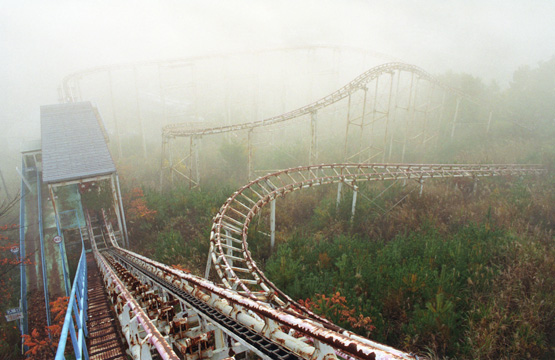
Many authors equate a strong narrative to a roller-coaster, a thrill ride with countless ups and downs, sharp twists in the track and blind drops that keep the participants on the edge of their seats. To a degree this is a strong analogy for the perfectly balanced narrative.

Photo Credit
When participants choose a roller-coaster they have a certain set of preconceived notions about the experience and the expectations of what will be experienced. Presentation is at the foremost, the coaster typically has a theme be it horror, adventure or even action heroes. This establishes the tone for the ride and gives participants a set of emotions to expect. This then leads to the actual ride, the anticipation of the excitement, the suspense as the the coaster climbs each rise in the track, the fear as the drops are perceived, the excitement of the pacing and ultimate satisfaction from the whole experience.

Any narrative composition, even life, can be easily compared to a thrill ride like a roller-coaster but while this is sufficient in most cases it's not entirely accurate.

The reality of a carnival ride like a roller-coaster is that the participant is aware of what's in store for them. The track is easily visible, like a reader selecting a specific genre but in all instances, the strongest compositions emulate life. This is where the carnival ride diverges greatly from the single track roller-coaster ride.

Where a narrative does follow a path it is not a singular track bound for conclusion. A narrative, as life, is predicated on following choice and consequence. A singular choice may cause the track to drop from under your feet or climb to great heights. When characters in a narrative are subject to their own choices and the consequences of those choices, the audience can better relate than if it was an on-rails ride.

The individuals in a narrative are not merely characters designed to support the main attraction like props on a roller-coaster ride to add atmosphere. Ever individual is a product of their choices and the more that these connections are explored, the more the audience becomes invested in the composition. A strong narrative, like life, is not a restrictive roller-coaster but a full carnival of thrills. Every path is hidden,every ride, adventure and event concealed until the appropriate choices are made.


“Writing is not life, but I think that sometimes it can be a way back to life.” 
― Stephen King, On Writing

Tuesday, December 20, 2011

That Holiday Feeling

Ferias Ex Machina….

As Christmas is only a few days away now traditional Holiday themes are inundating all narratives on all mediums but why?

In a traditional narrative whether it is still, sculpted, cinemagraphic or literary a composition is orchestrated in such a way as to draw the viewers into the piece. There is a level of intrigue as the thrill of uncertainty keeps the rapt attention of the audience. This is not the case for many 'Holiday' narratives.

Photo Credit
The majority of 'Holiday' narratives are composed with layers of positive themes; selflessness, family, change of heart, unconditional love and other similar themes.

While many narratives can utilize similar themes, Holiday compositions typically feature these themes at a relative superficial level. The dramatic twists and turns that otherwise would create a thrilling piece are sedate compared to traditional narratives. These narratives often rely on the Ferias Ex Machina. 


Ferias Ex Machina or "Holiday out of the machine" is where a seemingly unsolvable/inextricable problem is suddenly and abruptly solved with the contrived and unexpected intervention of some new event, character, ability or object particularly in a 'Holiday' composition. These are where the characters will have a revelation, change of heart, a random bystander offers help because it is the season, etc.

In a traditional narrative composition, if the Ex Machina approach is used it makes for a superficial or failed piece by modern standards. So how is it acceptable for Holiday compositions?

Many narratives span extensive time periods either within the singular narrative or within a series and inevitably draw on the 'Holiday' themes. Much like a straightforward Holiday composition, the narratives fall to the same superficial level of device yet, since it is 'Holiday' themed it is generally accepted by the audience despite the Ferias Ex Machina approach.

What do you think? Is Ferias Ex Machina a suitable device for a holiday narrative or should a piece strive to be more than a 'Holiday' composition?

Merry Christmas….

Monday, September 12, 2011

Composing Composition

Focal Points, setting, details, composition…

In the visual arts there are a variety of simplistic guides that can help an artist create a strong composition and with enough fore-thought it is actually possible to push the limits of a piece to something that the masses will regard highly.

One of the basic guides for crafting a strong composition in the visual arts that can also be reflected in a compelling narrative is the Rule of Thirds. In the 1783 Sir Joshua Reynolds describes this in unquantified terms as 'the balance of dark and light. This has since been refined as conceptualizing an image by dividing the image into nine equal parts with two horizontal and two vertical lines. The points at which these lines meet are considered the 'power points.'

Photo Credit
Two primary concepts that can be abstracted from this Rule of Thirds are the ideas of 'balancing light and dark' and utilizing 'power points' at equivocal lengths.

In a narrative the balance of light and dark is often more complex than visualizing shadows and highlights. The overall tone of a piece can determine the 'exposure' for the piece but the shadows or 'darkest moments' in the piece will need to be of significant contrast to add sufficient dimension to the work. Eg. If the narrative is filled with deaths then the darkest moments will all appear the same level. The same is true for the highlights of a piece. If all the high points or highlights of a piece are on equal ground then there will be no significant contrast between one moment and the next. When all of the highlights and shadows of a piece are equal then the composition will be a dull neutral gray.

While finding the right balance of light and dark is integral to providing contrast in a piece, it is also necessary to define the 'power points' of the composition. These are the most visually striking focal points or in a narrative, the most thrilling moments of the piece. Together with balancing light and dark, these power points will be the contrasting subjects of the piece. Each of the four selected points and the 'strike line' leading to that point are inherently where the most emphasis is derived for a piece. These highest highlights to the lowest shadows provide the depth and contrast necessary to drive interest in a piece, when the appropriate focal points are selected for the piece at precise intervals the overall composition becomes an interesting piece.

To further enhance the the composition it is necessary to choose the appropriate setting to provide the requisite contrast between the focal points and the subject(s) of the composition. It is also necessary to choose the appropriate depth of field for each composition to emphasize details and enhance the overall composition.

Whether creating a visually striking image or an emotionally striking narrative, the abstracted principles remain the same; contrast and balance for the light and dark of the piece as well as choosing the appropriate subject(s) for the 'power points' and strike lines that lead up to these points.

Monday, July 25, 2011

Scaling Syndication

In every narrative work the suspense, tension and excitement work together to craft the perfect thriller, an amazing ride that keeps the audience entranced. Seldom does the creator view their work complete in one ride, almost every writer views the work as but a piece of a larger story.

While motivations for expanding a piece can range from the monetary to an intentional overarching theme or an overarching theme. There are also a multitude of ways to craft a series from the components of their first ride. Less common is developing additional stories based upon secondary characters from the first work and expanding into their own works. Another more frequent method of expanding the ride is to simply apply all of the original elements to another track. Taking the same characters and dropping them into another plot. These methods are quite prevalent in novellas, TV and even most sequels to the original piece. These are not, however, the true foundation for the Epic.

"The first chapter sells the book; the last chapter sells the next book." - Mickey Spillane
Photo Credit
There are a number of components that need to be kept in check when crafting a true series that can expand across multiple rides culminating in one grande experience. The Epic is not only a series but an artfully woven piece that allows each component to stand on it's own as well as hold it's place in the larger narrative. This is analogous to crafting one large ride with such detail that it would be impossible for the audience to find the seams between the pieces.

As every journey begins with a single step, the same is true of the foundation for the series. The first narrative introduces the characters, setting and a problem that can be solved within the confines of the first ride while hinting at a larger arc. This is the same as crafting a 'hook' in the first piece. It draws the audience and leaves them wondering what comes next. The largest issue in crafting this element is maintaining the cohesiveness of the solitary ride. If the first piece ends with a less than satisfying ending to tie-in the next ride it will greatly reduce the chances of having the audience continue on to that next ride. The balance of the Thriller elements needs to be complete.

The subsequent steps in the series behave as the consistent thrilling ride with multiple twists, turns, ups and downs. Each narrative in this greater piece can focus on a multitude of sub-events that help the audience explore the world and characters through various trials. These serve to develop characters and demonstrate their place in the world, each is a complete ride in-of-itself yet they hint at something larger.

The timeline of a series is very fluid and often has been subject to influence from publication. While a piece can be constructed in such a way as to move through periods of time out of internal chronological order the strongest come from a consistent sense of progress. Typically timelines for installments in a series have gaps between those installments varying from months to years. These gaps permit writers to 'refresh' characters and even add additional elements to each new installment. The failure of this pacing is the audience may forget the previous ride and the Epic will lose some of its impact. Some series actually carry the narrative from one to the next with no time in between installments.

An Epic is defined by the over arching plot or theme that the audience needs to experience on a small scale before they finally reach that conclusion at the end of the series. Because the satisfaction of the excitement must match the suspense and tension of the ride, many series focus on a grande-scale world changing event. Like Tolkien's Lord of the Rings series, the characters start on a small-scale adventure and end by changing the world. A great many Urban Fantasy and Thrillers rely on these as the tropes to make an Epic series. Just as many also fail because they do target such world shifting problems that breaks the audience's connection with the ride. Believability falls to the wayside and there is no recovering. Not every Epic needs a world changing event, it can still be as small as changing the world of a single character. In the series Veronica Mars, the entirety of the first plot arc centered on finding the true killer of the main characters' best friend. The arc did not change the world but changed the world for the protagonist. 

Crafting a perfect thrill ride that keeps the audience enraptured can be a challenge to keep that tension and excitement balance. The key to crafting the Epic is scaling. Every component is a cohesive thrill ride set at a given scale that alludes to something that drives the characters. Rapidly shifting scale from one installment to the next can break believability and sever the connection between audience and attraction.

Monday, July 18, 2011

Drawing the Thrills

Fear, Thrills, Excitement…

As with any ride that is artfully crafted, participants are intrigued by the anxiety of not knowing what will happen next. The steady pressure of this anxiety, this fear creates a tension and through it a suspense that drives the narrative forward.

"Monsters are real, and ghosts are real too. They live inside us, and sometimes, they win." - Stephen King


The suspense may drive the piece forward but without a release the characters and audience will be too fatigued by the end of the piece to enjoy the ride. Many seek out thrills to experience that rush, the race of their heartbeat, the fear of the unknown and the feeling of relief that comes once they've overcome that obstacle. It is a psychological need to understand, a fascination with that which they can not comprehend because it is so different from our everyday lives. That fascination stems from a need to find out how much fear the individual can tolerate and ultimately the sense of satisfaction that comes from being able to endure that anxiety.

In a roller-coaster it is the anxiety of not knowing what comes next that makes the ride so appealing but it is the excitement that makes the ride satisfying. The longer the anxiety is permitted to build, the more tension the participants will feel and by extension the greater the satisfaction will be for the release of that tension.

While the tension of a ride may continue to build the conditional stress experienced is still subject to the individual's tolerances for prolonged anxiety. This means that while a ride may layer anxiety and tension to keep applying pressure the individual has physiological tolerances to that stressor. The individual can become exhausted and in terms of a narrative this means they will put the story down. Exciting moments are release points for the tension. If the excitement does not address the current anxiety or tension in any way then it will not serve as a release but another form of tension.

Thrilling moments are derived from an equal balance of anxiety and the satisfaction of that release. Like a roller-coaster, if the ride climbs to an epic height the drop, excitement, should be of equal height unless there is a need to keep partial stress. This can mean a greater satisfaction from the climax of the ride however, it also means greater chances of fatigue along the journey.

Thrills are created by provoking emotional anxiety both for the character and the reader through exploring that which they can not understand. What is it like to have someone close murdered? What is it like the have two people fall in love with the same person? What is it like to catch a criminal? Stop a supernatural horror? People look to experience a thrill, something that they do not experience on a routine basis. To deliver that thrill, it needs to come in equal parts of tension and excitement. If you reduce the tension, the excitement will not have the same impact. If you reduce the excitement, the satisfaction will fade with it. The perfect thrill is one that is built with suspense and has partial releases (pay-offs) until the close.

Romance example: Antoine has a crush on Jayne but she doesn't know he exists. Antoine set about trying to get her attention. (Tension) After a period he finds a means of talking with her. (Partial-Release)  Jayne smiles at him passing in the hall. (Partial-Release) Mean Ex-BF threatens Antoine, they walk away together. (Tension) Antoine confronts EB. (Tension) Jayne admits she's in love with Antoine. (Release)

Supernatural Thriller example: Antoine discovers people are disappearing. Secretly has crush on Jayne. (Tension) Discusses with friends and friends confirm more disappearances. (Tension) Starts working with Jayne to find missing people. (Partial-Release) In-fighting about how to proceed as friends disappear. (Tension) Find clues about disappearances, in-fighting between them due to tension. (Partial-Release, relationship tension) Antoine admits crush to Jayne, interrupted before Jayne can react. (Tension) Antoine saves Jayne form supernatural threat. (Partial-Release- still relationship tension) Together they stop the threat and Jayne admits to being in love with Antoine. (Release) 

Ultimately, if you build too much tension without at least a partial release it is akin to queuing in line for hours to get on a roller-coaster that goes down one dip and dumps you off at the gift shop.

Monday, July 11, 2011

Assigning Stressors

As the narrative roller-coaster unfolds it is not simply the suspense and excitement that drives the piece forward but the tension, the taut emotions that consume both characters and audience

Every piece begins with anticipation, presumptions about events and serves to draw an emotional connection between the audience and the ride. It is that emotional connection that a creator can draw upon to influence perceptions and elevate their work beyond the initial hook.

An audience's connection begins with anticipation as the first conflict is assigned to the character. This is the prominent conflict that is designed to both introduce the audience to the characters and test the characters. Psychology describes this conflict as a stressor and the emotion associated with an unresolved stressor is the foundation of every narrative, Tension. Through the introduction of this unresolved stressor the narrative is compelled forward and providing the connection has been initially been established the audience will be driven to find a resolution for the stressor based upon the General Adaptation Syndrome model.

In the General Adaptation Syndrome model physiologists describe stress as taking place in the three phases of Alarm, Resistance and Exhaustion. In the alarm phase the body will react to initial stressor with adrenaline and commonly the 'fight or flight response.' The Resistance phase takes place under a sustained tension and represents how the individual will either cope or remove the stressor. As the final phase of the GAS model exhaustion takes hold on the subject and the body's systems are compromised. Abstracting this concept to the characters in a story, these stressors can not only develop new conflicts but also represent additional depth to the characters. As the tension continues to mount across time for the characters it can have a profound impact on their behavior.

A story is a taut ride, a thrilling roller-coaster that takes unexpected turns and drops to keep the audience enraptured. The suspense is born of anxiety, a tension that is drawn in such a manner as to keep both the characters and audience moving through the story. Applying different stressors can keep tension high, keep the audience engaged, but as with any stressor, if there is no relief exhaustion can set in and break the piece.

Tuesday, July 5, 2011

Drawing the Paranoia

Suspense, anxiety, fear….

While every story is its' own thriller, a roller-coaster of suspense, tension and excitement it is the writers' ability to wield the elements to enhance the connection between the narrative and the audience that defines the nature of the piece. Through closer examination of these elements it is possible to not only further enhance a piece but also further define the audience of a piece.

"Being prepared for almost anything, he was not, by any means, prepared… for nothing" - Charles Dickens, A Christmas Carol.


Suspense is an imperative to any piece, it defines the need for an audience to continue through a story. It embodies the questions that need answers. Will the character fall in love with the protagonist? Did they do the right thing by buying that house? Who committed the murder? Will they stop the antagonist? These are only a few of the many questions that are crafted for not only the audience but for the characters in a piece to answer. These are the driving force that keeps a piece moving forward but what is the defined use?

The element of suspense is a feeling of uncertainty and strong anxiety about the outcome(s) for certain actions. Most commonly it is utilized in the build-up right before a grand or dramatic moment to enhance the impact of that moment. In a romance it can mean the silence before the love interest responds to the almighty ILY from the protagonist. In a mystery it can be the interrogation of a suspect, while in a thriller it can be a race to stop something from happening. There is more than one way to utilize suspense in a narrative though.

One of the most powerful uses of suspense is not genre specific but it does require an artful use and a delicate balancing act. Suspense can be established and rather than releasing the tension through excitement, the excitement of the piece only serves to further enhance the suspense. In classic horror and thriller fashion it is known as "Nothing is Scarier." In short this trope means that as the suspense builds it is more powerful if the excitement or release moment comes without an actual release. This same device can be utilized in any genre, it is not horror or thriller specific but these are genres that use it openly. In a diametric example, Romance this could mean the protagonist admits the ILY to the interest but before the interest can respond something intervenes. The audience is left with that suspense while something adds an additional layer to the suspense.

There are roughly three variants of this device that are very common to horror and thrillers. These are the classic, full and has been variants. In the classic horror example suspense is built as the audience anticipates something to jump out from the dark and does. This is almost viewed as cliche now and it utilized in almost every horror and thriller. Abstracting this is simply suspense building up to a release point that is inevitable and often expected. The second full variant of this is often the most powerful of the three variants. The suspense is built as the audience anticipates something bad to happen, a monster to jump out of the dark but something intervenes to prevent release point. The audience still anticipates the attack, the monster but it doesn't come. Abstracting this variant we have suspense building to the point of release but the release point never comes. This is a very powerful element for most mystery, thriller and horror narratives. The final is the has been variant and is now quite common in horror stories. Often this is seen horror movies as a character expecting something in the darkness, another character distracts them and then the 'whatsit' attacks. Abstracting this variant suspense is built to the point of release but something intervenes to delay the release point.

Suspense is the key element in a taught story. It is the basis for many thrillers and horror stories but the elements are not exclusive to a single genre. As a writer draws the suspense of their piece it is possible to turn any story into a suspenseful page turner regardless of genre. What are the suspenseful elements of your piece?

Monday, May 16, 2011

Orchestrating the Thriller

Regardless of the chosen direction for a narrative, all works at their core are an amusement ride. An attraction that an audience wants to experience. A thrill.

Every piece contains three primary elements to compose the ride; suspense, tension and excitement. Infusing the elements into the piece in varying amounts can dictate the ultimate direction for the narrative and define its very genre.

A narrative begins with a solitary question. A singular hook that draws the audience in and drives the individuals in the piece forward. In a mystery it is often a crime scene and the question is 'why?' In a thriller it is often the same question, the same 'why?' However, it is also often accompanied by a consistent threat. A 'who's next?' that the audience continually asks. While for a romance or drama it is 'will I find love?' or 'will I ever break from this routine?' This question is imperative, it's the start of the ride.

Once the audience is on the ride it becomes a matter of alternating elements to maintain their interest. Like a roller coaster ride, the more unpredictable the journey the more the audience will be captivated.

In a thriller, the audience is given an event that captures their interest, an event that serves as a form of excitement. These events come in the form of close calls, near-death experiences and quite often fight or chase sequences. The excitement of these events is used sparingly like dramatic drops on a roller-coaster track.

All of the radical drops in a coaster would not matter were it not for the tension that comes from the rise to the top of each or the suspense of not knowing when the drop will occur. In a narrative, the characters are led from one event to the next under intense pressure. Whether it's an investigation or characters clamoring for survival, the pressure keeps the story moving.

While there are only certain elements that can be used to perpetuate the story, there are a multitude of ways that they can be implemented. The intervals between the elements can leave room for unpredictably or a rapid pace that leaves the audience breathless. The elements can even be hidden, revealed only at the last possible second to enhance their impact.

All narratives are inherently thrillers to a degree, the audience is driven forward by the events, the climbs and the drops of the ride. How do you keep the thrills coming?
 

PW Creighton: The Surveillance Report Copyright © 2011 -- Template created by PW Creighton -- Powered by Blogger