Showing posts with label abstraction. Show all posts

Sunday, May 20, 2012

Lost in Development

I'll open this post by saying that this will be the last post on this platform as everything including the Surveillance Report have been migrated to www.pwcreighton.com I would like to thank everyone for their contributions to this blog and continued support. Over the course of the last year this platformed has obtained more than 10,000 unique visitors and over 15,000 page views.


Platform, platform, platform.

As you're first diving into the writing world, you hear a lot about developing your writing for publication and developing your writing platform. There is a lot of discussion about what the first move is towards publication, do you join writing groups or develop your personal brand? While that is more of a personal argument, there is strength in establishing a primary platform after you have cover-art.

When you establish a writing platform, it's not only about creating a medium for your voice, it's about branding yourself and your work. This is where things can get interesting. Personal branding is not only about developing a tone for your work but a distinct style that is identifiable with you. This is the very definition of branding, distinctive style, iconic images and specific tag lines that convey everything that is the brand.

So, when I first launched my platform last year I hoped it would be effective and I had no idea if I would write anything anyone wanted to read or if it would be a representation of my style, my brand. Writing Files and now The Surveillance Report have been very effective both at establishing my voice and presenting my persona, my style and brand. While a blog is essential for any writer's platform, even more essential at challenging your writing skills, it is only a piece of a true platform.

If a blog is the core, the heart of any writer's platform, then the website would be the actual body.

A website presents a unified brand, there are continual updates, video, photo, and easy to use links that tie together all of the author's platform elements. This is where things can now become very confusing. In the past it was as simple as choosing to build a website to represent yourself, today a blog can carry all of the same functions. So, what are the advantages of a website over a blog? Is there even a distinction today? Many websites are actually built using blogging platforms, wordpress, blogger, etc.

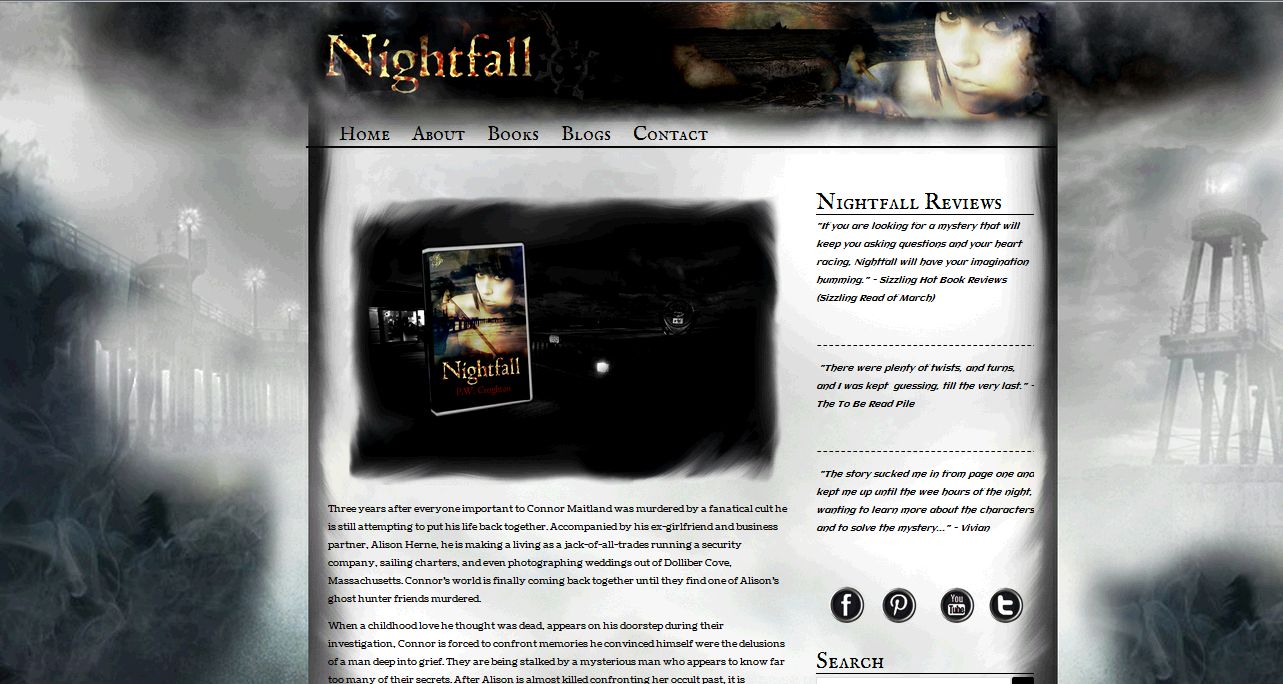
As a designer that can also develop I found myself in quite a bit of a conundrum. I had to pull myself away from writing and editing the sequel to Nightfall just to develop a platform that suited my current needs and answer all of the fundamental requirements by readers. Jody and Roni have great insights here and here.

I started scrounging around looking for inspiration, what should an author site have? What are the essential elements, what do the best author sites have in common? Well, to my dismay as a designer, I was absolutely horrified by what I found. Not only do authors violate branding rules, but also every internet marketing premise when it comes to their websites. I could only find the Huffington Post's article on the top Author websites. It was very telling, even top named authors have atrociously bad websites. It's clear that some of these authors would never make it as fresh-blood today.

So, avoiding the mistakes and aiming for a very savvy site, I wasted an entire week building a website that still didn't turn out the way I had envisioned. It was all too easy to stop and call it done, but as a writer today either just starting out or a fresh-blood author platform and branding are just as integral as the writing that you produce. This first effort cost me two weeks and it was a complete waste of time. I did not want to waste my time any further and I certainly did not want to be another of the authors where you stumble across the site and say "Wow, when was THAT built?"

It was about this time I stumbled across an article by fellow wordsmith Roni Loren that discussed her new website and how she put it together with a new platform. So, I followed her advice and gave this platform called 'squarespace' a chance. I gave it a couple of hours and thought it was terrible, I couldn't get it to do anything I wanted. Then it clicked. After perusing the squarespace boards I could get the site to do anything I wanted it to with a few clicks.

I devoted a couple hours to designing the site and with only a bit of fussing I had the entire site built and not one but two blogs constructed (including pulling in all of the Surveillance Report and comments). It was clean, modern and matches all of the needs. While it's not revolutionary in layout or styling, I love the look of it and it is me. It was completed in just a few short hours and now I'm back on track.

-Side note - Particularly proud of the design with the headers. -

 So what is the takeaway? Well, if you're a writer then you need something that defines and presents your brand but you also need something that won't hurt your writing time. Writers are some of the best individuals, and the last thing anyone wants is to hear laughter because of their heinously bad website. A website is the very structure of a writing platform it needs to be built well and it needs to cater to a host of needs including your blog.

In short, writers have precious little time. While you might be able to build, design and orchestrate a platform from scratch, it doesn't mean that you should.

Join me on my new platform www.pwcreighton.com and remember to subscribe to the new Surveillance Report there. :-)

Wednesday, April 18, 2012

A Titanic Story

"I think that it was definitely a goal of Titanic to integrate a very personal, very emotional, and very intimate [story]... something that has a profound impact on your imagination..." - James Cameron

Photo Credit
In today's industry where publishers, Hollywood, music and even game developers are constantly in a race to 'remake' previous works or produce ones that are so similar to what has already been successful that they couldn't make it in the witness protection program, one wonders how it is possible to make something significant.

I recently had the pleasure to see the re-release of James Cameron epic as Titanic 3D. While I had seen pieces of this behemoth before, I never really saw it from beginning to end nor had I ever looked at this in terms of story. After watching I can only marvel at the culmination of elements that conspired to make it a true modern 'epic.'

Examining the story it seems to be a very simple romance. The boy from the wrong side of the tracks, the rich socialite that wants to escape her confining life, the jealous bad-guy fiancé and the helpful friends. On paper this sounds rather mundane, it very well sounds like almost any other romantic story in existence. So, where does this story become an epic?

The setting for the story is aboard the ill-fated cruise ship in 1912, this is not an original setting by any stretch of the imagination, There are no fewer than fifty different movies about the ship not counting the hundreds of documentaries. If we look at strictly the literary scene there are thousands and thousands of fictionalized accounts with a large percentage of them as romance stories. While tragic, this setting does not necessarily equate to an 'epic.'

If it's not the overall story or the setting, one might wonder if it's the characters that make this such a significant story. The characters are quite flat overall with a street kid, the socialite cheating fiancée, a controlling millionaire, and countless other rather flat characters. The superficial details to their lives, the personality traits and their interactions do not even pertain to an 'epic story.' Just sampling quotes reveals how dull or predictable most interactions are and how unusual some of the dialogs are.

Are the Events of the story what drives it to epic status? Outside of context you have a poker game, a guy that talks a socialite out of suicide, a dinner where socialites discuss status, a number of conversations about foreshadowing, a 'low-brow' party, a violent outburst from the millionaire towards his fiancée, a drawing session, a romantic moment between the star-crossed lovers, a moment of false imprisonment, survival on the sinking ship, treading water, character death and finally the heart/staircase. Is it the events that make this story epic? If it is the case then the story should be able to be moved to any other setting and have the same results.

Photo Credit
After looking at all of the elements it is abundantly clear at what makes this piece an epic, a story that is still successful 15 years later. It's the emotional punch.

The romantic story feels unique and new because the characters are drawn together in a believable way, reacting in an expected but emotional manner. The characters conveyed the emotions of each event in such a manner that even years after everyone knows the whole plot that people still react emotionally to Jack attempting to escape from the handcuffs or when Rose is slapped. The setting keeps the story together, it makes it a period piece that never feels out of place where technology can give away the age of the piece and pull the audience from it. These emotional punches culminate with the very moment that makes it an epic. Jack's death.

If the story had concluded with Jack and Rose making a new life together it would certainly be a happy ending but it would never even touch epic status. The only plausible ending was to take the one thing that the audience became so attached to throughout the journey, their relationship, and breaking it with something beyond their control. Old Rose's photos and the staircase scene give a sense of completion but also convey immense emotion. Even to this day, the audience can see an image from one of the 'emotional hits' and immediately feel it personally.

So what makes a story an epic? Is it unhappy endings? Is it the story alone? Is it the characters, their lives, the setting or the events? It is a culmination of all of these elements, each element that comes with it's own emotional hit and is then tied together. Creating a Titanic story is not about the individual elements or what they represent but the emotions that they convey.

Monday, April 9, 2012

The Artistic Product

Desire, Appeal, Demand, Art....

In any creative venture there is an element conceptual fulfillment and appeal. Often many choose to define their works as an art. These concepts demonstrate a defined expression and communicate emotion through specific aesthetic criteria, in short works that are of more than ordinary significance.

There are many different mediums that can be termed art, ranging from the standards of painting and sculpture to writing and even film or gaming. The ideal of conveying a concept through a medium in such a way as to be desirable is a fundamental motive for many artists. Through practice, refinement of technique and expression a work can be viewed as art.

While any work can be viewed as a work of art it is undeniably the aesthetic criteria that permits the work to be classified and termed "a work of art" within the medium. The aesthetics of a piece, while entirely subjective, are often representative of the 'high-concepts' that determine the appeal of the piece.

Photo Credit
As with any creative work, the determination of appeal is quite subjective however the broader the appeal the more accepted the piece is overall.

It is the appeal of a piece that many artists seek so that the work is broadly accepted as a work of art without dispute. Many artists are willing to sacrifice for the sake of their work, barely making a living while trying to find 'mainstream success' in their desired field. These Starving Artists epitomize the concept of an artist and are entirely dependent on the demand for their work.

Starving Artists and demand are where a couple of misconceptions enter.

Many writers/artists that are new to the industry often claim that their work is art as a defense to changing their work. As previously discussed, there are components to this that determine viability of their claim and then there is the misconception about the 'Best Seller' author.

The Best Seller author may have made their way into the best selling ranks but it does not mean that they have left 'Starving Artist' status. Most authors work other more permanent jobs because it often takes more than six published works and at least 2 'best sellers' before they can even consider focusing on being an author as their career.

In reality, an artist creates a work that they hope has enough appeal to drive the demand for their work including future works. Successful artists can convey their work with broad appeal but still remain truthful to their original concepts so that it is a work of art. Even starving artists who have sacrificed for their art dream of 'breaking into the business' and having their work desired. This desire effectively makes the work of art a product.

Products rely on marketability to determine success and even art needs an audience to claim success. In the writing industry success is measured in more facets than stars in the sky but claiming a work is art is not a defense against change, it only means that you'll be left by the roadside in an industry of unique artistic products.

Sunday, April 1, 2012

Assembling Art

The argument of art has always been not only a conceptual one but one of personal perception of both the product and the practice used to create that product.

A recent story that has brought into question series endings as well as artistic vision has been the whole Bioware/Mass Effect 3 ending that has managed to go from an industry specific topic to national news and even spurred Forbes to begin analyzing the industry. This is really interesting because it is an argument of artistic expression versus respect for the property for fans.

Photo Credit
Many critics and writers, even myself have dedicated significant time to analyzing writing as an artistic expression, an art form. Through comparisons in perspective, similarities in techniques across mediums including photography, film, sculpture and even performance arts, writing is about the art of creation but is that all?

The primary dispute that critics are using to defend the flawed story of Mass Effect 3 and often what many writers also rely on it the idea that it is art. The story is an art and the creator has full artistic license to craft the work however they see fit but this isn't entirely true.

"Many definitions of art have been proposed by philosophers and others who have characterized art in terms of mimesis, expression, communication of emotion, or other values. During the Romantic period, art came to be seen as "a special faculty of the human mind to be classified with religion and science"-Wiki

When an artist creates their piece of work it is what they envisioned and they are ultimately only constricted by how they perceive their own work. This entire process changes when the artist chooses to share their work with others as a career. The work then needs to become commercially viable.

In every artistic medium there are criteria that need to be addressed for the work to be accepted by enough critics and individuals to be a viable work.

What this means in short, a toddler's crayon drawing may be art to their mother but no one is likely to be buying it for thousands of dollars. In writing terms if someone writes a 200,000 word novel with the grammar of an eight-year-old and refuses to address these issues no one will publish it or want to read it.

For all of the artistic intent every work needs an outlet to be viable. In the writing industry, as in photography and film these are publishers. Publishers set criteria for all works because they have a set target market and prospects for those works already that also establish the work's commercial viability. It's an assurance that any work that they accept will be viable for them. If the artist's work does not meet their criteria then it will not be accepted or they will request it is changed to suit their criteria.

Photo Credit
Many budding writers instinctively dispute the need for changes to their work but the publisher is focusing on what is commercially viable. EVERY work is altered for publication. Some publishers require larger changes and more dramatic alterations to the piece to suit their target while other publishers will only refine the work.

When I was editing Nightfall for my publisher their requirements were fairly simple, no profanity and no trademarks. I had no problem dropping the cursing, it opened up the audience for my work but I found more difficulty with trademarks, mostly giving up car models. In the end it was just a matter of edits.

No matter the medium, if an artist wishes their work to be successful then it should be expected there will be changes that need to be met. If the artist resists the recommendations, then they should also expect the criticisms that come with that choice. While the work may be a piece of art it is also a product. If the customers are not happy with the product while the artist defends their work as art then they should know that they will have fewer customers next time.

While we regard writing as an art form, artistic expression in the finest, we should always be wary of claiming it's our artistic license to make certain choices about our work. If we want to succeed as authors we need to accept the criticisms and make the changes that make our works viable, otherwise it's not a career in writing just more unpublished works in our desk.

Monday, March 26, 2012

Assembling Endings

Every narrative, every story has a beginning, middle and end. Through the author's artistic vision for the piece the reader experiences scripted emotions, perceptions and thoughts as the writer intends but there limitations.

A recent story that has brought into question series endings as well as artistic vision has been the whole Bioware/Mass Effect 3 ending that has managed to go from an industry specific topic to national news and even spurred Forbes to begin analyzing the industry. This is really interesting because it is an argument of artistic expression versus respect for the property for fans.

More on artistic vision next time but for right now we'll focus on the concept of the ending.

Photo Credit
The entertainment industry is no stranger to 'bad endings' in movies, tv and writing. Every person can recall a multitude of narratives that failed due to the writer's choice in crafting the ending.

Examining the concept as a whole there are many stories that can succumb to 'bad endings' but are these part of artistic vision or are these elements subject to change? Regardless of whether it's artistic license or something that is open for debate, there are certain elements that need to be considered.

When an author chooses to convey their vision to others they need to consider the threads of each piece and how they flow.

Each element that is introduced in a narrative be it a character, a detail or an event these become elements, threads, of the story that continue forward throughout the piece. The viewer has a unique perception of the story and while the writer can attempt to foresee what those perceptions will be, it is important to note that the audience may focus on elements that may be insignificant to the writer.

Ex. If the writer introduces an engraved handgun that was given to the main character by a brother in the first couple of chapters, the readers will expect it to come into the story as some point before the close. This may be a detail to the author to create a sense of heritage but to the audience it is unconsciously an element that will play a role. This may come as another detail, it may come as the use of the weapon but there will be an aspect of this 'thread' that will return with implications.

Most 'bad endings' are not a result of leaving too many threads loose but frequently the result of Deus Ex Machina or breaking off the threads rather than tying them off.

Deus Ex Machina literally means - "God Out of the Machine." In short this means where the writer creates a perfect solution to the problems that arise in the story. This perfect solution is generally an unexpected abrupt event, character, ability or object that appears out of nowhere.

In some instances Deus Ex does have it's place for writers but for the audience these instances still feel contrived and cheap.

Breaking off threads usually incorporates Deus Ex for the threads or simply creating ways of eliminating the threads without a sense of closure. A number of series rely on this method when the writer wishes to make radical changes to a series. The writer desires to change the car the main character drives? The writer creates a radical scenario where the old car is eliminated and a new one needs to replaces it.

While this may be an applicable means to make changes in a story or series the primary key to using it effectively is in the pacing. If the threads are broken too quickly it will will appear out of place and once more it will cheapen the experience from the audience's perspective.

The final option for a writer to assemble the ending of a piece is for the writer to actually leave some of the threads untied. This is a common practice for writers to leave openings for sequels or other story opportunities.

This approach is used the most frequently to great effect providing the appropriate threads are tied in the conclusion.

Crafting a narrative is a delicate balancing act. The beginning is constructed in such a fashion to hook an audience and introduce all of the threads but the conclusion is the final moments of the piece. The last thoughts the audience will have of the work and the parting impression that will stay with them. If the conclusion doesn't strike the right chords, tie off the right loose ends in an appropriate fashion, the audience will perceive the entire work with that connotation just like the Mass Effect series.
 

Wednesday, March 14, 2012

Intriguing Adaptations

In any creative composition that desires to convey a narrative, the piece strives to emulate life. Through the emulation it is possible for others to connect with the work.

Individuals that perceive the composition can empathize with others in familiar situations, they can recognize individuals and even understand how narrative thoughts could come together because it is familiar. Establishing relatable elements expands the scope of the piece, changes it into something personal, something that can convey a concept into the very thought process of others.

Photo Credit
Selecting and manipulating elements to make a composition relatable is only one part of a larger challenge, making the piece interesting to an external perspective. Individuals have their own perceptions, preconceived notions that filter any composition.

While establishing the connection with the piece creates a given level of interest, it does not guarantee that the piece will have enough innate interest to keep the viewer engaged.

The most fundamental element of any narrative that grabs an individual's attention and keeps it is adaptation.


Every narrative, every piece is driven by the fundamental concept of human adaptation, individual adaptability. People are naturally drawn to stories because of the innate fascination with observing how other people adapt to situations. Regardless of whether it's how someone would adapt to the death of a loved one, the stress of saving lives, catching a murderer, caring for a child or even switching careers the interest is piqued.

Since most people are unable to experience all the possibilities of human adaptability they are innately drawn to experience these adaptations through others. It doesn't matter if it's called coping, overcoming something or character growth, it is human adaptation and we are always interested. Mixing relatable elements into the piece only assists in emphasizing our interest in that adaptation.

Sunday, March 4, 2012

Establishing Style

Each and every composition is born of a unique idea that the creator desires to convey through their work. The idea, concept and overall composition may be unique; however conveying the distinctiveness of the piece can be one of the more difficult prospects.

Out of the more than 300,000 books published in the US each year, the difference between one composition and another can be as little as character names despite the unique idea that the creator originally had.

Photo Credit
The audience is often drawn to similar works and when one composition is difficult to distinguish from another on premise alone, the unique idea needs a strong means of conveying that distinctiveness. Adjusting tone, setting and specific details can take a composition from similar average work to something iconic.

Examining some of the most iconic media compositions, Burn Notice, MacGyver, Supernatural, X Files, Twin Peaks, The Matrix, TrueBlood, GhostBusters, The Shining, even James Bond it is apparent that each of these compositions established their distinctiveness through tone, setting and the manipulation of character details.

Adjusting the tone of the entire piece not only changes how characters perceive others and elements in the composition but it affects how the piece is perceived through the narrator and ultimately the audience's own perceptions. Changing the setting to something unique or even changing how the setting is perceived can establish a unique aspect that shifts the composition to something iconic. One of the most powerful means of establishing a composition's uniqueness can be through the details of the piece. Does the main characters wear expensive suits? Drive a classic car? Have an obsession with coffee?

When there are millions of different narrative compositions and the audience has a preference for things that are uniquely distinct but remarkably similar to what they are comfortable with, the struggle to be distinct becomes synonymous with Style. Even when the theme or concept is familiar establishing the uniqueness becomes a drive for the distinct style of the work.

Monday, February 20, 2012

Carnival of Thrills

Every composition is its own thriller, a unique and compelling ride that provides the necessary suspense, excitement and satisfaction to compel the audience to the conclusion.

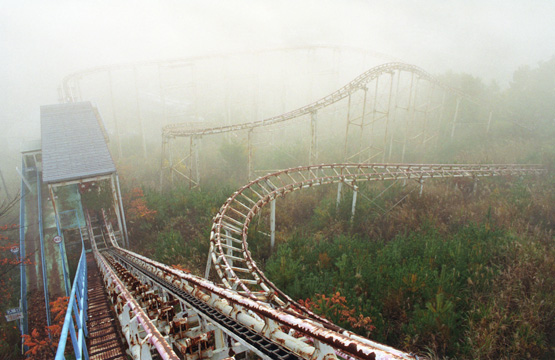
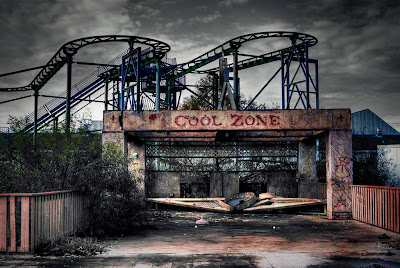
Many authors equate a strong narrative to a roller-coaster, a thrill ride with countless ups and downs, sharp twists in the track and blind drops that keep the participants on the edge of their seats. To a degree this is a strong analogy for the perfectly balanced narrative.

Photo Credit
When participants choose a roller-coaster they have a certain set of preconceived notions about the experience and the expectations of what will be experienced. Presentation is at the foremost, the coaster typically has a theme be it horror, adventure or even action heroes. This establishes the tone for the ride and gives participants a set of emotions to expect. This then leads to the actual ride, the anticipation of the excitement, the suspense as the the coaster climbs each rise in the track, the fear as the drops are perceived, the excitement of the pacing and ultimate satisfaction from the whole experience.

Any narrative composition, even life, can be easily compared to a thrill ride like a roller-coaster but while this is sufficient in most cases it's not entirely accurate.

The reality of a carnival ride like a roller-coaster is that the participant is aware of what's in store for them. The track is easily visible, like a reader selecting a specific genre but in all instances, the strongest compositions emulate life. This is where the carnival ride diverges greatly from the single track roller-coaster ride.

Where a narrative does follow a path it is not a singular track bound for conclusion. A narrative, as life, is predicated on following choice and consequence. A singular choice may cause the track to drop from under your feet or climb to great heights. When characters in a narrative are subject to their own choices and the consequences of those choices, the audience can better relate than if it was an on-rails ride.

The individuals in a narrative are not merely characters designed to support the main attraction like props on a roller-coaster ride to add atmosphere. Ever individual is a product of their choices and the more that these connections are explored, the more the audience becomes invested in the composition. A strong narrative, like life, is not a restrictive roller-coaster but a full carnival of thrills. Every path is hidden,every ride, adventure and event concealed until the appropriate choices are made.


“Writing is not life, but I think that sometimes it can be a way back to life.” 
― Stephen King, On Writing

Tuesday, February 7, 2012

Suspended Perceptions

Any narrative journey is a confluence of events, lives and emotions. It is a carnival ride that the participants are thrown onto and it's up to the gathered crowd to judge the entertainment value of watching participants on the rides.

Like any carnival there are a great variety of rides available and a number of ways that the crowds can experience them. Each can be equated to a narrative avenue and an emotional outlet that is available to experience.

Some individuals prefer to experience the ride first-hand, experiencing all of the emotions, events and the personal interactions along with the participants. In the narrative journey these adventurous individuals would choose a first-person perspective, they want to experience what the participants experience.

Photo Credit
Others prefer to watch participants reactions to the rides, enjoying not being on the ride that is evoking all of the emotions in its participants. Honestly, it can be quite the experience watching the brave climb aboard the Orbiter and then watching them scream in terror as they are hurled about. These observers typically choose the third-person perspective for their narrative journey.

Between the adventurers and the observers the carnival rides offer endless opportunities and countless experiences. Examining these attractions from an outside perspective it is possible to identify the key emotions that each ride is designed to exploit.

Regardless whether it's the Tunnel of Love, a calm ride that brings the participants closer together or  a Tilt-a-whirl that offers non-stop excitement each is an abstracted concept focused on one singular emotion that exploits the behaviors of participants. Every participant boards a ride with their own expectations and perceptions of what the ride will convey to them. In the narrative sense these are all just genres. Just as the participant is aware what each ride is meant to convey, so too is the reader aware of what each genre entails.

Interestingly, despite the cliches and the preconceived notions participants and observers have, they still enjoy the ride.

Wednesday, February 1, 2012

Intriguing Observations: How Choreography Helps a Scene

The Intriguing Observations series was created to gather some of the greatest supporters and bloggers to provide their own insight on all things creative both in their ventures and their techniques. This week on the guest series is another all-star supporter and an outstanding wordsmith Jill Kemerer.


~~~~~~~~~~~~


Each October I spend hours choreographing a dance routine for our school’s cheerleading squad. First, I select fast-paced, appropriate music—no suggestive lyrics or cursing—then I think of possible sequences, often searching YouTube for new-to-me dance moves.

The real choreography doesn't begin until I throw on my yoga pants and practice performing eight counts. It’s a fun but arduous process of repeating moves until they’re memorized and then deciding which order to put them in. Often, I have to throw out entire eight counts for being too difficult, too fast, or too confusing. When I have the routine finished, I rehearse it often to keep it fresh until practices begin in December.

Photo Credit
As a fiction writer, I incorporate choreography in every scene. If you’re a writer, you do too, but you might not have realized it. First, we select the location of the scene the same way I select music for a dance. It must be the appropriate locale for the season—we wouldn’t put our characters on a sunny beach during a Canadian winter—and it should be a venue where our characters would logically appear.

After we’ve determined the setting, we have to figure out how to start the scene, who is in the scene, and what the viewpoint character wants to accomplish. The real choreography doesn’t begin until we open up our manuscript and start writing. I don’t believe I’ve ever written a scene where the characters didn’t move. Even if the scene is mostly in one character’s head, movement should occur. Maybe she stomps to the kitchen in frustration as she tries to figure out who sabotaged her project? Or he tries to ignore his problems by flipping through the television stations at the speed of light?

When there are several characters in a scene, the choreography gets trickier. We have to clarify who speaks, responds, and walks away when the scene is crowded or we risk losing the reader.

If you, like me, overuse gestures from scene to scene, choreography can help. Visualize the interaction between characters and strive to find the unique actions they take. If nothing new comes to mind, picture them moving within the scene.

Try to provide tension and conflict even in their actions. Let’s say your characters have reluctantly paired to solve a crime. Maybe one shuffles slowly through life and takes the time to notice little details, while the other has a goal and won’t be distracted by anything. You could show their personality traits by setting the scene in a store and having one striding to the counter to question the clerk while the other picks up merchandise and examines walls, prices, even the other customers. The dialogue will remain the same, but the little actions tell a reader much more than their words ever could.

In many ways, our characters’ interaction is a dance. We simply choreograph their movement on each page and throughout the story.

How do you choreograph your characters’ actions in a scene?


Jill Kemerer writes inspirational romance novels. Coffee fuels her mornings; chocolate, her afternoons. A former electrical engineer, she now enjoys a healthy addiction to magazines, fluffy animals, and her hilarious family. She is a member of ACFW and RWA and also serves as vice-president of MVRWA. Jill is represented by Rachel Kent of Books & Such Literary Agency.

To learn more about Jill, head to her website, www.jillkemerer.com, stop by her blog, http://jillkemerer.blogspot.com, be friends with her on Facebook (http://www.facebook.com/AuthorJillKemerer), and follow her on Twitter (http://twitter.com/#!/jillkemerer).


Wednesday, January 25, 2012

Intriguing Observations: Art In Writing


When this blog was first launched early last year, there were concerns about subject matter and finding an audience that would be interested in these ramblings. Over time, topics became more creative and more distinct, focusing on not just writing but all creative aspects. On the anniversary of the initial launch it only felt appropriate to gather together some of the greatest supporters and bloggers to provide their own Intriguing Observations on creative ventures and techniques.

Kicking off the Intriguing Observations Series this week is an outstanding supporter and wordsmith Amber Keller

~~~~~~

When you read a book have you ever felt like you were in a scene? Maybe you could see what the character sees, feel their anxieties or fears, maybe even smell certain scents or hear a particular sound. This is what a writer strives for; to have their audience as lost in and passionate about their work as they are. In order to achieve this, several things must be taken into account.

This is also a way to incorporate art into writing.

Photo Credit
When you write a scene, place yourself in your characters head. What do they see? What do they hear or feel? What would they do? If you start with these questions, many times you can branch off into much deeper details in a natural progression. Like an artist with a canvas, the writer needs to convey emotions and meanings. Give the readers a real, visceral interpretation of the scene so that they can lose themselves in it.

Also much like a potters’ wheel, a writer starts with a crude idea and begins to mold it into the right words and phrases, building elements such as scene, characters, setting and plot. It is a work of passion, of sweat and tears, maybe even literally at times, but one that is not meant to show the work. It needs to seem flawless and fluid. The delicate balance is what we attempt to achieve.

Another way to assimilate art into writing is to use symbolism. This can be in the form of a repeated phrase or item throughout a story. Once the reader sees something repeated, it becomes significant and there will be a meaning bestowed upon it.

One example of a widely known artistic movement is Surrealism. There were works of literature being created at this time that are fundamentally considered a part of this movement. The method was to concentrate on undertones instead of the literal meaning. This can be a powerful tool in a writer’s toolbox.

After all that’s been previously discussed, there is one discernable truth that speaks to the totality. 

Writing itself is an art. 


Amber Keller is writer who delves into dark fiction, particularly horror and suspense/thrillers. Besides having finished two horror novels this past year, she has numerous short stories available on her blog, and is fortunate to be a part of two anthologies. She is a member of the Horror Writers Association and also contributes to various websites and emagazines, including horror and science fiction movie reviews. When not at her laptop, she can be found looking for things that go bump in the night.

Amber's blog ~ Ramblings by Amber
Amber on Twitter ~ akeller9


The newest anthology that was just released is the Night Terrors II anthology and can be found here.


Monday, January 23, 2012

The Perfect Tease

Compelling, Intriguing, Tease…

Any artistic piece is a combination of different elements that are arranged in such a manner as to be compelling to the observer, the audience. Creating a compelling work is more than just the internal elements; the setting, scenes, dialog, pacing even tone of the piece. Making a compelling work is ultimately perfecting the art of the tease.

Every creative work relies on an intriguing presentation to attain the interest of the viewer regardless of the medium.

The primary challenge for any piece is to compress the entirety of the work into a small segment that is both a summary of the piece and an outstanding 'hook' that leaves the viewer with the desire to know more about the work.

Photo Credit
In cinematography, especially the film, this initial hook can be presented as 30 second or 1 minute clip of a work that summarizes the piece, creates tension and makes an exceptionally compelling argument for why the piece should be viewed. Often these promos, or teasers, feature the most dramatic or compelling moments of the overall piece to show a heightened sense of drama and conflict. A secondary approach to the cinematic teaser is to create the compelling nature of the piece by only revealing the unique elements of the work and creating an incomplete picture of the piece.

In these cinematic instances, the teaser is created as an instrument to compel the audience to experience the entirety of the piece. Both approaches rely on the viewer's questioning nature to create sufficient desire to 'fill in the blanks.' Why were the characters fighting/running? What is going on at town/village/office etc.

The differences between narrative teasers and visual teasers are precious few. The primary difference between literature/narrative teasers and visual is that the narrative needs to constantly replicate the sense of the teaser. The cover is the first compelling teaser, combining the most dramatic elements of the piece into a visual representation that serves to intrigue and compel interest.  The synopsis is the second teaser, compressing the entire piece into a few lines that serve to outline the story and leave the observer with the desire to 'fill in the blanks.'

Moving into the actual narrative, the first line that is affectionately known as a 'hook' is the teaser. A highly effective line that serves to pique interest in the piece. The first paragraph, page and even chapter become the more complex teasers that allude to the overall narrative and hint at the direction of the piece. Subsequently, each introductory line in a chapter and exit line serve as teasers to compel interest. This is where perfecting Macro-composition can assist greatly.

Outside of the primary narrative, teasers are constructed in animated gifs, book-trailers and even ad text that are designed to highlight aspects of the work while remaining true to the overall piece.

No matter the medium, all creative works rely on being the perfect tease. Creating that perfect tease is an ever evolving process and what worked previously may no longer be acceptable or effective. The audience is constantly evolving and so too does the art of the tease.

Monday, January 16, 2012

Abstracting Speed and Clarity

Expressing the focus of a composition is a delicate balance between the primary subject and surrounding details of the piece.

The balancing of primary subject and supporting details is most readily apparent in visual compositions from mediums such as photography and cinematography. The speed of the composition determines the clarity of the overall composition.

In photography and subsequently cinematography, the film speed determines a number of components within a given composition. Most prominently the speed determines the level of detail and clarity of the the piece. The restriction of adjusting the speed at which a composition is captured is that as the speed increases to capture fast subjects with more clarity, the more detail is sacrificed.

Photo Credit
Film, as well as digital, requires larger film grains to capture at faster speeds. As the film speed is increased, the grains become noticeably larger and affect the level of detail capable in the image. While faster speed allows for capturing a subject with more stability the faster the subject, the faster speed required to capture it.

The concept of speed and clarity is just as visible in a narrative composition as it is in the visual arts. As the speed of the composition increases, the subject becomes clearer as the focus but the level of detail is reduced as the speed - pacing is increased.

In a narrative the descriptors, dialog tags and even breaks either page or chapter are the equivalent 'film grain' in the piece. Increasing the pace of the narrative makes these elements seem larger and even distorted compared to the piece. The primary subject becomes even clearer but the surrounding details begin to lose detail to keep that pace. While reducing the speed of the piece too much can make the overall composition seem unfocused.

Every composition is a delicate balance of speed and clarity. Increasing the details reduces the focus of the primary subject and slows the pace. Likewise, too little detail yields a fast-paced blur of a composition.


Sunday, January 8, 2012

Stabilizing Influence

Dynamic, fluid, compelling...

Any creative composition, especially a narrative, has a dynamic component to it that keeps the audience interested. The more dynamic the piece, the more intriguing it is for the viewer but it can also become a challenge for the composition.

In the visual arts, creating a dynamic composition is a matter of choosing fluid elements and subjects for the piece. The largest difficulty in fluid subjects is in establishing an anchor, applying some stability to keep the composition in clear focus. As much as fluid subjects are compelling to the viewer it is also possible for the composition to lose focus and become distorted, unclear, if the piece lacks some stability.

Photo Credit
Capturing dynamic compositions in the visual arts is a matter of stabilizing how the composition is perceived. Typically this is achieved through tripods and very complicated stabilizing rigs that keep perfect balance. Other elements that are fluid in the piece require equal parts of static elements.

A dynamic narrative composition is very similar to a visual arts composition. The fluid elements of a narrative piece can range from the perceived scene to the very characters within the piece. The combination of elements and unrestricted perceptions in a narrative can allow for dynamics that can become disorienting for an audience. 

Stabilizing the elements of a narrative is similar to stabilizing a visual composition however, additional 'supports' need to be added to the composition. For every dark and bleak setting there needs to be one 'safe' setting. For a calm, collected and methodical character, their partner should be emotional and impulsive. Altering perspective, adjusting pacing, changing settings and adding opposing character personas are just a few means of supports that can stabilize a narrative and help it to maintain focus.

Dynamic and fluid elements are needed in a composition for a viewer to find it compelling however, for every dynamic element within a piece it is necessary to have something to stabilize the composition and balance the elements. maintaining balance allows the audience to perceive the contrast between the static elements and the dynamic, making those elements even more compelling.

Wednesday, December 28, 2011

New Year's Review

As 2011 is coming to a close everyone takes stock of the trials and tribulations, the victories and validations of the year and what all of these have meant to each of us.

At the start of this year I was editing my manuscript and looking to get my series published. Through the conversations of the amazing writing community, I decided it was time to build my 'author platform' starting with a blog. I had never 'blogged' before other than a few contributed articles. I was nervous about finding material, even having a topic others would be interested in reading. I wasn't sure how this was really going to turn out, how it was going to develop and most importantly to me, how this would help with publication.

I started with a few topics that seemed logical to me and started sharing my rambling thoughts out to my friends and contacts out on the inter-webs.

My first observation was that I really did have some outstanding writer friends in the twitter-verse and through the comments I saw, I really did have an interesting take on things that more than my virtual-friends were willing to have an interest in reading. I also started producing articles for a regional media outlet that started gaining significant attraction for them.

In April together with a few friends we set about investigating and spending the night at one of the country's most notorious locations, a dilapidated asylum that is now a mainstay of television shows.

Through no small feat I signed with my publisher in May and gleefully started organizing my thoughts to make sure the series would not only be coherent but also something significant when it debuted. All of my research, all of my ramblings and dreams worked out.

In the summer I went back to the beautiful Massachusetts coast where I was able to draw on more inspiration and restructure some of the later events in the series as well as catch some breathing room.

Later in the summer I stumbled upon a novel idea for my weekly articles, a look at compositions, not just the writing idea but how any story is told through a composition. Whether it's a film, a still shot, writing or even sculpture all components work and if looked at from the right perspective the techniques could work for any medium. It was also about this time that along with some friends we went out to the Qunicy Harbor and spent a night investigating a retired Cold-war Era naval destroyer.

In the fall, my fiance and I were married. After being together for more than 5 years we decided it was what we both wanted. It was the next step in our lives together and while a bit nerve-wracking at the time, it was life.

So at the end of 2011, after all that has happened in this year what was the outcome? Well, for Writing Files it was a number of guest posts and highlights on some outstanding writing friend's blogs. Highlights included  Jill Kemerer in June, Jen Talty in Sept, Samantha Combs and Donna Galanti in Oct and oh so much more. Significant thanks to all of my writerly friends, fellow word-herders to borrow a phrase. After a single year of blogging, Writing Files has had more than 9K views, 290 comments, and almost a third of all traffic is from twitter. The remaining visits are courtesy of friend's blogs like Jami Gold, Michele Shaw and Jill Kemerer. After a year of Writing Files it's hard to imagine not being part of these communities, author platform or not.

Looking back at 2011 the easiest thing to say is that life happened. There were challenges, difficulties and there were triumphs, dreams that came true and plenty of adventure to be had.    

As I look toward the new year and know how much I have changed over this past year, it is clear that life dictates change. The first big change for the new year is actually going to be saying goodbye to Writing Files.  2012 will be the launch of the first novel in my series Nightfall, the new home for this composition needs to reflect more of the character of this piece but also focus my ramblings. As any composition, the theme needs to be unified. Writing Files is becoming The Surveillance Report next post.

Happy New Year everyone!


Monday, December 12, 2011

Storyboarding Timelines

In any visual composition it's necessary to have a plan of action, a concept that needs to be visualized. Taking that concept to a realized piece requires that certain elements are available for production and the primary means are creating a timeline and storyboards.

It's not possible to produce the conceptualized piece if the material, the shots that are needed to realize the piece are not available.

Recently, I was reviewing my series outline that I had conjured making notes as time passed and I found that the series while conceptualized was missing a number of elements. It was apparent that with three separate timelines and the initial story in the background to contend with, it was fast becoming unmanageable. The outline just didn't fill in the blanks that I was looking for to make sure it was cohesive and not a random series of events. The outline just wasn't working.

Taking the issue out of the strictly literary realm and applying the cinematographers law- 'Storyboard It' the creative issues evaporated.

Photo Credit
The visual approach to storyboarding begins with understanding the full purpose of the storyboards, the intent, who will see them and how detailed they will need to be for those purposes. What many don't realize is how relatively easy it is to create storyboards especially for narrative. These are not going to be an amazing artwork but can be as rudimentary as stick figures so long as the notes are detailed and there is a rough sketch of a scene. The primary difference between using storyboards for cinematography and using the boards for a written narrative is strictly the tools used to create the piece.

After the purpose of the storyboards is established the key scenes are selected. Any composition, any story is a culmination of specific scenes. The largest benefit of creating these boards is the ability to manipulate them physically. It becomes strikingly apparent when the storyboards are actually tacked up on the wall what scenes work, how the pacing and narrative flow work in the composition. It also becomes apparent how the actual timeline will flow.

The timeline in my case, was actually creating the separate timelines stacked in a simple excel sheet. The stories become abundantly clear with dividing points clearly denoted for a series. After the initial timeline was stretched out, the storyboards for the entirety were orchestrated filling in all of the 'missing pieces' that were sadly lacking from the overstuffed outlines.

The composition timeline behaves much like any historic timeline, there are significant events that effect the narrative either directly or indirectly and these are recorded. It's designed to give perspective on the piece.

A narrative composition is an assemblage of elements and often keeping those elements in a cohesive order can become quite unwieldy especially if there are multiple narratives that are layered together for a series. Many techniques can be utilized to organize the concept but creating a timeline with detailed storyboards is easily one of the most efficient means.

Tuesday, December 6, 2011

Abstracting Layers

Depth, Dimension, Layers…

As a narrative piece is composed, one of the difficulties of framing a specific point as the subject of the narrative is establishing the sense of depth in the composition.

Often a visual composition will rely on layering to add a sense of depth and even time to the piece. A narrative composition can quite frequently utilize similar techniques to bring that composition into greater focus, bring it to life.

Adding depth to a narrative is achieved through layering interaction dynamics and narrative history.

Photo Credit
Interaction dynamics are the implied and explored relationships within the narrative. These can be the relationships between subjects or between subjects and setting. Implied relationships are not overt reactions between subjects but the secondary inferred relationships. In a visual sense the subjects would be juxtaposed to demonstrate hidden emotions or draw tension. These are quite common in romantic narratives as two subjects awkwardly avoid interactions.

The explored relationships are overt dynamics, emotions and interactions are direct. Visually there are direct correlations between subjects or subjects and setting. These can be further layered with different levels of emotions, interactions and relationships. All of these are typically the make new friends, adversaries and love interests subject interactions.

The interaction dynamics of both implied and explored relationships add layers to the composition, provide a sense of depth to the interactions.

A visual composition can frequently capture a still moment in time, but it can also appear flat and superficial. While in a narrative it is possible to convey a linear progression of time, like a visual composition it can also appear flat and superficial.

Through narrative history it is possible to layer a composition with additional depth and dimension. The composition demonstrates a history for the subjects through details of worn settings, memories of previous events and relationships built on events not within the composition.

As any visual composition becomes more interesting with layers of interaction dynamics and narrative history so to does a narrative composition. The flat one-dimensional take on a narrative timeline or strictly overt interactions leaves a flat, superficial image. Adding layers of interactions, history and detail together brings the piece to life.

Monday, November 28, 2011

Leading Lines

In a composition there are a variety of techniques that can be utilized to explore the piece. One of the most dynamic means of guiding the audience through a piece is through the use of leading lines.

Leading lines are one of the top rules of visual composition and are used to great effect to guide the viewer's perspective through the piece, drawing attention to focal points and creating narrative rhythm. These lines are also can be used singularly or with additional supporting lines.

Photo Credit
A narrative composition is led by leading lines as much as any visual composition, however unlike a visual composition the leading lines are not only visual based on the narrator's perspective but also a product of dialogue.

The narrator's perspective has a strong influence on the composition through the depth of field, viewing angle and the leading lines. Through the narrator's perspective it is possible to guide the audience through the piece in a similar fashion as a visual composition. The narrator's perception can create tension, emotion and dynamic depth through their perception of the scene. As the narrator examines a particular scene, their view will follow the same leading lines as an audience would with a visual composition.

Ex: I forced the weathered metal door open and stumbled out onto the platform. The tile was cracked and broken, covered in disturbing stains that led to the tracks. The tracks were rusted, long forgotten as they ran down the tunnel and back into the real world.


The narrators eye follows the leading lines as the audience would view it in the visual composition. The eye follows the lines of the tile in the foreground to the tracks which prominently guide the eyes down in a linear direction.

Dialog leading lines are often more clearly defined as character movement within the environment or lines that begin or end a scene. These lines convey movement not only through the visual composition but through the story as well. Often these lines are used as indicators for scene and settings change.

Ex: "Well, that's not going to matter anyhow." I heard her let out a sigh. "Fine, let's do this." I stopped and looked at her. "That's the spirit. Ready?" She nodded. I turned the knob.


The audience's perception of a narrative composition is subject to the same rules of visual compositions. Through dialogue and scene leading lines, an audience is guided through the piece in a fluid, dynamic manner that keeps the piece interesting.

Tuesday, November 15, 2011

A Sound Design

Any narrative composition is an assemblage of elements from the relationships between characters and their interactions, to subtle details like lighting, depth of field and narrative angles that are all designed to control the audience's perceptions of the piece.

In cinematography, a primary element that is necessary to unify a composition is sound. Whether it's the audio levels for a given scene, the subtle use of background noise or even music, audio creates the gestalt composition.

Controlling the audio levels in cinematography, while challenging, also yields the most dynamic results and brings the composition to life for the audience.

Photo Credit
Audio levels typically consist of two subset levels and four operating levels. The two subsets consist of the dynamic range, the full range of sound in a given recording; and the operating range, the actual range of recording. Within these subset levels are the operating levels; the Noise floor, the Reference level, Headroom and Maximum output.

The Noise Floor, also known as the background noise, is most responsible for creating a unifying tie between scenes even when the scenes take place in dramatically different settings. Most often a cinematographer will create a steady white-noise that they can underly to subtly tie together all of the scenes in a piece.

The Reference Level quite frequently is the 'talking volume' in a piece. This is subject to the direction that the sound is coming from in regards to the input. Individuals talking in frame or background music that alter from scene to scene. This is the primary level for action and interaction with the main composition.

The Headroom and Maximum Output levels are typically only utilized for 'peaking,' that is, the times when the music will swell or a particular noise will be emphasized over the previous sounds. A number of compositions utilize this to great effect for startling the audience.

A narrative composition utilizes sound design just as well as any cinematography effort. While the cinematographer needs to rely on the actual sounds and levels of their work, the writer has infinitely more control over the sound but has a greater challenge. Every narrative setting has audio levels that can be subtly used to create the desired effect and control the audience's perceptions of the scene.

 Ex. She paced along the walkway under the warm glow of the park's lights. She needed answers and he was going to be the first step.


In the narrative, the sound design is not always overt and quite frequently the audio is dependent on the audience's preconceptions of the scene. While it is not overtly described in this scene the audio levels are inferred. The sound levels are very low with footsteps on the wooden walkway and a quiet undercurrent of nocturnal sounds from the park. While the implied sounds are adequate the audio does not utilize the full operating levels for the scene. The composition feels incomplete.

Ex. She paced along the ocean walkway under the warm glow of the park's lights. She needed answers and he was going to be the first step. The winds picked up, rustling the bushes and carrying small bits of litter across the grass.


The additional details not only add to the visual composition but also succeed in generating full operating levels for the composition. The Noise Floor is filled with subtle shifts between the ocean and winds. The Reference level is filled with footsteps on the walkway while the Headroom Level is filled with swelling winds and rustling bushes.

Just as in Cinematography compositions, a Narrative composition relies heavily on sound design to control the perceptions of a scene. Understanding and utilizing the audio levels to great effect can be the difference between an average scene and a dramatic scene that influences the audience. Sound is integral creating the optimal composition, world building that immerses the viewer.

Sunday, November 6, 2011

Juxtaposition of Relationships

Every narrative composition is about the dynamics of relationships, the interactions between characters that drive the piece forward. There are however, more elements to conveying those relationships than just the interactions between the sculpted characters.

As with any visual composition, the elements of a piece can be juxtaposed in a manner that can convey the specific dynamics of relationships. Through a manipulation of perspective and the details of a scene it is possible to emphasize ties or relationship dynamics, convey emotions and shared feelings, reveal occasions and shared history.

Ties and relationship dynamics in a composition are primarily a revealed through actions of the subjects but the details can clearly reveal similarities of physical characteristics, similar thoughts and perspectives. Choosing the appropriate details, it is possible to create a sense of unity between characters.

Ex. She pushed her way through the crowd when she saw Nick talking with someone at the back of the bar.

Photo Credit
In this example the atmosphere is crowded and suspicious but does not carry an emotional impact. If the perspective and focal points are adjusted it becomes significantly stronger.

Ex. She pushed her way through the crowd and stumbled to a halt. Nick was sitting with some redhead at the back of the bar.


Utilizing the relationship between subjects and the setting makes it possible to convey emotions and shared feelings in a subtle cohesive manner that prevents any jarring disconnections between the audience and the piece. When conveying a specific subject matter the composition is arranged to a 'telling-effect' that reveals the emotional impact rather than reactionary from the subjects.

Ex. The struggle caused the camera to slip and tumble over the side of the boat. We bolted to the railing and watched helplessly as it splashed into the water.


The entire scene is predicated on actions and the relationship between the subjects and objects in the scene. While no dialog or emotions are revealed the juxtaposition of the elements creates the emotion. The same can be created with the use of objects alone in a composition.

Ex. The light followed the red droplets along the darkened corridor only stopping when the source was revealed. A simple folding knife with dark stains on the glinting metal.

 Often compositions utilize occasions such as holidays, birthdays or other special occasions to create a sense contrast for the subject material. A more subtle use of objects and subjects in the composition is utilizing and emphasizing the shared history of the subjects. Referencing a single previous event, high school slogan years later or other telling moments.

A narrative composition is no different than a visual composition, the relationship between objects, details and subjects affect the overall piece. Choosing the appropriate emphasis, focal points and providing the right juxtaposition between the elements creates a stronger composition. Any single element can be enhanced to affect the overall piece.
 

PW Creighton: The Surveillance Report Copyright © 2011 -- Template created by PW Creighton -- Powered by Blogger