Showing posts with label plot. Show all posts

Sunday, January 8, 2012

Stabilizing Influence

Dynamic, fluid, compelling...

Any creative composition, especially a narrative, has a dynamic component to it that keeps the audience interested. The more dynamic the piece, the more intriguing it is for the viewer but it can also become a challenge for the composition.

In the visual arts, creating a dynamic composition is a matter of choosing fluid elements and subjects for the piece. The largest difficulty in fluid subjects is in establishing an anchor, applying some stability to keep the composition in clear focus. As much as fluid subjects are compelling to the viewer it is also possible for the composition to lose focus and become distorted, unclear, if the piece lacks some stability.

Photo Credit
Capturing dynamic compositions in the visual arts is a matter of stabilizing how the composition is perceived. Typically this is achieved through tripods and very complicated stabilizing rigs that keep perfect balance. Other elements that are fluid in the piece require equal parts of static elements.

A dynamic narrative composition is very similar to a visual arts composition. The fluid elements of a narrative piece can range from the perceived scene to the very characters within the piece. The combination of elements and unrestricted perceptions in a narrative can allow for dynamics that can become disorienting for an audience. 

Stabilizing the elements of a narrative is similar to stabilizing a visual composition however, additional 'supports' need to be added to the composition. For every dark and bleak setting there needs to be one 'safe' setting. For a calm, collected and methodical character, their partner should be emotional and impulsive. Altering perspective, adjusting pacing, changing settings and adding opposing character personas are just a few means of supports that can stabilize a narrative and help it to maintain focus.

Dynamic and fluid elements are needed in a composition for a viewer to find it compelling however, for every dynamic element within a piece it is necessary to have something to stabilize the composition and balance the elements. maintaining balance allows the audience to perceive the contrast between the static elements and the dynamic, making those elements even more compelling.

Tuesday, December 20, 2011

That Holiday Feeling

Ferias Ex Machina….

As Christmas is only a few days away now traditional Holiday themes are inundating all narratives on all mediums but why?

In a traditional narrative whether it is still, sculpted, cinemagraphic or literary a composition is orchestrated in such a way as to draw the viewers into the piece. There is a level of intrigue as the thrill of uncertainty keeps the rapt attention of the audience. This is not the case for many 'Holiday' narratives.

Photo Credit
The majority of 'Holiday' narratives are composed with layers of positive themes; selflessness, family, change of heart, unconditional love and other similar themes.

While many narratives can utilize similar themes, Holiday compositions typically feature these themes at a relative superficial level. The dramatic twists and turns that otherwise would create a thrilling piece are sedate compared to traditional narratives. These narratives often rely on the Ferias Ex Machina. 


Ferias Ex Machina or "Holiday out of the machine" is where a seemingly unsolvable/inextricable problem is suddenly and abruptly solved with the contrived and unexpected intervention of some new event, character, ability or object particularly in a 'Holiday' composition. These are where the characters will have a revelation, change of heart, a random bystander offers help because it is the season, etc.

In a traditional narrative composition, if the Ex Machina approach is used it makes for a superficial or failed piece by modern standards. So how is it acceptable for Holiday compositions?

Many narratives span extensive time periods either within the singular narrative or within a series and inevitably draw on the 'Holiday' themes. Much like a straightforward Holiday composition, the narratives fall to the same superficial level of device yet, since it is 'Holiday' themed it is generally accepted by the audience despite the Ferias Ex Machina approach.

What do you think? Is Ferias Ex Machina a suitable device for a holiday narrative or should a piece strive to be more than a 'Holiday' composition?

Merry Christmas….

Monday, December 12, 2011

Storyboarding Timelines

In any visual composition it's necessary to have a plan of action, a concept that needs to be visualized. Taking that concept to a realized piece requires that certain elements are available for production and the primary means are creating a timeline and storyboards.

It's not possible to produce the conceptualized piece if the material, the shots that are needed to realize the piece are not available.

Recently, I was reviewing my series outline that I had conjured making notes as time passed and I found that the series while conceptualized was missing a number of elements. It was apparent that with three separate timelines and the initial story in the background to contend with, it was fast becoming unmanageable. The outline just didn't fill in the blanks that I was looking for to make sure it was cohesive and not a random series of events. The outline just wasn't working.

Taking the issue out of the strictly literary realm and applying the cinematographers law- 'Storyboard It' the creative issues evaporated.

Photo Credit
The visual approach to storyboarding begins with understanding the full purpose of the storyboards, the intent, who will see them and how detailed they will need to be for those purposes. What many don't realize is how relatively easy it is to create storyboards especially for narrative. These are not going to be an amazing artwork but can be as rudimentary as stick figures so long as the notes are detailed and there is a rough sketch of a scene. The primary difference between using storyboards for cinematography and using the boards for a written narrative is strictly the tools used to create the piece.

After the purpose of the storyboards is established the key scenes are selected. Any composition, any story is a culmination of specific scenes. The largest benefit of creating these boards is the ability to manipulate them physically. It becomes strikingly apparent when the storyboards are actually tacked up on the wall what scenes work, how the pacing and narrative flow work in the composition. It also becomes apparent how the actual timeline will flow.

The timeline in my case, was actually creating the separate timelines stacked in a simple excel sheet. The stories become abundantly clear with dividing points clearly denoted for a series. After the initial timeline was stretched out, the storyboards for the entirety were orchestrated filling in all of the 'missing pieces' that were sadly lacking from the overstuffed outlines.

The composition timeline behaves much like any historic timeline, there are significant events that effect the narrative either directly or indirectly and these are recorded. It's designed to give perspective on the piece.

A narrative composition is an assemblage of elements and often keeping those elements in a cohesive order can become quite unwieldy especially if there are multiple narratives that are layered together for a series. Many techniques can be utilized to organize the concept but creating a timeline with detailed storyboards is easily one of the most efficient means.

Tuesday, December 6, 2011

Abstracting Layers

Depth, Dimension, Layers…

As a narrative piece is composed, one of the difficulties of framing a specific point as the subject of the narrative is establishing the sense of depth in the composition.

Often a visual composition will rely on layering to add a sense of depth and even time to the piece. A narrative composition can quite frequently utilize similar techniques to bring that composition into greater focus, bring it to life.

Adding depth to a narrative is achieved through layering interaction dynamics and narrative history.

Photo Credit
Interaction dynamics are the implied and explored relationships within the narrative. These can be the relationships between subjects or between subjects and setting. Implied relationships are not overt reactions between subjects but the secondary inferred relationships. In a visual sense the subjects would be juxtaposed to demonstrate hidden emotions or draw tension. These are quite common in romantic narratives as two subjects awkwardly avoid interactions.

The explored relationships are overt dynamics, emotions and interactions are direct. Visually there are direct correlations between subjects or subjects and setting. These can be further layered with different levels of emotions, interactions and relationships. All of these are typically the make new friends, adversaries and love interests subject interactions.

The interaction dynamics of both implied and explored relationships add layers to the composition, provide a sense of depth to the interactions.

A visual composition can frequently capture a still moment in time, but it can also appear flat and superficial. While in a narrative it is possible to convey a linear progression of time, like a visual composition it can also appear flat and superficial.

Through narrative history it is possible to layer a composition with additional depth and dimension. The composition demonstrates a history for the subjects through details of worn settings, memories of previous events and relationships built on events not within the composition.

As any visual composition becomes more interesting with layers of interaction dynamics and narrative history so to does a narrative composition. The flat one-dimensional take on a narrative timeline or strictly overt interactions leaves a flat, superficial image. Adding layers of interactions, history and detail together brings the piece to life.

Monday, November 28, 2011

Leading Lines

In a composition there are a variety of techniques that can be utilized to explore the piece. One of the most dynamic means of guiding the audience through a piece is through the use of leading lines.

Leading lines are one of the top rules of visual composition and are used to great effect to guide the viewer's perspective through the piece, drawing attention to focal points and creating narrative rhythm. These lines are also can be used singularly or with additional supporting lines.

Photo Credit
A narrative composition is led by leading lines as much as any visual composition, however unlike a visual composition the leading lines are not only visual based on the narrator's perspective but also a product of dialogue.

The narrator's perspective has a strong influence on the composition through the depth of field, viewing angle and the leading lines. Through the narrator's perspective it is possible to guide the audience through the piece in a similar fashion as a visual composition. The narrator's perception can create tension, emotion and dynamic depth through their perception of the scene. As the narrator examines a particular scene, their view will follow the same leading lines as an audience would with a visual composition.

Ex: I forced the weathered metal door open and stumbled out onto the platform. The tile was cracked and broken, covered in disturbing stains that led to the tracks. The tracks were rusted, long forgotten as they ran down the tunnel and back into the real world.


The narrators eye follows the leading lines as the audience would view it in the visual composition. The eye follows the lines of the tile in the foreground to the tracks which prominently guide the eyes down in a linear direction.

Dialog leading lines are often more clearly defined as character movement within the environment or lines that begin or end a scene. These lines convey movement not only through the visual composition but through the story as well. Often these lines are used as indicators for scene and settings change.

Ex: "Well, that's not going to matter anyhow." I heard her let out a sigh. "Fine, let's do this." I stopped and looked at her. "That's the spirit. Ready?" She nodded. I turned the knob.


The audience's perception of a narrative composition is subject to the same rules of visual compositions. Through dialogue and scene leading lines, an audience is guided through the piece in a fluid, dynamic manner that keeps the piece interesting.

Tuesday, October 25, 2011

Analyzing the Angle

Composition, Framing, Angles….

In any composition there are a variety of facets that can impact the composition as a whole. Elements such as lighting, perspective and depth of field for the piece can adjust the overall tone, perspective and even objective for the entire composition.

As with any composition in the visual arts, one of the most significant facets of to keep in mind is the angle of the 'shot.'

Photo Credit
While there are many conceivable angles to approach a scene from the two most important framing angles are the 'low shot' and the 'top down' shots. The low shot is commonly used in compositions where emotion is the principle objective. Focusing on a subject from a low angle creates a sense of overbearing pressure, authority or menace. The opposite is true for the 'top down' shot. Often used in compositions to show scale and distance the audience from subject matter, it is possible to convey a sense of insignificance.

In any narrative, each scene is perceived from a specific angle and perspective. As with most instances of first-person narratives, the angle of the scene is restricted to the available and logical perceived approaches by the narrator. The narrator is restricted to human perspectives, angles on scenes. This perspective may appear limiting but as the creator of the composition, it is possible to move the scene to accommodate a stronger impact.

Ex. I jogged down the hallway towards the figure looming over the latest victim. I was too late.


In this example the angle of the scene is perceived at distance on the same plane, the same level as the scene. Adjusting the angle and scene to create a better impact…

Ex. I jogged to the stairs and started up until I found the next victim. I knelt on the landing and cursed myself. Too late, again. Lifting my gaze, I saw the figure looming at the top of the stairs watching me.


As the angle on the scene changes so does the emotional impact and tone of the scene. If the scene is reversed and the angles change again so that it is a 'top down' angle then the perceptions change with it.

Ex. I jogged to the top of the stairs. He was standing over his next victim on the landing below. I was too late again.


In these examples the tone and perceptions of the scenes change giving a completely different tone to the composition each time. In the first example, the perceptions range from the antagonist may be caught, fight or flee. The second example, the perceptions range from sadness to fear that the character may be the next victim and in the final example the perceptions are that the antagonist may flee or be caught.

While the composition may have many facets that impact the overall tone, the angle of the 'shot' is one of the strongest elements for controlling the narrative perceptions. In a third person perspective, it is far easier to control the angle of the shot but it is also more difficult to convey the same level of emotion as the 1:1 ratio of the first person perspective. Every detail, perspective and angle has attributes that lend itself the certain compositions. It's the director, the creator's challenge to understand these and create the ideal composition.

How do you perceive the angles?

Monday, October 3, 2011

Lighting the Narrative

In any composition, details can control the tone and atmosphere of the piece more than any overt elements. The strongest of these elements is also most often overlooked due to it's rather commonplace nature, lighting.

While settings and even weather can influence the atmosphere and tone of a piece, these are direct elements that an audience can perceive as cliche and can become a detriment to the overall composition. Using the lighting of each scene, each setting can be a subtle means of controlling the audience's preconceptions and perceptions of the composition.

As with photography and cinematography, controlling the lighting of the scene allows the creator to bring their vision of the piece to life. Through controlling the direction, quality and quantity of light in a scene it's possible to control perceptions of a scene.

Through the subtle manipulations of directional lighting it is possible to convey specific emotions and manipulate audience perceptions of the scene.

Ex: She paced along the ocean walkway under the warm glow of the park's lights. She needed answers and he was going to be the first step. Her pacing quickened until another gust rushed her and the rolling waves sprayed higher than the railing.

Photo Credit
The streetlight provides the directional lighting and offers a sense of security, safety, that the audience can perceive. This light source conveys the emotional tone of the scene, it's night, there's an anxiety about the scene and most details are washed out highlighting the primary subject in even greater detail.

Controlling the quantity of light in a scene is another means of controlling tone although it is far less subtle than simply adjusting the quality of the light and the direction of it.

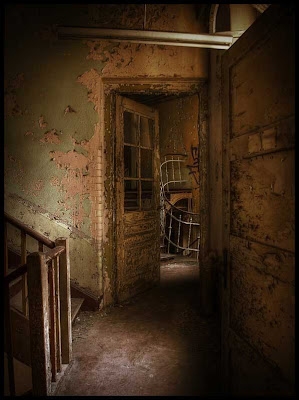
Ex: The sun was warm as she drew a breath of determination and pulled open the heavy fire-door. Inside was a long dirty hallway lined with neglected and abused doors. Light was a precious commodity with a number of the ceiling lights broken. The fire door closed and left her in the pathetic lighting.

The transition from sunlight to a poorly lit interior reflects the oppressive emotions of the scene. The sunlight offers warmth, safety and comfort while the interior lighting reflects something darker, harsher than the outside world. This also demonstrates the differences in the quality of the lighting. The sunlight carries natural preconceptions and emotions while interior lights reflect a different set of emotions. Even if the lights were simple florescent lights there would still be a shift in the perceptions associated with the lighting.

Ex: I stepped out into the pure white florescent light. White eggshell walls reflected the light off the white tile floor in an empty wide hallway lined with cream colored doors and wire mesh windows down it's length. I stopped at the first large glass window to look at the sun-lit parking lot.

The distinction of the florescent lights emphasizes the sterile nature of the environment and carries a sense of cold detachment while the sunlight carries the warmth. The contrast between these two different qualities of light distinguishes two different sets of preconceptions and perceptions of the settings.

Through the subtle manipulations of lighting it is possible to reflect the desired narrative tone of the scene. Adjusting the depth of field, the focal points and emphasized details of a composition allows for a more dynamic composition that carries more emotional weight for the audience.

Tuesday, August 30, 2011

Narrative Arcology


Sustained, Structure, Sub-plots…

As a narrative is crafted its' creator strives to develop a self-contained world that feels believable and welcoming for an audience. Most often the piece is not a singular narrative but a comprehensive arrangement of narratives that are all self-contained yet influential and integral to forming the narrative.

Every narrative has a core element or theme that drives the story but each of these elements is also self-contained and complete. The primary components of this narrative arcology are the primary plot, each individual character's primary plot, the secondary sub-plots and the thematic components such as mystery, tension, anxiety and world building elements.

Photo Credit
Abstracting the perspective on a 'story' it is the point at which an audience begins viewing the lives of the individual characters. Something significant and contained has occurred in the lives of the characters that can be perceived as self-contained and complete story. It is this perspective that demonstrates one of the primary principals of the arcology concept, the self-contained and self-sustaining components to drive the primary element. As psychological profiling suggests, every individual experiences a form of narcissism that can be more dominant during early adulthood. This narcissism means that every individual believes that they are the star of their own story and in truth, they are. That means that every individual in a story is their own main character.

Many narratives address these separate sub-plots as a change in perspective to another character and ultimately reflect the complete impact of these self-contained narratives on the primary plot. Stories by Tolkien or Koontz demonstrate this separate but cohesive approach readily but the disadvantage of this approach is that often the reader can see the impact before it occurs. 

A secondary approach is to examine the full narrative for all of the individuals in-depth separately. The individuals reflect the events of their own narratives as they 'come into frame' in the primary plot but remain self-contained while contributing to the narrative arcology. Stories by Kelly Armstrong demonstrate this method quite clearly. One character may be distracted by a fight with a sibling when the main character asks for help with their problem. The main character may experience the fallout from that narrative but the actual narrative will remain self-contained.

A narrative is a bracket, a frame that is placed over any number of lives at a given point of time that can culminate in a decisive journey to conclusion. Each is a path that leads in one direction but has multiple paths that cross it to extend or add dimension to each path. The individual lives involved are each their own self-contained and self-sustaining narratives, sub-plots. Each individual is a component to the larger structure that makes the structure whole,  the narrative arcology.

Tuesday, August 16, 2011

Cliched Contrivances

Gimmicks, Machinations, Contrivances...

While every narrative, every work requires a series of contrived events to propagate a story and develop the plot into a designated direction, there are certain contrivances that have not only fallen into cliche but can also serve to sever the connection between the audience and the work.

These contrivances are prominently a single element on which the entire subject of a piece can hinge. While these elements have been overused to the point of absurdity by popular media, they still find their way into narratives and while these elements can have their place in a piece their implementation is often the largest failing. This comes from a lack of research and more reliance on what has be exemplified by the media when using these elements.

Photo Credit
The most gimmicky of these elements are the almighty whatsit, the walking encyclopedia and the psychological excuse.

The Almighty Whatsit takes two forms; the first is the whatsit that causes the story, while the second form is the whatsit that resolves the story. In the first form this can be a device that could save, destroy or alter the world, a miracle cure or artifact of some form. In Urban Fantasy this is often the lynch-pin of the story, someone is in pursuit of a magical relic that can give them unbelievable power to do very bad things. The second form usually is added to resolve the story when things are at their bleakest for the characters. This form can be anything that the first form can be. In both instances the almighty whatsit is something wholly unique and world shattering, while at the same time it's the implementation of this that breaks the audience-work connection.

The Walking Encyclopedia is often the solution resource for the main characters. When they are striving to accomplish something and need knowledge that will ultimately lead to the resolution of the piece the characters happen across the Walking Encyclopedia. This element often comes as the explanation or info-dump piece of the plot. The Walking Encyclopedia knows exactly what to do and is ancillary to the main characters either uninterested in the outcome or is secretly supporting the antagonist. The implementation of the Walking Encyclopedia is usually the by-product of foreshortening a piece. This can easily be rectified into something believable by reducing the information provided by any one character.

The Psychological Excuse is one of the most overused elements in any medium. This can be utilized to explain the behavior of characters, the motivation for the antagonist and even the core element of a piece.  This element is often a trauma of some form either physiological or psychological. Why does the antagonist hate the protagonist? They were abused as a child. The character needs to be captured to explore some exposition. The character is hit on the head and knocked-out, drugged or otherwise incapacitated. The character needs to explore their life, uncover a mystery etc. They have amnesia, multiple-personality disorder and so forth. The Psychological Excuse requires quite a bit more research than relying on traditional tropes. If someone is traumatized there are strong psychological and physiological effects that are often repressed or subconscious. If someone is knocked-out or drugged into incapacitation there are very dramatic side-effects ranging from brain lesions to sever vomiting and more.

Every Narrative relies on certain tropes to progress and develop the story but quite frequently these contrivances fall into cliched and gimmicky territory that breaks the spell for the audience. Popular media has explored these tropes extensively to the point of exhaustion. Sometimes it's best to recognize the cliche if only to avoid it.

Do you have any contrivances in your work? How do you avoid these cliches?


Monday, August 8, 2011

Abstracting Trauma

Almost every narrative's central theme is overcoming a significant trauma that has led to significant adversity and hardship. In many instances this trauma is either the crux of the narrative or the creators' primary means of drawing emotion from their audience.

A traumatic event involves an experience or recurring experience that completely overwhelms an individual's ability to cope.

Photo Credit
Frequently the theme of overcoming the trauma and 'moving on' or confronting the repercussions of that trauma are the core foundation of any narrative piece due to the highly controversial and emotional nature of the trauma. When the success of a piece is dependent on drawing an emotional connection between the individuals in the piece and the audience, beginning with a trauma that stirs emotions in the audience is fundamental.

Due to the controversial and highly emotional nature of trauma, the selection of those traumas for the piece are delicately selected to either develop characters or the primary plot. The selection is often made because the creator wishes to explore the depths of a particular trauma. What are the prolonged effects of child abuse on the child? What reactions does someone have after years of verbal abuse? How does an individual perceive the world after the loss of a loved one? How does a rape victim cope? These particular traumas are extremely powerful but it is also important to note that these can have an adverse response from the audience. Not everyone will want to explore these 'dark' emotions.

Attempting to explore trauma is highly contingent on understanding the psychological effects of the trauma on an individual. Often after a traumatic experience a person may re-experience the trauma mentally and physically. They may turn to drugs or alcohol to escape as psychological triggers cause a re-experience of the event. The individual may suffer feelings of intense anger, resentment and guilt. Upsetting memories such as images, thoughts or flashbacks may haunt the person. Nightmares and insomnia may occur as their repressed fears keep the person on edge. As these stressors continue it can lead to emotional exhaustion and ultimately emotional detachment.

In a narrative piece that utilizes trauma as both backstory for individuals in the piece and as a core element of the primary plot, it is paramount to understand what that trauma actually does to the individuals that experience it. Just as imperative is understanding how an audience will perceive that trauma and if they are willing to confront those 'dark' emotions.

Monday, July 25, 2011

Scaling Syndication

In every narrative work the suspense, tension and excitement work together to craft the perfect thriller, an amazing ride that keeps the audience entranced. Seldom does the creator view their work complete in one ride, almost every writer views the work as but a piece of a larger story.

While motivations for expanding a piece can range from the monetary to an intentional overarching theme or an overarching theme. There are also a multitude of ways to craft a series from the components of their first ride. Less common is developing additional stories based upon secondary characters from the first work and expanding into their own works. Another more frequent method of expanding the ride is to simply apply all of the original elements to another track. Taking the same characters and dropping them into another plot. These methods are quite prevalent in novellas, TV and even most sequels to the original piece. These are not, however, the true foundation for the Epic.

"The first chapter sells the book; the last chapter sells the next book." - Mickey Spillane
Photo Credit
There are a number of components that need to be kept in check when crafting a true series that can expand across multiple rides culminating in one grande experience. The Epic is not only a series but an artfully woven piece that allows each component to stand on it's own as well as hold it's place in the larger narrative. This is analogous to crafting one large ride with such detail that it would be impossible for the audience to find the seams between the pieces.

As every journey begins with a single step, the same is true of the foundation for the series. The first narrative introduces the characters, setting and a problem that can be solved within the confines of the first ride while hinting at a larger arc. This is the same as crafting a 'hook' in the first piece. It draws the audience and leaves them wondering what comes next. The largest issue in crafting this element is maintaining the cohesiveness of the solitary ride. If the first piece ends with a less than satisfying ending to tie-in the next ride it will greatly reduce the chances of having the audience continue on to that next ride. The balance of the Thriller elements needs to be complete.

The subsequent steps in the series behave as the consistent thrilling ride with multiple twists, turns, ups and downs. Each narrative in this greater piece can focus on a multitude of sub-events that help the audience explore the world and characters through various trials. These serve to develop characters and demonstrate their place in the world, each is a complete ride in-of-itself yet they hint at something larger.

The timeline of a series is very fluid and often has been subject to influence from publication. While a piece can be constructed in such a way as to move through periods of time out of internal chronological order the strongest come from a consistent sense of progress. Typically timelines for installments in a series have gaps between those installments varying from months to years. These gaps permit writers to 'refresh' characters and even add additional elements to each new installment. The failure of this pacing is the audience may forget the previous ride and the Epic will lose some of its impact. Some series actually carry the narrative from one to the next with no time in between installments.

An Epic is defined by the over arching plot or theme that the audience needs to experience on a small scale before they finally reach that conclusion at the end of the series. Because the satisfaction of the excitement must match the suspense and tension of the ride, many series focus on a grande-scale world changing event. Like Tolkien's Lord of the Rings series, the characters start on a small-scale adventure and end by changing the world. A great many Urban Fantasy and Thrillers rely on these as the tropes to make an Epic series. Just as many also fail because they do target such world shifting problems that breaks the audience's connection with the ride. Believability falls to the wayside and there is no recovering. Not every Epic needs a world changing event, it can still be as small as changing the world of a single character. In the series Veronica Mars, the entirety of the first plot arc centered on finding the true killer of the main characters' best friend. The arc did not change the world but changed the world for the protagonist. 

Crafting a perfect thrill ride that keeps the audience enraptured can be a challenge to keep that tension and excitement balance. The key to crafting the Epic is scaling. Every component is a cohesive thrill ride set at a given scale that alludes to something that drives the characters. Rapidly shifting scale from one installment to the next can break believability and sever the connection between audience and attraction.

Monday, July 18, 2011

Drawing the Thrills

Fear, Thrills, Excitement…

As with any ride that is artfully crafted, participants are intrigued by the anxiety of not knowing what will happen next. The steady pressure of this anxiety, this fear creates a tension and through it a suspense that drives the narrative forward.

"Monsters are real, and ghosts are real too. They live inside us, and sometimes, they win." - Stephen King


The suspense may drive the piece forward but without a release the characters and audience will be too fatigued by the end of the piece to enjoy the ride. Many seek out thrills to experience that rush, the race of their heartbeat, the fear of the unknown and the feeling of relief that comes once they've overcome that obstacle. It is a psychological need to understand, a fascination with that which they can not comprehend because it is so different from our everyday lives. That fascination stems from a need to find out how much fear the individual can tolerate and ultimately the sense of satisfaction that comes from being able to endure that anxiety.

In a roller-coaster it is the anxiety of not knowing what comes next that makes the ride so appealing but it is the excitement that makes the ride satisfying. The longer the anxiety is permitted to build, the more tension the participants will feel and by extension the greater the satisfaction will be for the release of that tension.

While the tension of a ride may continue to build the conditional stress experienced is still subject to the individual's tolerances for prolonged anxiety. This means that while a ride may layer anxiety and tension to keep applying pressure the individual has physiological tolerances to that stressor. The individual can become exhausted and in terms of a narrative this means they will put the story down. Exciting moments are release points for the tension. If the excitement does not address the current anxiety or tension in any way then it will not serve as a release but another form of tension.

Thrilling moments are derived from an equal balance of anxiety and the satisfaction of that release. Like a roller-coaster, if the ride climbs to an epic height the drop, excitement, should be of equal height unless there is a need to keep partial stress. This can mean a greater satisfaction from the climax of the ride however, it also means greater chances of fatigue along the journey.

Thrills are created by provoking emotional anxiety both for the character and the reader through exploring that which they can not understand. What is it like to have someone close murdered? What is it like the have two people fall in love with the same person? What is it like to catch a criminal? Stop a supernatural horror? People look to experience a thrill, something that they do not experience on a routine basis. To deliver that thrill, it needs to come in equal parts of tension and excitement. If you reduce the tension, the excitement will not have the same impact. If you reduce the excitement, the satisfaction will fade with it. The perfect thrill is one that is built with suspense and has partial releases (pay-offs) until the close.

Romance example: Antoine has a crush on Jayne but she doesn't know he exists. Antoine set about trying to get her attention. (Tension) After a period he finds a means of talking with her. (Partial-Release)  Jayne smiles at him passing in the hall. (Partial-Release) Mean Ex-BF threatens Antoine, they walk away together. (Tension) Antoine confronts EB. (Tension) Jayne admits she's in love with Antoine. (Release)

Supernatural Thriller example: Antoine discovers people are disappearing. Secretly has crush on Jayne. (Tension) Discusses with friends and friends confirm more disappearances. (Tension) Starts working with Jayne to find missing people. (Partial-Release) In-fighting about how to proceed as friends disappear. (Tension) Find clues about disappearances, in-fighting between them due to tension. (Partial-Release, relationship tension) Antoine admits crush to Jayne, interrupted before Jayne can react. (Tension) Antoine saves Jayne form supernatural threat. (Partial-Release- still relationship tension) Together they stop the threat and Jayne admits to being in love with Antoine. (Release) 

Ultimately, if you build too much tension without at least a partial release it is akin to queuing in line for hours to get on a roller-coaster that goes down one dip and dumps you off at the gift shop.

Monday, July 11, 2011

Assigning Stressors

As the narrative roller-coaster unfolds it is not simply the suspense and excitement that drives the piece forward but the tension, the taut emotions that consume both characters and audience

Every piece begins with anticipation, presumptions about events and serves to draw an emotional connection between the audience and the ride. It is that emotional connection that a creator can draw upon to influence perceptions and elevate their work beyond the initial hook.

An audience's connection begins with anticipation as the first conflict is assigned to the character. This is the prominent conflict that is designed to both introduce the audience to the characters and test the characters. Psychology describes this conflict as a stressor and the emotion associated with an unresolved stressor is the foundation of every narrative, Tension. Through the introduction of this unresolved stressor the narrative is compelled forward and providing the connection has been initially been established the audience will be driven to find a resolution for the stressor based upon the General Adaptation Syndrome model.

In the General Adaptation Syndrome model physiologists describe stress as taking place in the three phases of Alarm, Resistance and Exhaustion. In the alarm phase the body will react to initial stressor with adrenaline and commonly the 'fight or flight response.' The Resistance phase takes place under a sustained tension and represents how the individual will either cope or remove the stressor. As the final phase of the GAS model exhaustion takes hold on the subject and the body's systems are compromised. Abstracting this concept to the characters in a story, these stressors can not only develop new conflicts but also represent additional depth to the characters. As the tension continues to mount across time for the characters it can have a profound impact on their behavior.

A story is a taut ride, a thrilling roller-coaster that takes unexpected turns and drops to keep the audience enraptured. The suspense is born of anxiety, a tension that is drawn in such a manner as to keep both the characters and audience moving through the story. Applying different stressors can keep tension high, keep the audience engaged, but as with any stressor, if there is no relief exhaustion can set in and break the piece.

Tuesday, July 5, 2011

Drawing the Paranoia

Suspense, anxiety, fear….

While every story is its' own thriller, a roller-coaster of suspense, tension and excitement it is the writers' ability to wield the elements to enhance the connection between the narrative and the audience that defines the nature of the piece. Through closer examination of these elements it is possible to not only further enhance a piece but also further define the audience of a piece.

"Being prepared for almost anything, he was not, by any means, prepared… for nothing" - Charles Dickens, A Christmas Carol.


Suspense is an imperative to any piece, it defines the need for an audience to continue through a story. It embodies the questions that need answers. Will the character fall in love with the protagonist? Did they do the right thing by buying that house? Who committed the murder? Will they stop the antagonist? These are only a few of the many questions that are crafted for not only the audience but for the characters in a piece to answer. These are the driving force that keeps a piece moving forward but what is the defined use?

The element of suspense is a feeling of uncertainty and strong anxiety about the outcome(s) for certain actions. Most commonly it is utilized in the build-up right before a grand or dramatic moment to enhance the impact of that moment. In a romance it can mean the silence before the love interest responds to the almighty ILY from the protagonist. In a mystery it can be the interrogation of a suspect, while in a thriller it can be a race to stop something from happening. There is more than one way to utilize suspense in a narrative though.

One of the most powerful uses of suspense is not genre specific but it does require an artful use and a delicate balancing act. Suspense can be established and rather than releasing the tension through excitement, the excitement of the piece only serves to further enhance the suspense. In classic horror and thriller fashion it is known as "Nothing is Scarier." In short this trope means that as the suspense builds it is more powerful if the excitement or release moment comes without an actual release. This same device can be utilized in any genre, it is not horror or thriller specific but these are genres that use it openly. In a diametric example, Romance this could mean the protagonist admits the ILY to the interest but before the interest can respond something intervenes. The audience is left with that suspense while something adds an additional layer to the suspense.

There are roughly three variants of this device that are very common to horror and thrillers. These are the classic, full and has been variants. In the classic horror example suspense is built as the audience anticipates something to jump out from the dark and does. This is almost viewed as cliche now and it utilized in almost every horror and thriller. Abstracting this is simply suspense building up to a release point that is inevitable and often expected. The second full variant of this is often the most powerful of the three variants. The suspense is built as the audience anticipates something bad to happen, a monster to jump out of the dark but something intervenes to prevent release point. The audience still anticipates the attack, the monster but it doesn't come. Abstracting this variant we have suspense building to the point of release but the release point never comes. This is a very powerful element for most mystery, thriller and horror narratives. The final is the has been variant and is now quite common in horror stories. Often this is seen horror movies as a character expecting something in the darkness, another character distracts them and then the 'whatsit' attacks. Abstracting this variant suspense is built to the point of release but something intervenes to delay the release point.

Suspense is the key element in a taught story. It is the basis for many thrillers and horror stories but the elements are not exclusive to a single genre. As a writer draws the suspense of their piece it is possible to turn any story into a suspenseful page turner regardless of genre. What are the suspenseful elements of your piece?

Tuesday, June 28, 2011

Sustaining Believability

"The characters have to be true to themselves. The events need to follow a logic that fits the story. A single flaw and the magic is gone. The story dies." ~ Sam Lake


When a writer crafts their work they know that the story will not stand on it's own. More often than not, their work will be a piece of a series. While each piece needs to be complete in-of-itself with the ability to stand on its own, it's little more than a chapter of the larger story. Just like the singular story, the series will be it's own ride with its' own pacing, its' own suspense, tension and excitement. Unfortunately the most difficult part of crafting a larger story from the pieces is sustaining the continuity, the connections, between the pieces.


As the individual piece is crafted the writer often focuses intently on creating a believable, cohesive story that is wound so tightly that the audience can not foresee the dips in the ride. On its' own, the piece is a solid ride but as the audience expects it to lead to the next they are often disappointed. The connections between the first in a series and the next are jarring transitions. Why?

In the past, when a writer published a series the time delay between one piece and the next could exceed a year or more. This delay meant that when the next piece was released all of the recurring elements including setting, characters, themes and such would need to be re-introduced to the same detail that they were in the first piece. In addition to re-introducing the elements from the first in the series, the changes and events of the previous story(s) must also be reflected. Now, the delay between pieces has been shortened sometimes down to a matter of months between each. This means fewer details are re-introduced and repeated. Yet, there are still jarring transitions between most pieces in a series.

The largest failing for most when crafting a series of works is maintaining the same elements that are observed in the introductory piece. The tone can shift from one work to the next or more jarringly, the characters shift dramatically. While they act within the framework of the current story and it helps propel the current story, they are completely different characters from one piece to the next. These elements shift so dramatically that they do not match the overall work.

While some works were never intended to be part of a larger story, most were devised as continuing 'adventures,' a means of taking the favored characters and carrying them on so that the audience has more time with them. The strongest series are treated the same as other artistic mediums. Diptychs, Triptychs and so forth. One piece feeds into the next and while they are strong alone, they are even stronger when viewed as part of that series.

Tuesday, June 21, 2011

Drawing the Transitions

In any medium, be it a narrative, sculpture or movie, a story is being told. There is a 'narrative flow,' a pacing that establishes the tone and emotions. If that flow is broken, then so is the narrative. A single flaw and the magic is gone, the audience is lost and so is the piece.

If there is such a weight upon the flow of a piece then it is quite easy to see just how integral transitional elements are to the narrative. In film these elements are called transitions. These are a means of connecting one unrelated scene to another so that it appears to belong in the narrative and keeps the 'narrative flow' moving at the same steady pace. Transitions can be utilized in a number of manners in film, from the cross-disolve or cross-fade that blends the two scenes together to the Hard Cut that ends one scene sharply and launches the next or even the classic 'fade to black' transition. Each transition is selected to suit the two scenes and fit tightly within the determined narrative flow.

The same transitional elements that are used in film are often utilized in narratives as well. When the writer settles upon a genre, a tone and flow for their piece the transitions between the scenes are predetermined by these elements. Selecting the proper transition to match the elements often becomes the largest source of contention.

A Cross-Disolve or Cross-Fade in film is when the first scene slowly begins to fade out while the next scene begins to fade into focus. While there are many variants of this type of transition it is very common in any piece be it film, paint or print. In writing a cross-fade is when the writer begins closing a chapter by adding elements of what will happen in the next scene. Establish the characters involved, the setting and even the start of events that will unfold in the next. A concise example of this cross-fade is a transitory travel element. The characters are in a race to a location, at the end of the chapter the involved characters begin the journey and at the start of the next chapter they arrive at location. This transition should only be used to show that time has passed.

The Hard-Cut or Jump-Cut is far more common in films and narratives where pacing is absolutely paramount to the piece. The jump cut is what is called 'hard transition,' this means that it is the abrupt end  of one scene and the beginning of the next. Most authors utilize this transition in their work because it is the easiest way to show end and beginning of scenes. This is common because this transition does not interfere with pacing and it permits the story to move location to location without wasting time in explanations. An example of this in writing would be when characters are informed of a situation at another location, the scene ends and the next scene begins at that location. Through the negative space between the scenes the audience can infer a transition without the need to slow and follow the explanation.

The 'Fade-to-Black' transition is far less common today than it was in years past. Although in film it is still found in many shows that have a dramatic moment right before a commercial. The fade is very successful for building suspense in both film and narrative. This transition is far more common in third-person narratives than others because of the 'head-hopping' that can occur. Much like shows, in writing the transition is applied to add suspense and then switch scenes. Authors commonly utilize these 'fade-cuts' with title cards. These usually end a scene with a dramatic moment for the character then start the next scene with a title card of sorts that tells location before diving into following a new character.

Transitions in a creative piece are integral to brining an audience under the creator's spell. In writing, it's not just about creating cliffhanger endings at the end of every chapter, it's about the integration between that cliffhanger and the start of the next scene. If you misuse a transition it won't only disrupt the narrative flow but also break the creator's spell. This can prevent a good story from becoming a great story. Transitional elements in any creative piece can actually elevate a piece beyond it's initial conception if they are well implemented. Just look at the transitions in the Brightfalls webisode series.

How well are your transitions integrated? Do you think of the transitions or just the flow?

Sunday, June 12, 2011

Defining the Absence

When any creative piece is crafted the artist must analyze and interpret a number of elements to bring their vision to life. Just as a painter or sculptor must consider the aspects that they must insert into their composition they must also consider how they will use what they will not include.

The Negative Space of a composition is just as integral to the piece as every brush stroke or chisel mark. The artist can use it to add depth to the composition, further define the structure of the piece and act as a transition between the elements.

As an artist sculpts their piece from the void they select the elements that will serve the piece best whether by insertion or omission. The negative space is not a simple void but strategically implemented space that can bring the composition to life. Sculptors often utilize the negative space of a piece to draw the shadows and light the piece with emotion much like a writer can wield implications through omitted events. That which is omitted can bring events, actions and even emotions for characters into sharper focus.

While the negative space defines the piece, the structure and shape of that space can be molded to guide the audience's perception. In the visual arts this can be done to define the focal point of the piece, while a literary perception on this can be called a theme. A specific attempt by the creator to shape a piece towards one singular point, one event, that the creator wishes to convey.

The most common use of negative space in any creative piece is it's use as a transitional element to prevent inconsistencies or detract from the piece. It is not only more powerful to bypass the 'mundane' parts to keep the piece cohesive but by leveraging that negative space a piece can enhance the emotional impact of what is crafted.

In writing, negative space is just as prevalent as in any other art. When characters are describing traveling to location and the next scene is the characters at that location the journey to that location is implied, it is negative space. When characters act according to their past history but do not explain it, it is implied even though it is omitted. These omissions in the writing are actually the negative space in the piece.

In any creative piece what is sculpted and what is omitted are equally important elements. While there is an extensive amount of attention that is given to what is crafted, it is imperative to understand that what is omitted is still integral to the structure of the piece and has its own impact.

How do you use the negative space? Do you arrange your piece with the impact of that space in mind?

Monday, June 6, 2011

Abstracting the Antithesis

Antithesis, Synthesis, Logic...

In a narrative the writer will often go to extensive lengths to explore and understand the logic of characters. Information may be derived from previous events, details and psychological conditioning of characters but it is often a question of where does the author stop displaying the information openly?

While a writer can be absolutely transparent with their main character's motivations it is ultimately necessary for them to keep information from their audience to construct a sense of emotion. Whether it is love, happiness or even fear, the only means of preventing a narrative from reaching an early conclusion is to withhold information from the main character and the audience.

As a story unfolds, the writer may have all of the motivations penned but to keep the level of tension high they do not reveal these to their audience. When the main character and audience are left with the question of 'Why?' it should not be answered right away and in-truth, in a horror or suspense it probably should not be answered at all.

Stephen King once wrote that nightmares exist outside of logic and there’s little fun to be had in explanations; they’re antithetical to the poetry of fear.

Questions are the driving force in a story. The narrative thrives on the antithesis of knowledge that the primary characters hold regarding the primary question. The characters journey to answer the defining question is the heart of any piece. Every step that the characters take will yield its own questions but the singular driving question should never find its' answer until the story draws to a close.

The driving logic behind characters' actions and their motivations can assist the audience in connecting with the piece but it is the absence of that knowledge, that logic, that can make an emotion resonate through a story. In the end the audience will demand an answer and to a degree it must be given but there is more power to be found in withholding the entirety of that logic. A narrative is not about the logic, the explanations, it is a story about the quest for those explanations.

How much information do you give your characters? Your audience?

Tuesday, May 24, 2011

The Objective Struggle

Endeavor, Strive, Struggle....


As a writer crafts their story from the void of blank pages they maintain narrative cohesion through the basic elements. They keep the piece focused, driven with deep motivations for each of the characters. They gradually escalate the pace to keep the story moving forward. The subplots are interwoven with the story in such a precise manner that the main plot would fold without them. The reader can not resist, they are pulled into the narrative and swept away by its spell. They hurry to the completion of the story but begin to wonder. The spell draws to a close and the audience is released but they soon forget about it. 

What happened?

Far too often a writer will forget one of the most important elements in a story. A point.  An objective.

As the creator perfects their premise they need to have an objective in mind for the premise. The point of a narrative is not only to capture their audience with an elaborate and entrancing spell but to alter the characters within the piece. Every step along the journey, every character caught up in the primary premise and even the premise itself should have an objective.

In the narrative the journey is broken into scenes and chapters, stages along the way that push the characters towards completion. It is here that many will often falter. There are scenes that must be enacted to progress the overall premise but they should each have their own objective. This is also where objectives can become confusing. Introducing a new character or exploring the recently introduced characters can be a piece of this objective but not the entire objective. These stages of the journey can envisioned as primary objectives and sub-objectives. In a mystery this would be a pivotal clue that is discovered while a couple of secondary characters that are pivotal later are introduced would be a sub-objective of a chapter.

Just as every stage of a story is assigned an objective, every character that is introduced must also serve a purpose. Sure there are characters that can be introduced whose objective may seem missing to the audience but if they have a solid objective, then it will be apparent later. Nothing can be more jarring for the audience than being introduced to a character that does not serve a purpose. Now whether these characters support the main characters or have their own agenda is irrelevant. They must have their own objective in the story. An objective can be as simple as adding background details in a piece or as complex as expanding on the details of the primary premise.

The largest error for most writers, most spell-crafters, is failing to address an objective for the primary premise. The creator was a genius spell-crafter capturing the attention of their audience and keeping their attention but when they reach the end of their piece the audience should not be left wondering what was the point of the story. There are many different objectives that can be assigned to a premise but the end result of a narrative is that the character that the audience followed is no longer the same as they were in the beginning of the piece.

As a story is crafted it is necessary for the writer to not only establish the world, characters and premise but to establish the objectives for every element of the piece.

What are your objectives for your characters? Chapters? What about your plot?

Monday, May 16, 2011

Orchestrating the Thriller

Regardless of the chosen direction for a narrative, all works at their core are an amusement ride. An attraction that an audience wants to experience. A thrill.

Every piece contains three primary elements to compose the ride; suspense, tension and excitement. Infusing the elements into the piece in varying amounts can dictate the ultimate direction for the narrative and define its very genre.

A narrative begins with a solitary question. A singular hook that draws the audience in and drives the individuals in the piece forward. In a mystery it is often a crime scene and the question is 'why?' In a thriller it is often the same question, the same 'why?' However, it is also often accompanied by a consistent threat. A 'who's next?' that the audience continually asks. While for a romance or drama it is 'will I find love?' or 'will I ever break from this routine?' This question is imperative, it's the start of the ride.

Once the audience is on the ride it becomes a matter of alternating elements to maintain their interest. Like a roller coaster ride, the more unpredictable the journey the more the audience will be captivated.

In a thriller, the audience is given an event that captures their interest, an event that serves as a form of excitement. These events come in the form of close calls, near-death experiences and quite often fight or chase sequences. The excitement of these events is used sparingly like dramatic drops on a roller-coaster track.

All of the radical drops in a coaster would not matter were it not for the tension that comes from the rise to the top of each or the suspense of not knowing when the drop will occur. In a narrative, the characters are led from one event to the next under intense pressure. Whether it's an investigation or characters clamoring for survival, the pressure keeps the story moving.

While there are only certain elements that can be used to perpetuate the story, there are a multitude of ways that they can be implemented. The intervals between the elements can leave room for unpredictably or a rapid pace that leaves the audience breathless. The elements can even be hidden, revealed only at the last possible second to enhance their impact.

All narratives are inherently thrillers to a degree, the audience is driven forward by the events, the climbs and the drops of the ride. How do you keep the thrills coming?
 

PW Creighton: The Surveillance Report Copyright © 2011 -- Template created by PW Creighton -- Powered by Blogger