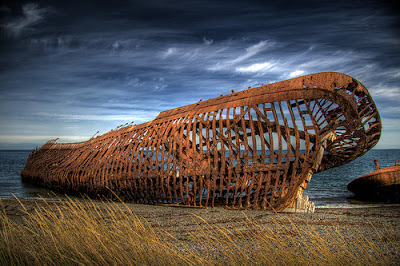
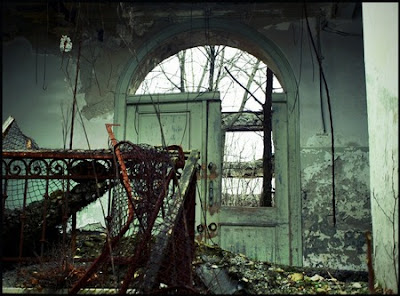
Showing posts with label atmosphere. Show all posts

Wednesday, May 2, 2012

Intriguing Observations: Inspiring Locations


The Intriguing Observations series was created to gather some of the greatest supporters and bloggers to provide their own insight on all things creative both in their ventures and their techniques. This week on the guest series is another all-star supporter and an outstanding wordsmith Jen Talty.

Photo Credit
Everyone has a place where they “think”. It’s a place where our mind just wonders deep into thought about anything and everything. I have two thinking places. The first one is in the shower. The problem is the moment I step out of the shower, the intense thoughts have left me and that’s a problem when those intense thoughts are great dialogue for my book. Or anything else having to do with my book.

If I happen to have a light bulb moment I have to run out of the shower and go write it down. Otherwise, gone forever or until my next shower.

I sometimes try not to think in the shower. That’s interesting…and impossible. It’s like my brain goes shower…think…shower…think and there is no stopping it. I do believe I have some great ideas that occur to me while in the shower.

The second place my brain thinks is in the car while I’m driving somewhere. This too poses a problem. I have a voice recorder on my phone, so the problem isn’t necessarily that I don’t have the ability to get my thoughts down, its that the thinking aspect is so intense I don’t think to get the voice recorder out until it’s too late and my brain and I have left the vehicle and the thoughts behind.

The bigger problem with my brain thinking in the car is that I have a tendency to forget where I’m going. I also sometimes forget there are “real” people in the car with me. For example, driving my children to hockey rinks. They will yell “mom, mom, mom, mother, mother, JENNIFER!” and they yell this a few times until they finally have my attention and they tell me I drove right past the exit about 8 exits ago. ARGH!

There are other places I like to think. When I walk. Or when I’m at the gym. I used to play golf and I’d think a lot out there, but then I’d walk right past my ball on the fairway, up to the putting green and realize I hadn’t take a swing at my ball to get it to the green…yeah, that’s a problem. When I’m cleaning, I’m thinking. And thinking, and thinking. When I’m doing cleaning, I go to the computer and type out my thoughts. However, these other places the thoughts tend to linger with me longer.

I have to wonder if the intense thoughts I have in the shower or while driving have to do with some sort of “safe” feeling my brain has. It’s like my brain has it’s own free will and does whatever it wants. Any other place I think, including while cleaning or just going for a walk, I feel like I have control over my brain, but in the shower, or driving, nope, it just wonders off were it wants to and then the moment I stop, it stops too. But worse, it hides those wonderful thoughts deep and then I have to play “mind” games with myself to find them. Most of the time the brain gives them. It as if the brain understands how important they are to me, but either enjoys watching me freak out that I can’t remember what I was thinking, or is trying to teach me a lesson to pay attention.

The mind is a wonderful thing. Now, I must go shower…I need to write, so hoping the brain works its magic  so I have something to work with when I sit down in front of the computer.

Where are your favorite places to think?


Jen Talty is Co-Creator of Who Dares Wins Publishing, Author of Romantic Suspense, Speaker, Writing Instructor and Hockey Mom. 

Website: http://www.jentalty.com/
Twitter: @jentalty
Who Dares Wins Publishing: http://whodareswinspublishing.com/

Wednesday, April 18, 2012

A Titanic Story

"I think that it was definitely a goal of Titanic to integrate a very personal, very emotional, and very intimate [story]... something that has a profound impact on your imagination..." - James Cameron

Photo Credit
In today's industry where publishers, Hollywood, music and even game developers are constantly in a race to 'remake' previous works or produce ones that are so similar to what has already been successful that they couldn't make it in the witness protection program, one wonders how it is possible to make something significant.

I recently had the pleasure to see the re-release of James Cameron epic as Titanic 3D. While I had seen pieces of this behemoth before, I never really saw it from beginning to end nor had I ever looked at this in terms of story. After watching I can only marvel at the culmination of elements that conspired to make it a true modern 'epic.'

Examining the story it seems to be a very simple romance. The boy from the wrong side of the tracks, the rich socialite that wants to escape her confining life, the jealous bad-guy fiancé and the helpful friends. On paper this sounds rather mundane, it very well sounds like almost any other romantic story in existence. So, where does this story become an epic?

The setting for the story is aboard the ill-fated cruise ship in 1912, this is not an original setting by any stretch of the imagination, There are no fewer than fifty different movies about the ship not counting the hundreds of documentaries. If we look at strictly the literary scene there are thousands and thousands of fictionalized accounts with a large percentage of them as romance stories. While tragic, this setting does not necessarily equate to an 'epic.'

If it's not the overall story or the setting, one might wonder if it's the characters that make this such a significant story. The characters are quite flat overall with a street kid, the socialite cheating fiancée, a controlling millionaire, and countless other rather flat characters. The superficial details to their lives, the personality traits and their interactions do not even pertain to an 'epic story.' Just sampling quotes reveals how dull or predictable most interactions are and how unusual some of the dialogs are.

Are the Events of the story what drives it to epic status? Outside of context you have a poker game, a guy that talks a socialite out of suicide, a dinner where socialites discuss status, a number of conversations about foreshadowing, a 'low-brow' party, a violent outburst from the millionaire towards his fiancée, a drawing session, a romantic moment between the star-crossed lovers, a moment of false imprisonment, survival on the sinking ship, treading water, character death and finally the heart/staircase. Is it the events that make this story epic? If it is the case then the story should be able to be moved to any other setting and have the same results.

Photo Credit
After looking at all of the elements it is abundantly clear at what makes this piece an epic, a story that is still successful 15 years later. It's the emotional punch.

The romantic story feels unique and new because the characters are drawn together in a believable way, reacting in an expected but emotional manner. The characters conveyed the emotions of each event in such a manner that even years after everyone knows the whole plot that people still react emotionally to Jack attempting to escape from the handcuffs or when Rose is slapped. The setting keeps the story together, it makes it a period piece that never feels out of place where technology can give away the age of the piece and pull the audience from it. These emotional punches culminate with the very moment that makes it an epic. Jack's death.

If the story had concluded with Jack and Rose making a new life together it would certainly be a happy ending but it would never even touch epic status. The only plausible ending was to take the one thing that the audience became so attached to throughout the journey, their relationship, and breaking it with something beyond their control. Old Rose's photos and the staircase scene give a sense of completion but also convey immense emotion. Even to this day, the audience can see an image from one of the 'emotional hits' and immediately feel it personally.

So what makes a story an epic? Is it unhappy endings? Is it the story alone? Is it the characters, their lives, the setting or the events? It is a culmination of all of these elements, each element that comes with it's own emotional hit and is then tied together. Creating a Titanic story is not about the individual elements or what they represent but the emotions that they convey.

Wednesday, April 11, 2012

Intriguing Observations: Writing is an Illusion

The Intriguing Observations series was created to gather some of the greatest supporters and bloggers to provide their own insight on all things creative both in their ventures and their techniques. This week on the guest series is another all-star supporter, fellow AP author and an outstanding wordsmith Meg Mims.

Writing is never easy, no matter what the genre. It’s an art—and crafting scenes to draw the reader in from the first line and keep them hooked until the last page takes hard work. One writer’s “trick” is relying on specifics. Word choice, in other words.

Photo Credit
Take “dog.” What kind of dog? A white dog. What size is it and what does it sound like? A yappy white poodle. Adding color, sound, even texture makes that vague word come alive. I used to teach elementary kids about using specifics when writing. Writers finagle words in fresh ways. “Digging up a cloud of dust, the dirty white poodle’s shrill yaps echoed in my brain.”

Shallow writing skips the surface of the author’s “world” and presents characters acting out scenes on an empty stage. I’m not advocating the use of info dumps. But the best writers will spin out a story on a slow line, fishing for depth. Oral storytellers do the same, using pauses and extra information to keep the listener’s interest. Take Harper Lee’s Pulitzer prize-winning novel, To Kill A Mockingbird. Being literary, she took free rein to build her world. And what a world it is, enough to shower a reader in specifics and place them smack dab in its midst.

“Maycomb was an old town, but it was a tired old town before I knew it. In rainy weather the streets turned to red slop; grass grew on the sidewalks, the courthouse sagged in the Square. Somehow, it was hotter then:   black dog suffered on a hot summer’s day; bony mules hitched to Hoover carts flicked flies in the sweltering shade of the live oaks on the square. Men’s stiff collars wilted by nine in the morning. Ladies bathed before noon, after their three o’clock naps, and by nightfall were like soft teacakes with frostings of sweat and sweet talcum.”

Readers (even ones who don’t like historical novels) enjoy specifics of a “story world” right along with the characters. My own trick is infusing several of the five senses within a character’s Point of View. You have to balance a razor’s edge between too subtle and overload. In Double Crossing, I used first person POV—primarily because I wanted that immediate close bonding between the heroine Lily Granville and the reader.

Writers tend to visualize their story world. Go beyond the “eyes” of a character, though, to hear, smell, feel and even taste within the scene’s action. In the following excerpt, I tried to use two or three senses at various times as Lily walks along a street in Nebraska, 1869:

I clamped a handkerchief over my mouth but Omaha’s black dirt still choked me. My hard sneeze left a ringing in my ears. There had to be a general store somewhere with needles and thread. Stray sparks from the Chicago and Western’s smokestack had burned tiny holes in my split skirt and jacket, and I was desperate to repair them both.

At last I found a shop. A bell jangled above my head when I entered. The bulky proprietor laughed and joked with several customers while he filled orders at the polished walnut counter. I meandered down each crowded aisle. Scents of dill, chives and cinnamon tickled my nose. Potatoes with earthy skins and papery onions filled open barrels. Small jars of pickled beets and corn relish, tins of fruit and baked beans lined the shelves. Huge burlap sacks of flour, sugar, salt, coffee and beans lay near the door, and wheels of cheese had been stacked above crates of smoked fish and salt pork.

Seeing the flatirons, hoes, plows and other tools all around brought a sense of normalcy back to my life. I realized I’d been wandering in a haze since Father’s funeral.

I could have had Lily touching the earthy skins of potatoes, but that would have dirtied her gloves! So keep in mind your character’s personality when writing. Vivid details come from specific adjectives and nouns—silver folding scissors, sturdy butter churns, oilcloth cape, shiny snaps. Readers can quickly identify the items with the visual cues. Dropping a few other sensory cues—bell jangled, scents tickling the nose—helps also. Adding a brief dialogue exchange with minor characters will also balance out the scene.

Your readers will appreciate that the characters are not acting on an empty stage.


Meg Mims is an award-winning author and artist. She writes “blended genre” fiction, and her western historical suspense won the 2012 Western Writers of America Spur Award for Best First Novel. Meg earned an M.A. from Seton Hill University’s Writing Popular Fiction program and is a staff writer for Lake Effect Living, a West Coast of Michigan tourist on-line magazine. Double Crossing is available both in e-book and print.


Twitter: @megmims
Facebook: Meg Mims and Double Crossing

Monday, April 9, 2012

The Artistic Product

Desire, Appeal, Demand, Art....

In any creative venture there is an element conceptual fulfillment and appeal. Often many choose to define their works as an art. These concepts demonstrate a defined expression and communicate emotion through specific aesthetic criteria, in short works that are of more than ordinary significance.

There are many different mediums that can be termed art, ranging from the standards of painting and sculpture to writing and even film or gaming. The ideal of conveying a concept through a medium in such a way as to be desirable is a fundamental motive for many artists. Through practice, refinement of technique and expression a work can be viewed as art.

While any work can be viewed as a work of art it is undeniably the aesthetic criteria that permits the work to be classified and termed "a work of art" within the medium. The aesthetics of a piece, while entirely subjective, are often representative of the 'high-concepts' that determine the appeal of the piece.

Photo Credit
As with any creative work, the determination of appeal is quite subjective however the broader the appeal the more accepted the piece is overall.

It is the appeal of a piece that many artists seek so that the work is broadly accepted as a work of art without dispute. Many artists are willing to sacrifice for the sake of their work, barely making a living while trying to find 'mainstream success' in their desired field. These Starving Artists epitomize the concept of an artist and are entirely dependent on the demand for their work.

Starving Artists and demand are where a couple of misconceptions enter.

Many writers/artists that are new to the industry often claim that their work is art as a defense to changing their work. As previously discussed, there are components to this that determine viability of their claim and then there is the misconception about the 'Best Seller' author.

The Best Seller author may have made their way into the best selling ranks but it does not mean that they have left 'Starving Artist' status. Most authors work other more permanent jobs because it often takes more than six published works and at least 2 'best sellers' before they can even consider focusing on being an author as their career.

In reality, an artist creates a work that they hope has enough appeal to drive the demand for their work including future works. Successful artists can convey their work with broad appeal but still remain truthful to their original concepts so that it is a work of art. Even starving artists who have sacrificed for their art dream of 'breaking into the business' and having their work desired. This desire effectively makes the work of art a product.

Products rely on marketability to determine success and even art needs an audience to claim success. In the writing industry success is measured in more facets than stars in the sky but claiming a work is art is not a defense against change, it only means that you'll be left by the roadside in an industry of unique artistic products.

Wednesday, March 7, 2012

Intriguing Observations: Your Book’s Palette – Using Color in Your Fiction

The Intriguing Observations series was created to gather some of the greatest supporters and bloggers to provide their own insight on all things creative both in their ventures and their techniques. This week on the guest series is another all-star supporter and an outstanding wordsmith Samantha Hunter.

Learning to sew and decorating a home has taught me a lot about using color. It was inevitable that this would find its way into my writing. When I learned to quilt, I had to learn a lot about color combinations, tones and patterns. In painting (and repainting) the rooms in our house I’ve learned a lot about using color as well. For instance, how to use color with certain kinds of light, how colors will make a room seem larger or smaller, welcoming or not, and how to create a flow of color from one room to the next. In sewing, you can make a subtle color pop in a quilt by placing it next to something that contrasts, and the difference between striking and gaudy is usually the placement of colors next to each other.

Photo Credit
As we all know, color affects mood – green and blue are soothing, orange can stimulate appetite, and yellow can inspire happiness. Brown is earthy, white is cold. Color also has historic can cultural meaning – the main rooms in my home are painted to reflect earthy, Craftsman color palettes popular in the early 1900s. Or, if you like red, you know in the US red usually suggests “danger” while in China it’s the color of wedding dresses for good luck! (White, in China, symbolizes death).

Some colors work together and  some do not. It’s best whenever you are using color to use tones and shades that complement and work together somehow. Here are some good links to read up on using color:

http://www.hgtv.com/decorating/how-to-choose-a-color-scheme/index.html

http://www.smashingmagazine.com/2010/02/08/color-theory-for-designer-part-3-creating-your-own-color-palettes/

You can do a lot with color and get as deeply into it as you would like in your book, but a consistent or interesting color scheme for your book can enhance your story, as well as tell us something about the characters, scenes and moods, which in turn affect the reader’s emotions and responses.

Does your heroine wear a red coat or a blue one? Why? What does this all say about her? If you describe them as living in an old farmhouse, or a log cabin, or an adobe ranch, you want to have a color palette that’s amenable to those living spaces as well as addressing your character’s choices. If you are decorating your character’s apartment, and she is a historian, what period of history does she favor and how would that be reflected in her dress or room colors? Or, if she really has a hidden desire or hates her job as a historian, maybe it shows up in the colors she chooses for her personal space in contrast to her office.

One of my favorite things to do with color is to use it to show how the characters and the story are also changing. For instance, in one of my earlier books, Fascination, my heroine wears only black and white at the start of the story – this reflects the issues at that point in the book, being trapped in extremes. But by the end, she is wearing multi-colored, flowered dresses – her world has opened up; she’s free. Even this simple use of color can have a subtle effect on the reader and how readers perceive the story.

Another example might be in the weather, the colors in the environment that you show through the protagonist’s POV and how that changes depending on their situation or mood. Or, how it can change in  the moment when someone caged by beige walls suddenly sees them as the frame for a beautiful view of the blue sky out the window – this could represent a life-changing moment for a character, a change in their perception of their world.

You can go back through scenes and consider how color makes a difference – or how it could make a difference. How does the gold wall look in different lighting, and how does that convey a certain mood? Consider everything from the color of the walls and clothing for your characters to the color of their car, etc. You can send messages to the reader through this use of conscious color choice, and make your story deeper in a very easy, fun way.


Sam Hunter lives in Syracuse New York with her husband and several pets. Since January 2004 when she sold her first book to Harlequin Blaze, Virtually Perfect, she has gone on to publish several more with new releases on the way. Sam holds two Master's degrees and was a university instructor for many years before quitting to live the writing life, is a confirmed TV addict and enjoys gardening, sewing, and travel.

Website: www.samanthahunter.com
Twitter: Follow @SamanthaHunter

Current books: Harlequin Blaze, Straight to the Heart; Indie Mystery: Once Burned, Book Two in the Sophie Turner Mystery series.

Sunday, January 8, 2012

Stabilizing Influence

Dynamic, fluid, compelling...

Any creative composition, especially a narrative, has a dynamic component to it that keeps the audience interested. The more dynamic the piece, the more intriguing it is for the viewer but it can also become a challenge for the composition.

In the visual arts, creating a dynamic composition is a matter of choosing fluid elements and subjects for the piece. The largest difficulty in fluid subjects is in establishing an anchor, applying some stability to keep the composition in clear focus. As much as fluid subjects are compelling to the viewer it is also possible for the composition to lose focus and become distorted, unclear, if the piece lacks some stability.

Photo Credit
Capturing dynamic compositions in the visual arts is a matter of stabilizing how the composition is perceived. Typically this is achieved through tripods and very complicated stabilizing rigs that keep perfect balance. Other elements that are fluid in the piece require equal parts of static elements.

A dynamic narrative composition is very similar to a visual arts composition. The fluid elements of a narrative piece can range from the perceived scene to the very characters within the piece. The combination of elements and unrestricted perceptions in a narrative can allow for dynamics that can become disorienting for an audience. 

Stabilizing the elements of a narrative is similar to stabilizing a visual composition however, additional 'supports' need to be added to the composition. For every dark and bleak setting there needs to be one 'safe' setting. For a calm, collected and methodical character, their partner should be emotional and impulsive. Altering perspective, adjusting pacing, changing settings and adding opposing character personas are just a few means of supports that can stabilize a narrative and help it to maintain focus.

Dynamic and fluid elements are needed in a composition for a viewer to find it compelling however, for every dynamic element within a piece it is necessary to have something to stabilize the composition and balance the elements. maintaining balance allows the audience to perceive the contrast between the static elements and the dynamic, making those elements even more compelling.

Tuesday, December 20, 2011

That Holiday Feeling

Ferias Ex Machina….

As Christmas is only a few days away now traditional Holiday themes are inundating all narratives on all mediums but why?

In a traditional narrative whether it is still, sculpted, cinemagraphic or literary a composition is orchestrated in such a way as to draw the viewers into the piece. There is a level of intrigue as the thrill of uncertainty keeps the rapt attention of the audience. This is not the case for many 'Holiday' narratives.

Photo Credit
The majority of 'Holiday' narratives are composed with layers of positive themes; selflessness, family, change of heart, unconditional love and other similar themes.

While many narratives can utilize similar themes, Holiday compositions typically feature these themes at a relative superficial level. The dramatic twists and turns that otherwise would create a thrilling piece are sedate compared to traditional narratives. These narratives often rely on the Ferias Ex Machina. 


Ferias Ex Machina or "Holiday out of the machine" is where a seemingly unsolvable/inextricable problem is suddenly and abruptly solved with the contrived and unexpected intervention of some new event, character, ability or object particularly in a 'Holiday' composition. These are where the characters will have a revelation, change of heart, a random bystander offers help because it is the season, etc.

In a traditional narrative composition, if the Ex Machina approach is used it makes for a superficial or failed piece by modern standards. So how is it acceptable for Holiday compositions?

Many narratives span extensive time periods either within the singular narrative or within a series and inevitably draw on the 'Holiday' themes. Much like a straightforward Holiday composition, the narratives fall to the same superficial level of device yet, since it is 'Holiday' themed it is generally accepted by the audience despite the Ferias Ex Machina approach.

What do you think? Is Ferias Ex Machina a suitable device for a holiday narrative or should a piece strive to be more than a 'Holiday' composition?

Merry Christmas….

Tuesday, December 6, 2011

Abstracting Layers

Depth, Dimension, Layers…

As a narrative piece is composed, one of the difficulties of framing a specific point as the subject of the narrative is establishing the sense of depth in the composition.

Often a visual composition will rely on layering to add a sense of depth and even time to the piece. A narrative composition can quite frequently utilize similar techniques to bring that composition into greater focus, bring it to life.

Adding depth to a narrative is achieved through layering interaction dynamics and narrative history.

Photo Credit
Interaction dynamics are the implied and explored relationships within the narrative. These can be the relationships between subjects or between subjects and setting. Implied relationships are not overt reactions between subjects but the secondary inferred relationships. In a visual sense the subjects would be juxtaposed to demonstrate hidden emotions or draw tension. These are quite common in romantic narratives as two subjects awkwardly avoid interactions.

The explored relationships are overt dynamics, emotions and interactions are direct. Visually there are direct correlations between subjects or subjects and setting. These can be further layered with different levels of emotions, interactions and relationships. All of these are typically the make new friends, adversaries and love interests subject interactions.

The interaction dynamics of both implied and explored relationships add layers to the composition, provide a sense of depth to the interactions.

A visual composition can frequently capture a still moment in time, but it can also appear flat and superficial. While in a narrative it is possible to convey a linear progression of time, like a visual composition it can also appear flat and superficial.

Through narrative history it is possible to layer a composition with additional depth and dimension. The composition demonstrates a history for the subjects through details of worn settings, memories of previous events and relationships built on events not within the composition.

As any visual composition becomes more interesting with layers of interaction dynamics and narrative history so to does a narrative composition. The flat one-dimensional take on a narrative timeline or strictly overt interactions leaves a flat, superficial image. Adding layers of interactions, history and detail together brings the piece to life.

Monday, November 28, 2011

Leading Lines

In a composition there are a variety of techniques that can be utilized to explore the piece. One of the most dynamic means of guiding the audience through a piece is through the use of leading lines.

Leading lines are one of the top rules of visual composition and are used to great effect to guide the viewer's perspective through the piece, drawing attention to focal points and creating narrative rhythm. These lines are also can be used singularly or with additional supporting lines.

Photo Credit
A narrative composition is led by leading lines as much as any visual composition, however unlike a visual composition the leading lines are not only visual based on the narrator's perspective but also a product of dialogue.

The narrator's perspective has a strong influence on the composition through the depth of field, viewing angle and the leading lines. Through the narrator's perspective it is possible to guide the audience through the piece in a similar fashion as a visual composition. The narrator's perception can create tension, emotion and dynamic depth through their perception of the scene. As the narrator examines a particular scene, their view will follow the same leading lines as an audience would with a visual composition.

Ex: I forced the weathered metal door open and stumbled out onto the platform. The tile was cracked and broken, covered in disturbing stains that led to the tracks. The tracks were rusted, long forgotten as they ran down the tunnel and back into the real world.


The narrators eye follows the leading lines as the audience would view it in the visual composition. The eye follows the lines of the tile in the foreground to the tracks which prominently guide the eyes down in a linear direction.

Dialog leading lines are often more clearly defined as character movement within the environment or lines that begin or end a scene. These lines convey movement not only through the visual composition but through the story as well. Often these lines are used as indicators for scene and settings change.

Ex: "Well, that's not going to matter anyhow." I heard her let out a sigh. "Fine, let's do this." I stopped and looked at her. "That's the spirit. Ready?" She nodded. I turned the knob.


The audience's perception of a narrative composition is subject to the same rules of visual compositions. Through dialogue and scene leading lines, an audience is guided through the piece in a fluid, dynamic manner that keeps the piece interesting.

Monday, November 21, 2011

Filtered Perspectives

Perceptions, Tones, Filters…

A writer's challenge in crafting a narrative is conveying the piece they envision to an audience that has no concept of the piece. The creator has to balance the elements of the piece, the settings, characters, thrills and the visual elements that can affect the perceptions of the piece.

Even as a piece is painstakingly balanced between the elements, it still may not convey the vision that the creator desires. It may not have the appropriate tone or saturation.

Conveying the appropriate tone for a piece can often be the most challenging due in-part to the preconceptions that audiences carry. Every individual has differing experiences and most often what one person perceives is not what another understands.

Ex. "She let out a sigh and leaned against the damp brick wall. Somewhere down the alley she could hear the rats fighting."    

Photo Credit
The setting in this example may convey a gritty and dark tone to some, to others that have lived or experienced this type of setting only conveys a night-time city neighborhood. The piece fails to utilize the preconceptions and carry the appropriate tone.

Drawing the appropriate saturation for an audience can be an equally strong challenge. The saturation of a piece is dependent on how long the audience is exposed to a setting or scene. Certain individuals will require longer time in the scenes to reach the appropriate saturation levels to convey the envisioned composition.

Adjusting the tone and saturation of a composition is similar to the visual arts. In photography and cinematography, when all of the elements are drawn together and the composition is still not what was envisioned, the artist typically applies filters to create the vision. Red filters to 'warm' a composition, 'blue' to cool and still more to affect the saturation levels in the piece. The more the light is controlled through filters, the more artists are able to control the audience's perceptions of the piece.

In a narrative it is possible to control tone and saturation through this same 'filter' concept. Adjusting tone is possible through filtering the narrator's perception. Expanding on the previous example with a 'filter' it is possible to ensure that the right tone is conveyed.

Ex. "She let out a sigh and leaned against the damp brick wall. It was hard to believe it had come to this. Somewhere down the alley she heard the footsteps over the fighting rats."


Through filtering the narrator's perspective it is possible to adjust the tone to a perceptible level. Extending the scene through a few slight details fully saturates the audience. Attaining the envisioned composition is not only an assemblage of the right elements but often the right application of filtered words.

Tuesday, November 15, 2011

A Sound Design

Any narrative composition is an assemblage of elements from the relationships between characters and their interactions, to subtle details like lighting, depth of field and narrative angles that are all designed to control the audience's perceptions of the piece.

In cinematography, a primary element that is necessary to unify a composition is sound. Whether it's the audio levels for a given scene, the subtle use of background noise or even music, audio creates the gestalt composition.

Controlling the audio levels in cinematography, while challenging, also yields the most dynamic results and brings the composition to life for the audience.

Photo Credit
Audio levels typically consist of two subset levels and four operating levels. The two subsets consist of the dynamic range, the full range of sound in a given recording; and the operating range, the actual range of recording. Within these subset levels are the operating levels; the Noise floor, the Reference level, Headroom and Maximum output.

The Noise Floor, also known as the background noise, is most responsible for creating a unifying tie between scenes even when the scenes take place in dramatically different settings. Most often a cinematographer will create a steady white-noise that they can underly to subtly tie together all of the scenes in a piece.

The Reference Level quite frequently is the 'talking volume' in a piece. This is subject to the direction that the sound is coming from in regards to the input. Individuals talking in frame or background music that alter from scene to scene. This is the primary level for action and interaction with the main composition.

The Headroom and Maximum Output levels are typically only utilized for 'peaking,' that is, the times when the music will swell or a particular noise will be emphasized over the previous sounds. A number of compositions utilize this to great effect for startling the audience.

A narrative composition utilizes sound design just as well as any cinematography effort. While the cinematographer needs to rely on the actual sounds and levels of their work, the writer has infinitely more control over the sound but has a greater challenge. Every narrative setting has audio levels that can be subtly used to create the desired effect and control the audience's perceptions of the scene.

 Ex. She paced along the walkway under the warm glow of the park's lights. She needed answers and he was going to be the first step.


In the narrative, the sound design is not always overt and quite frequently the audio is dependent on the audience's preconceptions of the scene. While it is not overtly described in this scene the audio levels are inferred. The sound levels are very low with footsteps on the wooden walkway and a quiet undercurrent of nocturnal sounds from the park. While the implied sounds are adequate the audio does not utilize the full operating levels for the scene. The composition feels incomplete.

Ex. She paced along the ocean walkway under the warm glow of the park's lights. She needed answers and he was going to be the first step. The winds picked up, rustling the bushes and carrying small bits of litter across the grass.


The additional details not only add to the visual composition but also succeed in generating full operating levels for the composition. The Noise Floor is filled with subtle shifts between the ocean and winds. The Reference level is filled with footsteps on the walkway while the Headroom Level is filled with swelling winds and rustling bushes.

Just as in Cinematography compositions, a Narrative composition relies heavily on sound design to control the perceptions of a scene. Understanding and utilizing the audio levels to great effect can be the difference between an average scene and a dramatic scene that influences the audience. Sound is integral creating the optimal composition, world building that immerses the viewer.

Sunday, November 6, 2011

Juxtaposition of Relationships

Every narrative composition is about the dynamics of relationships, the interactions between characters that drive the piece forward. There are however, more elements to conveying those relationships than just the interactions between the sculpted characters.

As with any visual composition, the elements of a piece can be juxtaposed in a manner that can convey the specific dynamics of relationships. Through a manipulation of perspective and the details of a scene it is possible to emphasize ties or relationship dynamics, convey emotions and shared feelings, reveal occasions and shared history.

Ties and relationship dynamics in a composition are primarily a revealed through actions of the subjects but the details can clearly reveal similarities of physical characteristics, similar thoughts and perspectives. Choosing the appropriate details, it is possible to create a sense of unity between characters.

Ex. She pushed her way through the crowd when she saw Nick talking with someone at the back of the bar.

Photo Credit
In this example the atmosphere is crowded and suspicious but does not carry an emotional impact. If the perspective and focal points are adjusted it becomes significantly stronger.

Ex. She pushed her way through the crowd and stumbled to a halt. Nick was sitting with some redhead at the back of the bar.


Utilizing the relationship between subjects and the setting makes it possible to convey emotions and shared feelings in a subtle cohesive manner that prevents any jarring disconnections between the audience and the piece. When conveying a specific subject matter the composition is arranged to a 'telling-effect' that reveals the emotional impact rather than reactionary from the subjects.

Ex. The struggle caused the camera to slip and tumble over the side of the boat. We bolted to the railing and watched helplessly as it splashed into the water.


The entire scene is predicated on actions and the relationship between the subjects and objects in the scene. While no dialog or emotions are revealed the juxtaposition of the elements creates the emotion. The same can be created with the use of objects alone in a composition.

Ex. The light followed the red droplets along the darkened corridor only stopping when the source was revealed. A simple folding knife with dark stains on the glinting metal.

 Often compositions utilize occasions such as holidays, birthdays or other special occasions to create a sense contrast for the subject material. A more subtle use of objects and subjects in the composition is utilizing and emphasizing the shared history of the subjects. Referencing a single previous event, high school slogan years later or other telling moments.

A narrative composition is no different than a visual composition, the relationship between objects, details and subjects affect the overall piece. Choosing the appropriate emphasis, focal points and providing the right juxtaposition between the elements creates a stronger composition. Any single element can be enhanced to affect the overall piece.

Tuesday, October 18, 2011

Establishing Perspective

In any composition there are a core set of elements needed to create the composition and each element can be adjusted to reflect the desired effect on the entirety of the piece.

The composition can be adjusted through the subtle shifts to subjects, lighting, settings and especially focal points. A shift in perspective can change the entire composition. In most narratives perspective is long-regarded as first person, second and third person in reference to the narrative perspective.

The narrative perspective is actually the 'narrators perspective' and not necessarily the visual perspective for a scene. In the visual arts the concept of a perspective is defined as the relationship between objects within a composition.  Simply put, a three-dimensional scene is compressed to a two-dimensional depiction of that scene but through the illusion of perspective it is possible to convey a three-dimensional scene.

Photo Credit
Taking the concept of the visual perspective and applying it to the narrative composition allows for similar control of a scene through different visual perspectives.

The Linear Perspective is the most common perspective for most narrative scenes. As objects and details are perceived further from the focal point, the fewer details are visible and smaller the objects are perceived to be in relation. The narrator's perspective as an individual is subject to a visual perspective within the environment.

Most instances of visual perspective in a narrative are subject to the subconscious Rectilinear Perspective through interpretation. This means that what is actually straight in the scene is perceived as straight. The perceptions of objects and subjects in a scene will shift however depending on the visual perspective. Illusions like overlap, dwindling size and volume will influence the perceiver within the scene.

When perceiving the perspective of a scene it is important to understand how visual perspective works. Through the eyes of a character, the objects and subjects in a scene can be unintentionally deceptive. Controlling the specifics of the perspective can provide a narrative with a stronger connection for the audience and more opportunities to affect the atmosphere of each scene in the composition.

Monday, October 3, 2011

Lighting the Narrative

In any composition, details can control the tone and atmosphere of the piece more than any overt elements. The strongest of these elements is also most often overlooked due to it's rather commonplace nature, lighting.

While settings and even weather can influence the atmosphere and tone of a piece, these are direct elements that an audience can perceive as cliche and can become a detriment to the overall composition. Using the lighting of each scene, each setting can be a subtle means of controlling the audience's preconceptions and perceptions of the composition.

As with photography and cinematography, controlling the lighting of the scene allows the creator to bring their vision of the piece to life. Through controlling the direction, quality and quantity of light in a scene it's possible to control perceptions of a scene.

Through the subtle manipulations of directional lighting it is possible to convey specific emotions and manipulate audience perceptions of the scene.

Ex: She paced along the ocean walkway under the warm glow of the park's lights. She needed answers and he was going to be the first step. Her pacing quickened until another gust rushed her and the rolling waves sprayed higher than the railing.

Photo Credit
The streetlight provides the directional lighting and offers a sense of security, safety, that the audience can perceive. This light source conveys the emotional tone of the scene, it's night, there's an anxiety about the scene and most details are washed out highlighting the primary subject in even greater detail.

Controlling the quantity of light in a scene is another means of controlling tone although it is far less subtle than simply adjusting the quality of the light and the direction of it.

Ex: The sun was warm as she drew a breath of determination and pulled open the heavy fire-door. Inside was a long dirty hallway lined with neglected and abused doors. Light was a precious commodity with a number of the ceiling lights broken. The fire door closed and left her in the pathetic lighting.

The transition from sunlight to a poorly lit interior reflects the oppressive emotions of the scene. The sunlight offers warmth, safety and comfort while the interior lighting reflects something darker, harsher than the outside world. This also demonstrates the differences in the quality of the lighting. The sunlight carries natural preconceptions and emotions while interior lights reflect a different set of emotions. Even if the lights were simple florescent lights there would still be a shift in the perceptions associated with the lighting.

Ex: I stepped out into the pure white florescent light. White eggshell walls reflected the light off the white tile floor in an empty wide hallway lined with cream colored doors and wire mesh windows down it's length. I stopped at the first large glass window to look at the sun-lit parking lot.

The distinction of the florescent lights emphasizes the sterile nature of the environment and carries a sense of cold detachment while the sunlight carries the warmth. The contrast between these two different qualities of light distinguishes two different sets of preconceptions and perceptions of the settings.

Through the subtle manipulations of lighting it is possible to reflect the desired narrative tone of the scene. Adjusting the depth of field, the focal points and emphasized details of a composition allows for a more dynamic composition that carries more emotional weight for the audience.

Monday, September 26, 2011

Macro-Composition

Every composition has a set of defined elements from depth of field to subjects to the very contrast of the details in a piece. There is however, no set scale for any piece.

The challenge of any creative piece is utilizing all of the elements to form a connection with the audience, to give that emotional bond that keeps their attention, makes them want to understand. In a narrative this can mean perspective in the piece or scale of the subject matter (Will it affect the world? or Just a few lives?) or this can mean the very length of a piece.

Building a connection between the audience and the composition can be achieved through a variety of methods but the strongest is creating the 1:1 connection, a Macro-connection.

Photo Credit
In photography, establishing a 1:1 connection between the audience and the subject is achieved by focusing intently on the minute details of a larger subject. The Macro-composition is created by selecting the details of a larger composition that best represent the larger piece and then making them larger than life, a direct 1:1 ratio.

Eg. The larger composition is a broken down and forgotten home, now overgrown with trees and is slowly collapsing as autumn sets in with the early morning sun. The Macro would be a close up shot of the neglected flowerpots along the fading stucco wall with a few fall leaves resting on the pots with a hint of the early morning sun.

Creating a Macro-composition in a narrative can be one of the more difficult things for a writer to accomplish. It is often easier to express the larger implications of a narrative by breaking the 1:1 connection. In a third-person perspective it is common for global effects to be viewed by jumping to an outside narrative character that can witness these. This breaks the 1:1 ratio and the essential 'spell' that the audience is under however, and the last thing any writer wants to do is break their audience-composition connection.

There are a number of ways to express a larger composition within the details of a given scene or event without breaking the Macro-compostion. To borrow the phrase from Rohe ~ "The Devil is in the Details."


Controlling the focal point of a composition and through a clever use of details it is possible to express the larger composition without breaking the Macro 1:1 connection. These practices are easily attributable to Macro-Compositions, telling an entire narrative in a few precisely chosen details and words.

One of the strongest practices comes from utilizing video as art. The Macro-Challenge consists of creating 4 video clips under 15 seconds each, the catch is they need to be 'Non-Symbolic' but convey an emotion. In short, it means to convey love the cinematographer can not use hearts, flowers the color red, people etc. Through this practice the cinematographer learns to take explicit care in developing every 15 seconds.

In a narrative, the desire to focus on larger details can inhibit the audience-composition connection or even break that connection if the wrong focal points and details are selected. The solution is to utilize the Macro-Challenge of cinematographers. Many of these challenges are currently floating around including Twitter-Fiction and Flash-Fiction among the many other variants. Taking specific care to craft a narrative in a sentence or two encourages a conscious selection of words and details. As the short sentence is perfected then that same approach can be brought to the paragraph, the chapter, the novel and ultimately the series.

Every composition, every narrative has a Macro-perspective embedded in the piece. Utilizing precise details can convey a larger composition without ever breaking the 1:1 connection with the audience.

Tuesday, September 6, 2011

Assigning Depth of Field


As the artist conceptualizes their work, they designate a specific subject or focus for that work. There is a particular message that they wish to convey with their subject and as a result, a given selection of details that must be emphasized in their work.

In a particular work, the artist will need to select the appropriate 'focus' for the piece. This focus will reveal a subject in greater detail while de-emphasizing the surrounding subjects to provide a greater contrast that allows the subject to stand out. This technique of emphasizing a particular subject with a selected focus is commonly described as a depth of field in photography and cinematography. In a visual sense it is the distance between the nearest and farthest objects in frame that appear 'acceptably sharp.'

Photo Credit
Much like the visual arts, it is just as necessary and integral to select the appropriate focal length, the depth of field for a piece. Three primary means of focusing on a subject across mediums include the deep focus, shallow focus and a selective focus.

A deep focus or large depth of field is common in cinematography and is also quite common in fantasy novels as well. In a deep focus shot the foreground, middle-ground and background are all in focus. This emphasizes moderate detail across all planes of the frame and in narrative terms this is revealed as detailed descriptions of the world, characters, atmosphere even political machinations. While there will be given subjects within the frame they will only exhibit an equal level of detail as that of the rest of the frame regardless of positional emphasis(if they're the main characters, subjects, etc.).

Ex: The rusted mechanical horse slowed its piston-timed pace until it brought the carriage to a stop before us. It was clear that the Algenie were being selective about transit updates in this section of the city. "Select your destination sir." The robotic voice echoed.

The counterpoint, a shallow focus or small depth of field is often more effective. In a shallow focus the subject is emphasized while de-emphasizing the foreground and background. This emphasizes great detail on a single plane and significantly less detail on surrounding subjects and in a narrative sense, is common in most contemporary novels. The subjects in frame will exhibit varying levels of detail depending on their positional emphasis.

Ex: The cab swerved across traffic in response to my hail drawing to a stop in front of us. I jumped in and tried not to recoil at the stench. The cabbie looked over his shoulder, "Where to boss?"


A balance between the shallow focus and deep focus is the selective focus, a large depth of field with selected emphasis. This focal method allows for a larger detailed frame than a shallow focus but also provides more detail than a deep focus on selected subjects in the frame. In a narrative sense this is more uncommon but also generates an air of inconsistency.

Ex: The battered yellow cab swerved around the sanitation truck as the workers hopped off. The car dodged a pristine Mercedes and slid to a stop in front of me almost taking my toes off the curb. I shook my head as horns sounded in the distance and I pulled the door handle. The scent of sweat and decay greeted me as I slid in on the cheap vinyl seat. "Where to boss?" The large cabbie asked with a thick Brooklyn accent.


Every creative piece has a selected depth of field, a focal length that establishes what in frame is emphasized and de-emphasized. Once a focal length is selected, it is abundantly apparent to the audience when that focal length changes. If there is a shift within the focus it often weakens the piece and often distinguishes a professional piece from the amateur. Do you know what focal length you're using?

Tuesday, August 2, 2011

Saturated Settings

In any piece, a setting can infuse a narrative with a distinct tone, a mood that flows throughout or even permits the characters to demonstrate traits that would otherwise remain hidden from the piece. Unfortunately many settings have been utilized to the point of exhaustion from decrepit abandoned buildings to the city coffee shop.

Photo Credit
Each distinct setting in a narrative can infuse a particular tone into the piece because of the preconceptions that every individual has regarding those settings. Most settings are not chosen based on the tone that they will set but because they will be relatable for the majority of the target audience but in choosing this route it creates and sustains the cliche settings.

Some of the most over saturated settings include; urban sprawl, office building, coffee shops, the sea-side town, the sewers, caves, hidden rural towns, decrepit abandoned buildings, schools, forests and swamps. Each of these settings carries a certain connotation and infuses a specific tone into the narrative.

In the Urban Sprawl setting(Cities or Suburbia) this is the most common setting for a narrative because the sheer number of audience members that live in a similar setting. The Urban Sprawl infuses believability and a tone of pressure, stress, to the piece. The coffee shop, the office building, the parking garage, the sewers and apartment/loft are frequently exploited in this setting. While there are a multitude of variants of these settings, the sense of normalcy that these settings evoke makes the narrative more believable but also less distinguishable from other works in a similar setting.

In the Rural setting, whether it's the hidden town on the sea or in the woods the setting adds a sense of peace and a tone of mystery. While there are fewer individuals of the audience that actually live in these settings the preconceptions created by these are far stronger. The audience will constantly be 'en garde' for the subtle hints of something else underneath the surface of the town.

The Hidden settings like swamps, forests, caves and abandoned buildings carry a tone of foreboding and sadness. Unfortunately these settings have been used by horror stories so frequently that the audience is just waiting for something to 'jump out' at them from the piece. Since far fewer individuals have actually experienced these settings, the layers of development and detail will be much greater to convey the same levels of tone that a familiar setting can do far quicker.

As a setting is utilized to build a relatable connection between the audience and the characters this also applies all of the knowledge and experiences that an individual has regarding a setting. When tapping into the viewer's knowledge it is important to note that not only will it be more readily believable but also that they may have more knowledge about the setting than the writer. It becomes a delicate balance of tone and believability. Drawing on popular settings can make a piece more believable but also less distinct.

What settings to you find that you draw upon the most and for what tone?

Sunday, April 10, 2011

Palpable Pressure

As a narrative begins to unfold the writer's choices of motivations and settings will ultimately dictate the atmosphere of the piece.

There are a multitude of avenues for an author to indirectly reflect the atmosphere within a piece whether it is the mental state of the characters, the state of an environment or just a consistent pressure on the characters through events. The atmosphere of a narrative can determine whether the narrative is a page-turner or a casual read. 

The mental state of a narrative's characters can be instrumental in establishing the atmosphere in a story. Viewing the world through the eyes a character with a bleak outlook will inherently bring an oppressive and dark atmosphere to the narrative. Just as well, a character that is unstable can add a sense of instability and uncertainty to the piece. 

The choice of settings and the general state of those environments can serve to engross the audience with an almost palpable atmosphere. Are the characters interacting at a casual coffee shop that easily vanishes into the background? Visiting the standard fare of iconic landmarks?  Settings that only serve as a stage for the scenes and easily vanish into the background. Or are your characters in a weathered old boathouse? A secluded small town locked away in the wilderness? Environmental settings that add to the overall tone.

Events within a narrative follow a steady rising flow like a wave that will eventually come to crashing end with the audience. It's the intervals of those events that can determine the pressure on the characters. A lengthy space between events can create a strong tension while short spaces and rapid pacing can establish a sense of urgency. 

The strongest examples of indirectly building atmosphere include Neil Gaiman's Neverwhere, Stephen King's The Shining, Dean Koontz's Phantoms and even TV shows like the X-Files or Twin Peaks. Each of these excelled not only because of design but the subtle and indirect approach to building atmosphere. 

Establishing an atmosphere directly can be extremely difficult based upon the chosen genre. In many Urban Fantasy pieces the author will choose dark settings and lace the story with numerous deaths but the atmosphere seldom rises to consume the piece and envelop the audience. In most instances it is a failure for the events to have a sense of weight. In many instances of directly establishing atmosphere it almost always depends on the overt setting.

The atmosphere of a narrative should be almost palpable. It should consume the audience to the point that they feel they are living in that world.
 

PW Creighton: The Surveillance Report Copyright © 2011 -- Template created by PW Creighton -- Powered by Blogger